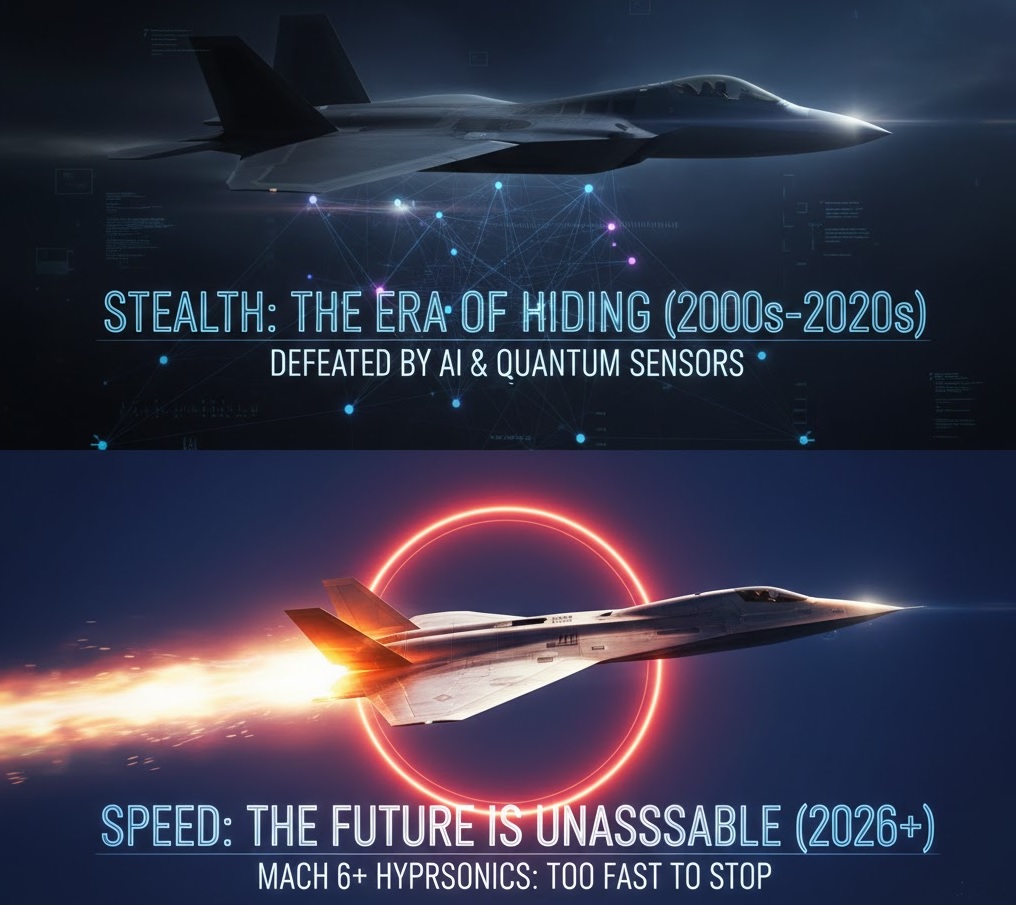
World : For nearly forty years, military airpower has been shaped by the principle of low observability, commonly known as stealth. From aircraft design to operational doctrine, avoiding detection was treated as the most reliable path to survivability. As of early 2026, that assumption is being reassessed across defense establishments, as technological advances are steadily eroding the effectiveness of traditional stealth. In its place, speed—specifically hypersonic speed—is emerging as a central requirement for future military platforms and strike concepts.
Defense analysts point to the convergence of advanced sensing technologies, artificial intelligence (AI), and high-speed propulsion as the drivers of this shift. Together, these developments are reducing the margin of advantage once provided by radar-evading designs and are reshaping how modern conflicts are expected to unfold.
Limits of Traditional Stealth
Stealth technology relies primarily on airframe shaping and radar-absorbent materials (RAM) to reduce radar cross-section (RCS). These methods were highly effective against legacy radar systems designed during the Cold War and its immediate aftermath. However, contemporary detection environments no longer depend on a single sensor or frequency band.
One area of concern is the development of quantum-based sensing. Experimental quantum radars and magnetometers operate on principles that measure subtle disturbances in electromagnetic fields rather than relying solely on reflected radar waves. While still maturing, these systems are designed to detect anomalies caused by aircraft movement, limiting the protective value of conventional stealth coatings and geometries.
At the same time, artificial intelligence is transforming how sensor data is processed. Modern defense networks increasingly rely on AI-driven fusion of inputs from satellites, airborne platforms, maritime sensors, and ground-based systems. Even if an aircraft remains difficult to detect by radar, secondary signatures such as infrared emissions, atmospheric wake effects, or electromagnetic interference can be correlated to establish a track.
Officials and researchers associated with the U.S. Defense Advanced Research Projects Agency (DARPA) have publicly acknowledged that concealment in a comprehensive operational sense is becoming more difficult. The emphasis, they note, is shifting from remaining unseen to remaining uncatchable.
Speed as a Defensive Measure
As detection becomes more likely, military planners are focusing on hypersonic speed—defined as velocities above Mach 5—as a means of reducing vulnerability. The underlying rationale is based on time compression. Faster systems sharply reduce the interval available for an adversary to detect, assess, decide, and respond.
A conventional subsonic or supersonic cruise missile may take close to an hour to reach a target several hundred miles away. By contrast, a hypersonic vehicle traveling at Mach 6 can cover the same distance in minutes. This difference significantly alters defensive calculations, particularly for missile defense systems that depend on layered detection and engagement sequences.
Hypersonic weapons also operate primarily within the atmosphere and are capable of maneuvering during flight. This combination of speed and maneuverability complicates tracking and interception, as existing defensive systems were largely designed to counter predictable ballistic trajectories or slower airborne threats. The result is a sharply reduced engagement window, often measured in seconds rather than minutes.
Technological Adaptation
Achieving sustained hypersonic performance requires a departure from many design assumptions of the stealth era. Highly specialized surface coatings optimized for radar absorption are giving way to heat-resistant structures capable of withstanding extreme aerodynamic heating and plasma effects.
Scramjet propulsion systems, advanced thermal protection materials, and autonomous flight control algorithms are central to this transition. Artificial intelligence plays a critical role in managing flight dynamics at extreme speeds, where human reaction times are insufficient. In this environment, human operators are expected to oversee mission objectives and decision-making rather than manually controlling flight.
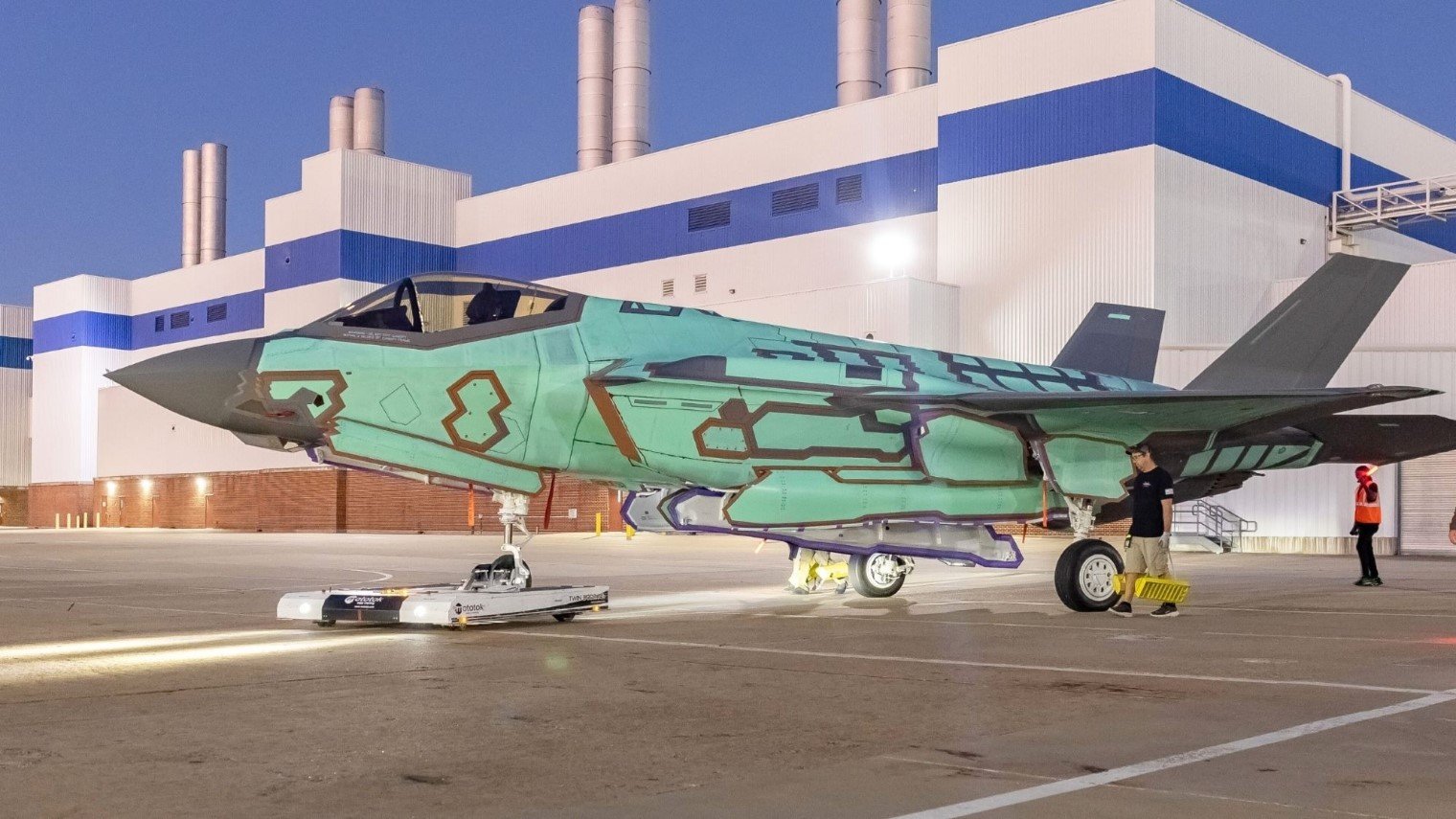
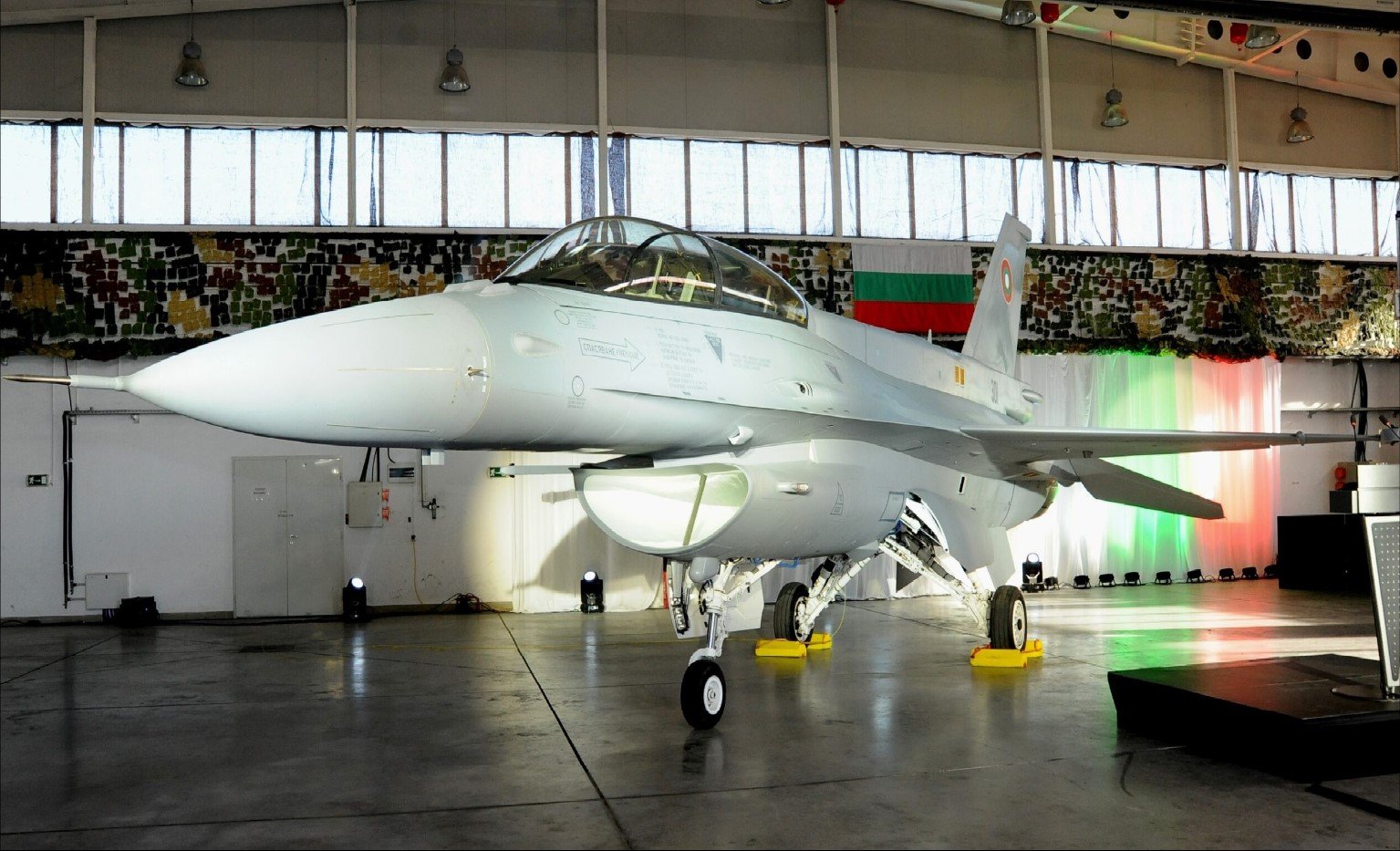
The shift is also reflected in the types of systems under development. While earlier generations of airpower focused on stealth fighters and bombers, current programs increasingly emphasize hypersonic glide vehicles (HGVs) and hypersonic cruise missiles (HCMs) designed to penetrate heavily defended airspace through speed rather than concealment.
Strategic Implications
The growing emphasis on speed does not suggest that stealth will disappear from military design. Instead, low observability is increasingly viewed as one element among many, rather than the defining characteristic of survivability. In complex, sensor-dense battlefields, advantage is expected to favor forces that can process information faster and act within compressed timelines.
As military doctrine adapts to these conditions, the balance between detection and response is being redefined. The central challenge is no longer whether a platform can be seen, but whether it can be engaged effectively before it completes its mission. In that context, speed is becoming a primary operational requirement, reshaping procurement priorities and long-term strategic planning across major defense powers.
——— End of Article ———