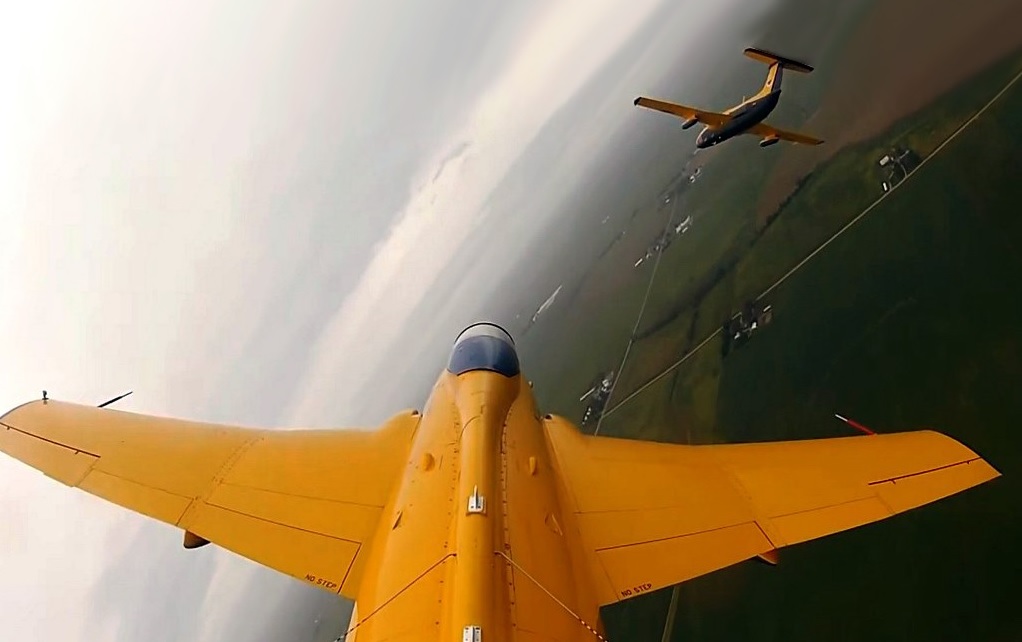
Lockheed Martin's Skunk Works successfully tested an AI agent integrated into an L-29 Delfin aircraft, showcasing its potential to manage air-to-air combat scenarios.
Lockheed Martin’s advanced projects division, known as Skunk Works, recently showcased a significant advancement in integrating artificial intelligence (AI) into air combat operations. The demonstration involved an AI agent controlling an L-29 Delfin aircraft, engaging in tactical exercises against a virtual adversary.
AI Integration in Tactical Environment
The AI agent was responsible for managing the aircraft’s heading, speed, and altitude. This allowed the Delfin to engage in both offensive and defensive maneuvers during the test flights. The primary goal was to evaluate the AI’s performance in various air combat scenarios, including standard head-to-head fights, off-aspect encounters, missile support, and missile defeat. Skunk Works reported that the AI agent exhibited intentional and decisive actions during these exercises, indicating a successful transfer of learned behaviors from simulations to real-world operations.
Performance and Results
Each test flight consisted of eight test cases to comprehensively assess the AI’s capabilities. The Skunk Works team was encouraged by the results, noting that the AI performed even better in live flights than in simulations. This successful demonstration is expected to strengthen the potential of AI in real-world combat scenarios, providing a foundation for future advancements in autonomous air combat technology.
Broader Initiative and Future Plans
This demonstration is part of a broader initiative by Skunk Works to rapidly develop and test AI-driven autonomy for air-to-air missions. The live flight tests are crucial for evaluating operationally relevant AI capabilities. According to Tom Schnell, a professor at the Iowa Technology Institute (ITI), which partnered in the demonstration, the integration of separate components into the L-29 to showcase new capabilities was particularly thrilling.
Moving forward, Skunk Works plans to conduct additional flight tests throughout the year, involving more aircraft and complex air battle scenarios. These tests aim to further refine and validate the AI's capabilities in various operational conditions.
Background and Previous Tests
Prior to this demonstration, the US Air Force conducted tests with an AI-operated F-16 fighter aircraft, with Secretary Frank Kendall on board. These efforts are part of a larger movement within the military to explore and implement AI technologies in combat roles, aiming to enhance the effectiveness and efficiency of air operations.
In summary, Lockheed Martin's Skunk Works has made a significant leap in demonstrating how AI can be effectively integrated into air combat missions. The positive results from these tests pave the way for further developments in AI-driven autonomy, potentially transforming the future of aerial warfare.
——— End of Article ———