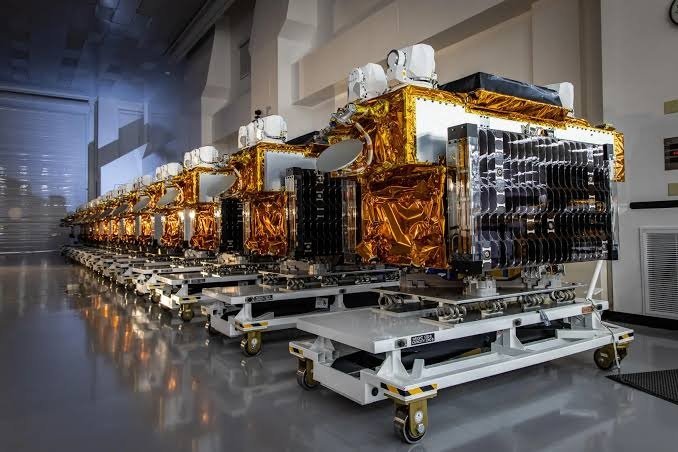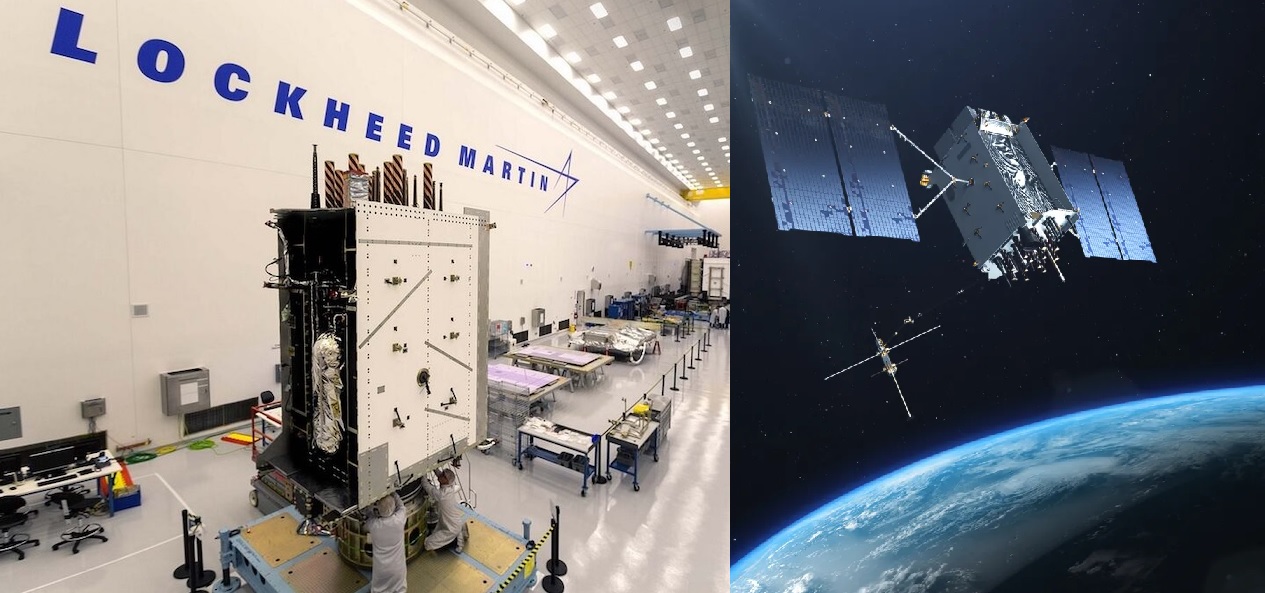
DENVER — April 30, 2026 : Lockheed Martin has completed the core mate phase of the Global Positioning System (GPS) IIIF Space Vehicle 11 (SV11), marking a key production milestone in the development of the next-generation navigation satellite constellation. The core mate process integrates the satellite’s primary structure with its essential subsystems, signifying the structural completion of the spacecraft.
SV11 is scheduled to be the first GPS IIIF satellite deployed into orbit, although it is the third spacecraft in the IIIF block to reach this stage. Space Vehicles 13 and 14 completed the same phase of assembly in 2025, indicating steady progress across the production line. All satellites are being assembled at Lockheed Martin’s facility in Denver, Colorado.
Production Progress and Manufacturing Approach
The company has reported improvements in manufacturing efficiency through the use of digital engineering tools, including digital twin models and augmented reality systems. These technologies are being applied to streamline assembly processes, reduce production timelines, and control costs as the GPS IIIF program advances.
Christina Mancinelli, Vice President of Global Communications and Navigation at Lockheed Martin, stated that the completion of the SV11 core mate reflects continued production momentum. She noted that with three satellites now past this stage, the program is progressing toward delivering upgraded capabilities to meet operational requirements.
Enhanced Capabilities of GPS IIIF Satellites
The GPS IIIF (Follow-on) satellites are designed to introduce expanded functionality for both military and civilian users, while improving the overall resilience of the GPS constellation.
One of the primary upgrades is Regional Military Protection (RMP), which uses high-powered, focused spot beam technology to strengthen signals over specific operational regions. This capability provides anti-jamming performance more than 60 times greater than earlier GPS satellites.
The satellites also incorporate a fully digital navigation payload, representing an increase from approximately 70 percent digital payloads in the previous generation to 100 percent digital architecture in the IIIF series. SV11 is equipped to transmit M-Code, an encrypted military signal that offers enhanced anti-spoofing protection, three times greater accuracy, and eight times improved resistance to jamming compared to legacy systems.
Additional onboard systems include Energetic Charged Particle (ECP) sensors for monitoring space weather and detecting environmental anomalies, along with a redesigned and lighter U.S. Nuclear Detonation Detection System (USNDS) payload.
Each GPS IIIF satellite is also fitted with Laser Retroreflector Arrays (LRAs), which enable precise laser-based tracking from ground stations. This capability is intended to improve positioning accuracy for end users, with long-term goals of refining accuracy from approximately one meter to the centimeter level.
For civilian applications, SV11 and subsequent satellites include a Cospas-Sarsat search and rescue payload capable of detecting 406 MHz distress beacons worldwide. This system supports emergency response efforts by enabling faster location of individuals in remote or maritime environments.
Platform Upgrades and Future Integration
Beginning with SV13, all GPS IIIF satellites will be built on Lockheed Martin’s LM2100 Combat Bus™, an updated spacecraft platform designed to enhance performance and adaptability. The platform includes additional cyber-hardening measures, increased power and propulsion capabilities, and expanded capacity for integrating future payloads.
Lockheed Martin is currently under contract to manufacture GPS IIIF satellites through SV22, ensuring continued expansion and modernization of the constellation.
Program Context and Ground System Modernization
The development of the GPS IIIF series follows the completion of the previous generation. In April 2026, the U.S. Space Force launched GPS III-8 (SV10), completing the deployment of the GPS III active constellation. That mission was conducted aboard a SpaceX Falcon 9 from Cape Canaveral Space Force Station.
To support the integration of the IIIF satellites, Space Systems Command recently awarded Lockheed Martin a task order contract valued at up to $105 million. The contract focuses on modernizing the Architecture Evolution Plan (AEP) ground control system, which will manage launch operations, early orbit activities, and eventual disposal of the new satellites.
Launch Timeline
The first launches of the GPS IIIF satellites are currently projected to begin in 2027. While a specific launch date for SV11 has not yet been announced, the completion of the core mate phase represents a significant step toward readiness for integration, testing, and eventual deployment.
The GPS IIIF program is intended to sustain and enhance global positioning, navigation, and timing services for both defense and civilian users, supporting a wide range of applications worldwide.
——— End of Article ———