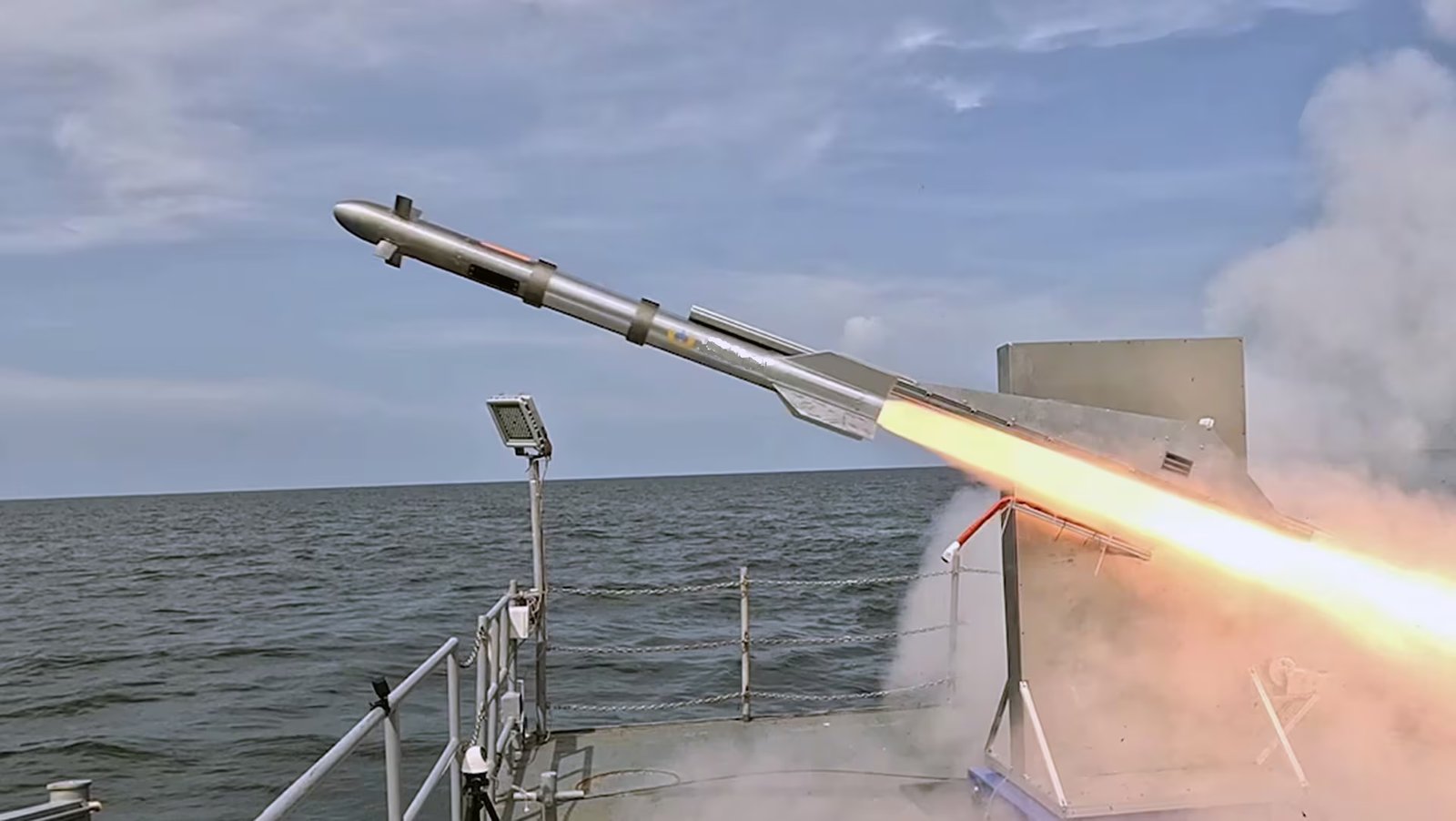
Washington, D.C. — The U.S. Department of Defense (DoD) has launched a new initiative to accelerate the development of affordable, mass-produced long-range precision strike weapons as it looks to supplement its inventory of high-cost guided munitions with scalable alternatives.
Managed by the Defense Innovation Unit (DIU), the new Ground-Based Affordable Mass (G-BAM) challenge invites defense companies and technology firms to propose mature, low-cost strike systems that can be rapidly tested, certified, and moved into production. The initiative is designed to support sustained military operations by providing commanders with more affordable long-range strike options while preserving high-end precision weapons for priority targets.
The announcement comes as recent conflicts and ongoing regional tensions have highlighted the challenges of relying heavily on expensive precision-guided weapons. According to the DIU, future conflicts will require the Joint Force to generate long-range effects at a scale, cost, and pace that current inventories alone cannot support.
Focus on Affordable Long-Range Strike Systems
The G-BAM program aims to complement existing high-end precision munitions rather than replace them. By fielding lower-cost weapons in larger numbers, the Pentagon intends to expand the range of targets that can be engaged while maintaining sufficient stocks of advanced munitions for missions requiring higher-end capabilities.
The effort aligns with the Direct Reporting Portfolio Manager for Unmanned Systems (DRPM-UxS), a recently established office focused on rapidly fielding low-cost autonomous systems at scale.
The DoD is seeking systems that can be demonstrated within 60 to 90 days and transitioned into production within 12 to 18 months, reflecting one of the department's fastest acquisition timelines for a long-range strike capability.
Technical Requirements
The Defense Innovation Unit has outlined several mandatory performance and production requirements for proposed systems.
The preferred system should include:
- Minimum range of 600 nautical miles.
- Payload capacity of at least 35 pounds, with more than 100 pounds strongly preferred.
- All-up flyaway cost below $250,000 at production scale.
- Existing manufacturing capacity or a credible plan to produce more than 100 systems per month.
- Ground launch capability without proprietary launch infrastructure, with remote, low-signature, and containerized launch methods preferred.
In addition, the Pentagon is seeking systems capable of operating in contested environments, including those affected by electronic warfare and GPS disruption. Desired capabilities include automatic target recognition, autonomous terminal guidance, alternative or redundant Position, Navigation and Timing (PNT) technologies for GPS-denied environments, and compatibility with existing targeting, command-and-control, and fires networks.
The department has not specified whether the final solution must be a missile or a one-way attack drone. Instead, it is seeking any ground-launched autonomous precision strike system that meets the required operational objectives.
Submission and Demonstration Timeline
Companies interested in participating must submit either a pitch deck of no more than 15 slides or a white paper of up to five pages by August 5, 2026, at 11:59 p.m. Eastern Time. Each submission must also include a recorded video showing the proposed system operating in a real-world environment.
The competition is open to both U.S. and international vendors, and prior combat use is not required, although demonstrated operational performance is considered an advantage.
Selected participants will advance to a Phase II flight demonstration scheduled for early November at a government test site. During the event, each team will provide a 30-minute system presentation followed by technical discussions with government and allied experts.
Each Phase II participant will receive a $250,000 cash prize and must provide at least three representative inert systems while limiting its demonstration team to no more than eight personnel.
The highest-rated proposals may receive up to $5 million to deliver operational test quantities directly to military units.
Transition Opportunities
Beyond the prize competition, successful participants may become eligible for additional government contracting opportunities. These include Prototype Other Transaction agreements under 10 U.S.C. § 4022, follow-on production contracts, and Army Small Business Innovation Research (SBIR) Direct-to-Phase II awards of up to $2 million for qualifying U.S. small businesses.
The Pentagon has allocated up to $250 million for prize execution and follow-on transition activities associated with the G-BAM challenge.
The UK Ministry of Defence is also supporting the initiative by contributing expertise related to long-range strike systems.
Part of a Broader Pentagon Strategy
The G-BAM challenge is one element of the Pentagon's broader effort to develop lower-cost, mass-producible precision strike capabilities.
Related initiatives include the Family of Affordable Mass Missiles (FAMM-BAR) program, which is developing methods to launch cruise missiles from standard cargo aircraft, and the Low-Cost Containerized Missiles program, which focuses on reducing the cost of advanced strike weapons.
Through these efforts, the Department of Defense aims to expand production capacity, reduce operational costs, and improve the ability to sustain long-duration military operations while reducing dependence on limited inventories of expensive precision-guided munitions.
——— End of Article ———