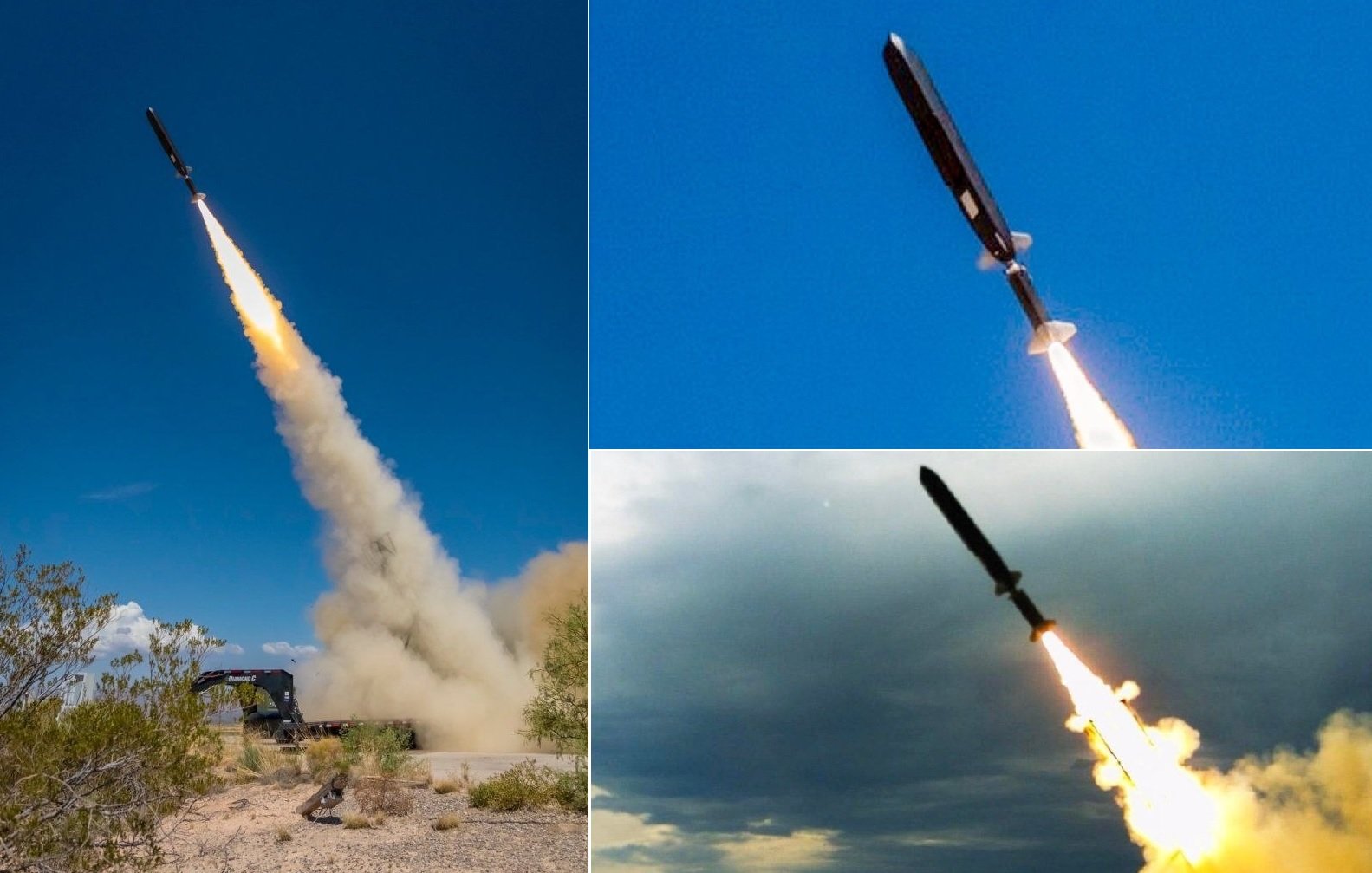
LONDON / TEHRAN : Iran has concluded a €500 million arms agreement with Russia for the procurement of 500 9K333 Verba man-portable air defense launchers and 2,500 associated 9M336 missiles, according to details first reported by the Financial Times, citing leaked Russian documents and sources familiar with the matter. The contract was signed in Moscow in December and outlines deliveries scheduled between 2027 and 2029, with indications that a limited number of systems may already have been transferred.
The agreement, valued at approximately €495 million under the contract documentation, was negotiated between the Moscow representative of Iran’s Ministry of Defense and Armed Forces Logistics (MODAFL) and Rosoboronexport, Russia’s state arms export agency. Neither the Russian Defense Ministry nor Iranian officials have publicly commented on the reported terms of the deal.
Procurement Background and Strategic Context
Iran formally requested the Verba systems in July 2025, days after the end of a 12-day conflict with Israel during which Iranian fixed air-defense networks and radar installations sustained significant damage from precision airstrikes. The acquisition reflects a shift toward decentralized and mobile air-defense configurations designed to reduce vulnerability to strikes targeting fixed radar and missile batteries.
The Verba systems are intended to supplement and partially rebuild Iran’s damaged air-defense network by deploying highly mobile, infantry-operated units capable of protecting critical infrastructure and sensitive sites.
The reported contract includes the supply of specialized night-vision equipment, allowing operators to conduct engagements in low-light and nighttime conditions.
Technical Overview of the 9K333 Verba System
The 9K333 Verba, designated by NATO as SA-25, is one of Russia’s most modern man-portable air-defense systems (MANPADS). It is designed for use by small mobile teams and is optimized to engage low-flying aircraft, helicopters, unmanned aerial vehicles, cruise missiles, and precision-guided munitions.
The system employs the 9M336 missile, which weighs more than 10 kilograms. The complete system, including the 9P521 launch unit, weighs approximately 17.25 kilograms. The missile has a diameter of 72 millimeters and a length of 1.64 meters.
The 9M336 missile is equipped with a high-explosive fragmentation warhead weighing approximately 1.5 kilograms, although some sources indicate a 2.5-kilogram configuration. It uses a magnetic proximity fuse with a secondary grazing impact fuse. Propulsion is provided by a solid-fuel rocket motor.
Operational parameters include an engagement range of 500 meters to 6.5 kilometers and a maximum flight ceiling of 4.5 kilometers. The missile can reach speeds of up to 500 meters per second, equivalent to approximately Mach 1.5. Reaction time is reported between five and ten seconds, with some configurations indicating an average of eight seconds.
The guidance system features a three-channel multispectral optical seeker operating in ultraviolet, near-infrared, and mid-infrared bands. This configuration improves target discrimination and resistance to thermal countermeasures. The system is capable of engaging targets traveling at speeds of up to 400 meters per second approaching and 320 meters per second receding. It is designed to operate in daytime and nighttime conditions and across varied weather environments.
The broader Verba complex includes the 9V861 mobile checkpoint, 1L229V ground-based interrogator, 1L122 compact radar detector, 9S935 automation kit, 9S933 portable fire-control unit, 9S933-1 mounting kit, 9S931 planning module, 9S932-1 intelligence and control module, and associated maintenance equipment. The 1PN97M Mowgli-2M thermal imaging sight can be attached to enhance night targeting capability.
Delivery Structure and Implementation
The contract specifies a three-tranche delivery structure spanning from 2027 through 2029. Individuals familiar with the arrangement indicated that a limited number of systems may have been delivered ahead of the formal schedule, though this has not been officially confirmed.
The transaction underscores ongoing military-technical cooperation between Tehran and Moscow, which has expanded in scope in recent years.
Broader Iran–Russia Defense Cooperation
On January 17, 2025, Russia and Iran signed a comprehensive 20-year strategic partnership treaty covering defense, counter-terrorism, energy, finance, and cultural cooperation. The agreement contains 47 articles addressing various areas of bilateral collaboration.
Military cooperation between the two countries dates back to the late 1980s. In 1989, following the death of Ayatollah Ruhollah Khomeini, Moscow and Tehran negotiated a major arms agreement. Between 1990 and 1993, Russia transferred nearly $1.9 billion worth of equipment, including combat aircraft, tanks, and submarines.
In 1995, Russia agreed with the United States not to conclude new weapons agreements with Iran and to complete existing deliveries by 1999. In 2000, Russia informed Washington it would no longer adhere to that understanding. Between 2002 and 2005, arms transfer agreements totaled approximately $1.7 billion.
In 2007, Russia agreed to sell Iran the S-300 air-defense system, although deliveries were delayed until 2016. Russian arms transfers to Iran declined from $35 million in 2010 to $4 million in 2015.
Since 2021, Iran has supplied Russia with ballistic missiles, drones, and surface-to-air missiles reportedly valued at $2.7 billion. These transfers include hundreds of Fath-360 short-range ballistic missiles, nearly 500 additional short-range ballistic missiles, approximately 200 surface-to-air missiles, millions of rounds of ammunition, and artillery shells. A 2023 agreement covering drones and related technology was valued at $1.75 billion. In total, Russia has reportedly spent more than $4 billion on Iranian weapons since 2021.
In 2018, Russia transferred nearly $2.5 billion in cash to Iran in multiple shipments ranging from $57 million to $115 million per consignment, intended to support Tehran amid U.S. sanctions.
Iran has also expressed interest in additional Russian systems, including Su-35 fighter aircraft, helicopters, and the S-400 air-defense system. In 2023, Iran received its first Mi-28NE attack helicopter from Russia.
Strategic Implications
The Verba acquisition reflects Iran’s effort to rebuild and diversify its air-defense architecture following damage sustained during the 2025 conflict. By integrating mobile, infantry-operated systems alongside existing layered defenses, Tehran appears to be prioritizing distributed protection of critical infrastructure and strategic facilities.
Deliveries scheduled through 2029 are expected to incrementally expand Iran’s short-range air-defense coverage, particularly against low-altitude aerial threats, including unmanned systems and cruise missiles.
——— End of Article ———