TEHRAN : Unverified claims circulating online that Iran has tested a submarine-launched, long-range variant of its Abu Mahdi cruise missile have drawn widespread attention among defense analysts, prompting renewed scrutiny of Tehran’s missile capabilities amid elevated regional tensions.
The reports, which began spreading earlier this week across social media platforms and defense discussion forums, assert that Iran has conducted a successful test of a radar-evading, submarine-launched cruise missile with a claimed range of approximately 2,600 kilometers. According to the posts, the weapon is described as a modified version of the Abu Mahdi missile and is portrayed as capable of threatening U.S. naval forces operating far beyond the Persian Gulf, including carrier strike groups deployed in the Arabian Sea and northern Indian Ocean.
No official Iranian statement has confirmed such a test, and no independent imagery, telemetry, or third-party verification has emerged to substantiate the claims. Iranian state media have also not reported on a submarine-launched cruise missile test with the specifications described online.
Known Capabilities of the Abu Mahdi Missile
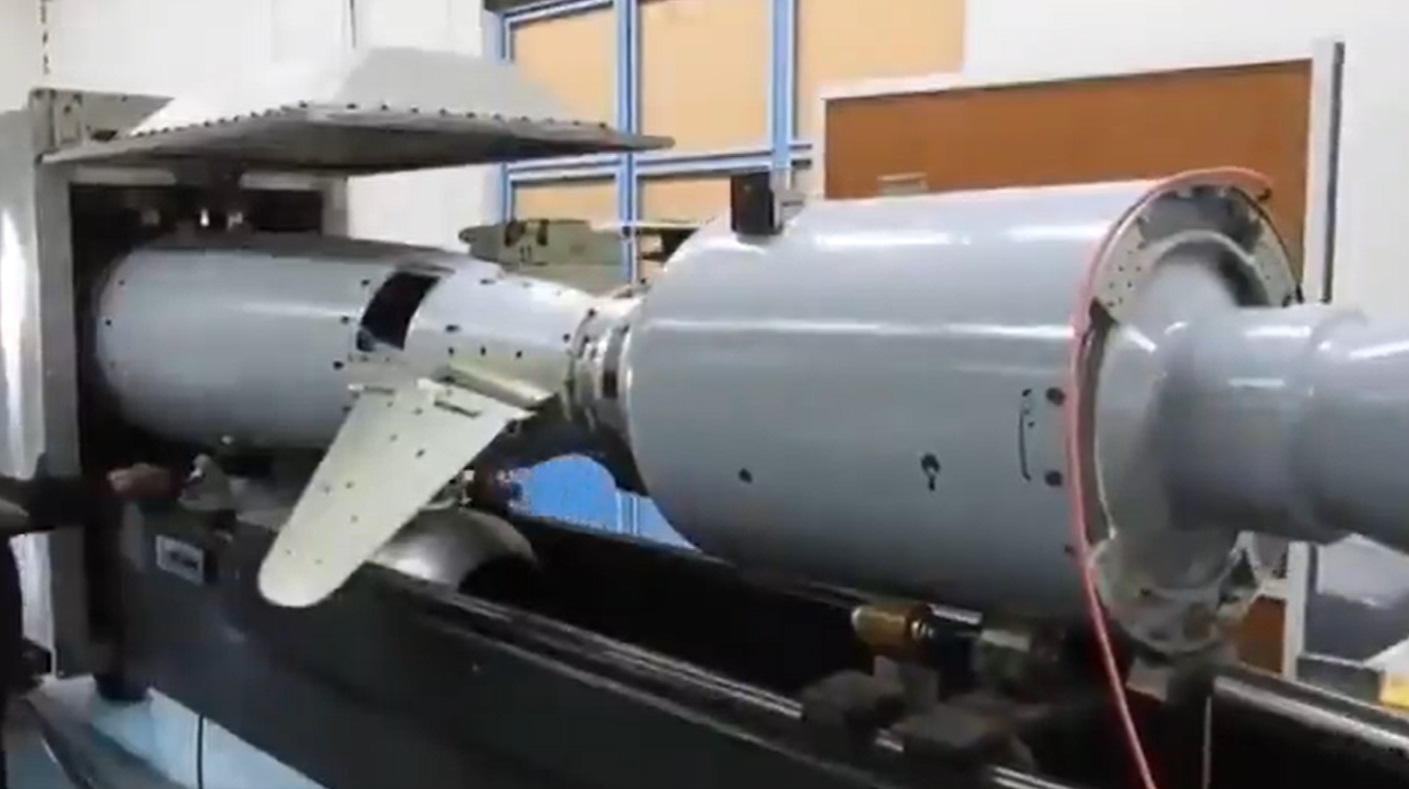
The Abu Mahdi cruise missile was publicly unveiled by Iran in 2020 as a sea-based, anti-ship cruise missile. According to information released at the time, the missile is turbojet-powered, designed primarily for coastal defense and naval strike missions, and is believed by Western analysts to have an operational range of 700 to 1,000 kilometers, depending on flight profile and payload.
Defense specialists note that extending the range of a missile in this class to 2,600 kilometers would require significant advances in propulsion efficiency, fuel capacity, guidance systems, and airframe design. Adapting such a system for submarine launch would add further complexity, including the need for compact launch canisters, cold-launch or swim-out mechanisms, and secure underwater command-and-control links.
“There is a substantial technical gap between the known Abu Mahdi system and the characteristics described in these reports,” said one regional missile analyst familiar with Iranian weapons development. “Such a capability would represent a major leap rather than an incremental upgrade.”
Iranian Military Messaging
While the specific missile claims remain unverified, Iranian officials have continued to emphasize improvements across the country’s missile forces. On Wednesday, Major General Abdolrahim Mousavi, Chief of Staff of the Iranian Armed Forces, visited an undisclosed underground missile facility operated by the Islamic Revolutionary Guard Corps (IRGC).
During the visit, Mousavi stated that Iran’s ballistic and cruise missile inventory had undergone comprehensive modernization. His remarks highlighted advances in accuracy, survivability, and operational readiness, without referencing any specific new missile with a multi-thousand-kilometer range or confirming the existence of a submarine-launched Abu Mahdi variant.
Iran has, over the past decade, invested heavily in hardened underground infrastructure, mobile launch platforms, and layered air and missile defenses, which it describes as central to its deterrence strategy.
U.S. Naval and Defensive Considerations
U.S. defense officials and analysts have downplayed the immediate operational impact of the online claims. Even in the event that Iran were to field a long-range submarine-launched cruise missile, U.S. carrier strike groups operate with extensive anti-submarine warfare coverage.
The USS Abraham Lincoln Carrier Strike Group, cited in some of the reports, is typically escorted by multiple guided-missile destroyers equipped with the Aegis Combat System, advanced sonar suites, and anti-submarine weapons. Carrier groups also rely on continuous surveillance from maritime patrol aircraft, including P-8 Poseidon platforms, and support from allied naval forces in the region.
Military planners note that effective employment of a submarine-launched cruise missile would require not only the missile itself, but also quiet and survivable submarines capable of reaching launch areas without detection, a domain in which Iran’s navy is considered more limited compared with major naval powers.
Regional Context
The emergence of the missile claims coincides with heightened rhetoric between Tehran and Washington over regional security and stalled diplomatic efforts related to Iran’s nuclear program. U.S. officials have reiterated that military options remain available should diplomacy fail, while Iran continues to emphasize its deterrent posture.
For now, analysts assess that the reported “2,600-kilometer stealth missile” remains unproven. The episode underscores the role of information operations and strategic signaling in the current environment, where unverified claims can influence perceptions even in the absence of confirmed technical evidence.
——— End of Article ———