Tehran : Iran has formally told international nuclear inspectors that unexploded U.S. munitions left behind after American airstrikes on its nuclear facilities in June 2025 pose unresolved safety risks, preventing inspections from resuming. The position was outlined by Foreign Minister Abbas Araghchi, who said access cannot be granted until new safety, security, and technical protocols are agreed.
Inspection Deadlock and Safety Concerns
Iranian officials say the presence of unexploded ordnance at bombed nuclear sites creates hazards for inspection teams and local engineers alike. According to Tehran, existing international inspection frameworks do not address visits to nuclear facilities that have been subjected to military strikes involving deep-penetration weapons. Araghchi said he raised the issue directly with the head of the International Atomic Energy Agency (IAEA), and was told there are no established procedures governing inspections under such conditions.
Iran has notified the IAEA that any inspection would require prior agreement on risk mitigation, site access routes, and emergency response measures. Officials added that the issues extend beyond explosive danger to include structural instability, debris clearance, and verification of safe working distances within damaged underground halls.
June 2025 Strikes and Affected Facilities
The safety dispute stems from a 12-day conflict in June 2025, which Iranian authorities describe as a coordinated Israeli campaign supported by the United States and conducted under the operational designation Operation Midnight Hammer. During the fighting, U.S. aircraft struck three core components of Iran’s nuclear infrastructure: Fordow, Natanz, and Isfahan.
Iran acknowledged significant physical damage to buildings and underground structures but said nuclear material had been relocated ahead of the strikes, avoiding any radiological release. The ceasefire that followed ended active hostilities, yet left the sites in a damaged and hazardous condition, with cleanup and verification efforts still incomplete months later.
Weapons Used and Unexploded Munitions
Iranian officials say the United States employed fourteen GBU-57A/B Massive Ordnance Penetrator bunker-buster bombs during the operation. They claim some of these munitions failed to detonate and remain embedded within rock and reinforced concrete at the targeted sites.
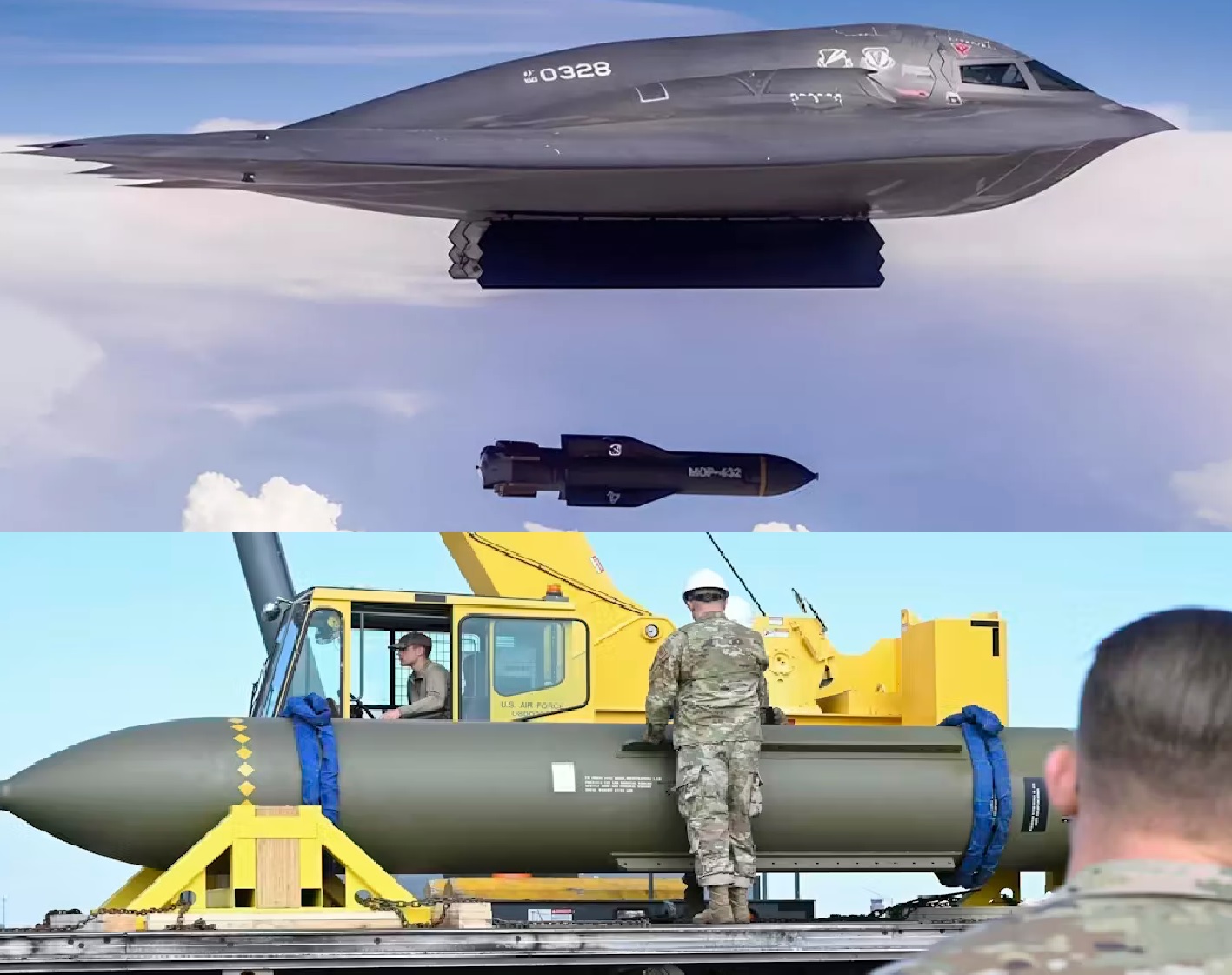
The GBU-57 Massive Ordnance Penetrator (MOP) is the largest conventional bomb in the U.S. arsenal. Weighing approximately 13,600 kilograms, it is designed to penetrate deeply buried targets before detonating. The weapon’s hardened steel casing allows it to drive through tens of meters of earth or several meters of reinforced concrete, guided by a combined GPS and inertial navigation system (INS). A delayed fuze is programmed to trigger only after sufficient penetration is achieved.
Iran says that if the fuze fails due to impact conditions or mechanical malfunction, the bomb can remain largely intact beneath collapsed structures. Such unexploded devices, officials argue, create unacceptable risks for inspectors and site workers until they are located, assessed, and neutralized.
Delivery Platform and Targeting Approach
The GBU-57 is carried exclusively by the B-2 Spirit strategic bomber. During the June 2025 strikes, U.S. aircraft reportedly aimed the weapons at ventilation shafts, access tunnels, and structural weak points intended to disrupt underground facilities rather than surface buildings alone. Iranian accounts say this approach increased the likelihood that some munitions became lodged deep within debris without detonating.
Technical and Intelligence Implications
Beyond safety considerations, the unexploded weapons raise sensitive technical and security questions. Iranian officials acknowledge that neutralizing and extracting any intact munitions would be a complex engineering task requiring specialized expertise and equipment. Even without recovering explosive material, access to a largely intact bomb could allow detailed examination of casing design, materials, and internal components.
Defense analysts note that inspection of such hardware could reveal information about penetration mechanics, fuze design, and guidance systems. Tehran has not stated whether recovery efforts are underway, but has emphasized that any handling of the devices would prioritize safety and containment.
Ongoing Contacts With the IAEA
Iran says communication with the IAEA has continued, but no timeline has been set for resuming inspections at the affected sites. Officials maintain that access will remain suspended until mutually agreed procedures are in place to address unexploded ordnance, damaged infrastructure, and personnel safety.
For now, the inspection impasse underscores how the aftermath of the June 2025 strikes continues to complicate international verification efforts, even months after the fighting ended.
——— End of Article ———