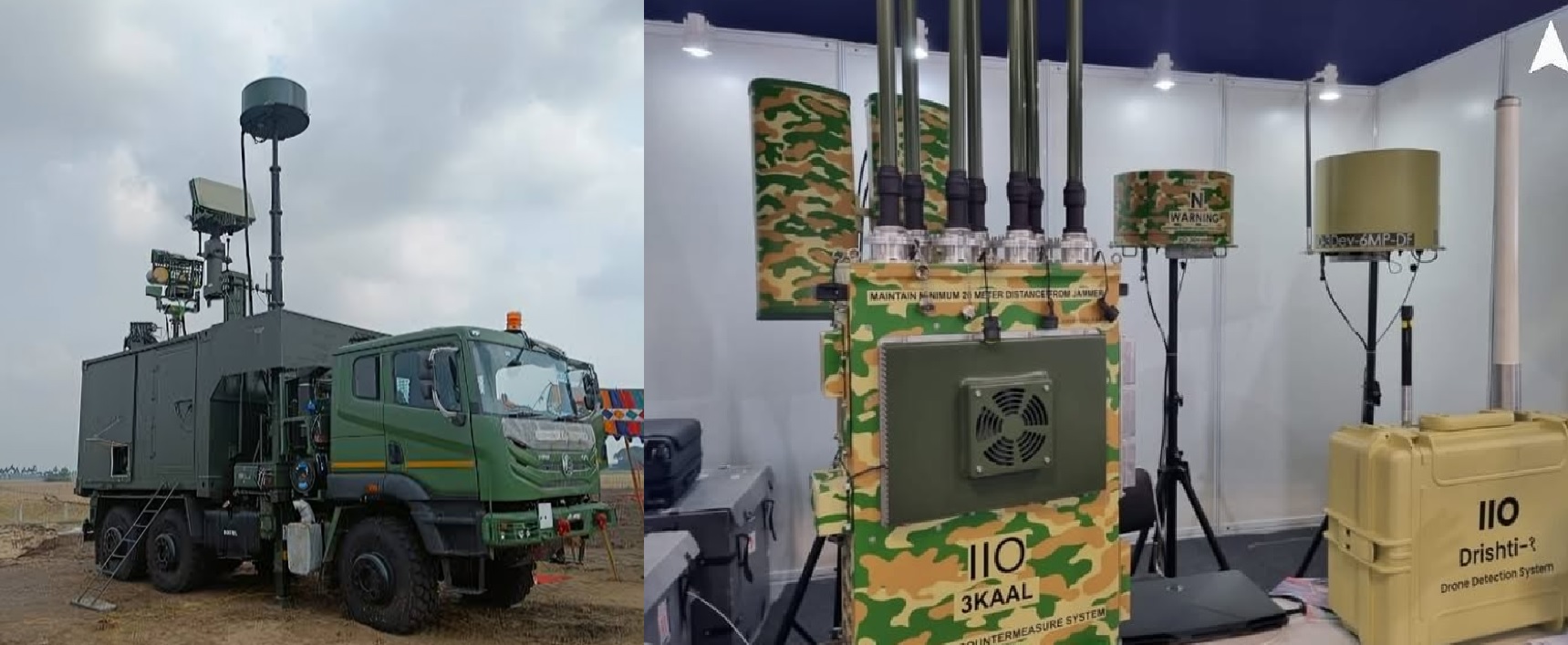
The Indian Army has taken a big step toward strengthening the country’s security by issuing Requests for Information (RFI) for the procurement of advanced counter-drone systems. This move is part of the government’s Make in India and Aatmanirbhar Bharat (self-reliant India) initiatives, aiming to develop and use indigenous technology to safeguard the nation.
Why Are These Counter-Drone Systems Needed?
In recent years, drones have become crucial tools in modern warfare. They are being used for surveillance, smuggling, and even armed strikes. Small drones are difficult to detect and can cause significant damage or gather sensitive information.
A recent military standoff between India and Pakistan highlighted the growing threat of drones. Both countries used unmanned aerial vehicles (UAVs) extensively during a brief four-day clash earlier this month. This event showed how important it is for the Indian Army to have reliable systems to detect and neutralize drones quickly.
What Are the New RFIs About?
The Indian Army has issued RFIs for two key types of counter-drone systems:
-
Manpack Counter Unmanned Aerial System (C-UAS): A lightweight, portable system that can be carried by soldiers in the field. It will help detect, track, and disable enemy drones during operations in remote or border areas.
-
Ground-Based Counter Unmanned Aerial System (C-UAS): A more powerful, fixed system that can be set up at military bases, airports, and sensitive installations. It offers a wider detection range and stronger neutralization capabilities.
Both systems will be developed under the Defence Acquisition Procedure (DAP) 2020 guidelines, ensuring faster decision-making and encouraging domestic defense production.
Who Is Leading This Technological Push?
Several Indian defense companies are stepping up to meet this challenge:
-
Bharat Electronics Limited (BEL): A government-owned defense manufacturer, BEL has already developed the D4 System, a vehicle-mounted counter-drone platform. It uses advanced technology like thermal imaging, optical sensors, and RF (radio frequency) analysis to detect drones. It can neutralize threats using soft-kill techniques like jamming signals or hard-kill methods like direct attacks.
-
Armory: A new player in India’s defense sector, this startup has introduced SURGE, a portable drone jammer. It can detect and disable rogue drones in real time by disrupting their communication signals, offering a reliable solution in active combat zones.
Additionally, companies like ideaForge Technology — known for supplying over 2,000 drones to Indian forces — are upgrading their platforms to resist electronic warfare, ensuring India’s drones can operate safely even in contested areas.
Recent Operations Show Why This Is Urgent
In a recent military mission named Operation SINDOOR, rising border tensions exposed the urgent need for reliable, homegrown counter-drone systems. The operation relied heavily on India-made equipment, further proving the importance of self-reliance in national security.
To support this effort, the Indian government has allocated a significant portion of its $4.6 billion emergency defense spending for counter-drone technologies. Around $470 million is expected to be invested in this area over the next two years, indicating how serious the country is about tackling the drone threat.
A New Chapter in India’s Defense Strategy
The increasing use of drones by hostile forces has changed the nature of warfare. Drones offer a cheap, effective way to gather intelligence or launch attacks without risking human lives. That’s why the Indian Army is fast-tracking the development and procurement of advanced counter-drone systems.
By partnering with domestic companies and reducing dependency on foreign technology, India is strengthening its borders and modernizing its defense capabilities. The Aatmanirbhar Bharat vision is no longer just a policy slogan — it’s becoming a practical, critical strategy for securing the nation against new-generation threats.
As trials and acquisitions speed up in the coming months, India’s soldiers will soon be better equipped to detect and destroy any aerial threats swiftly and effectively, ensuring the safety of the country’s skies and military installations.
——— End of Article ———