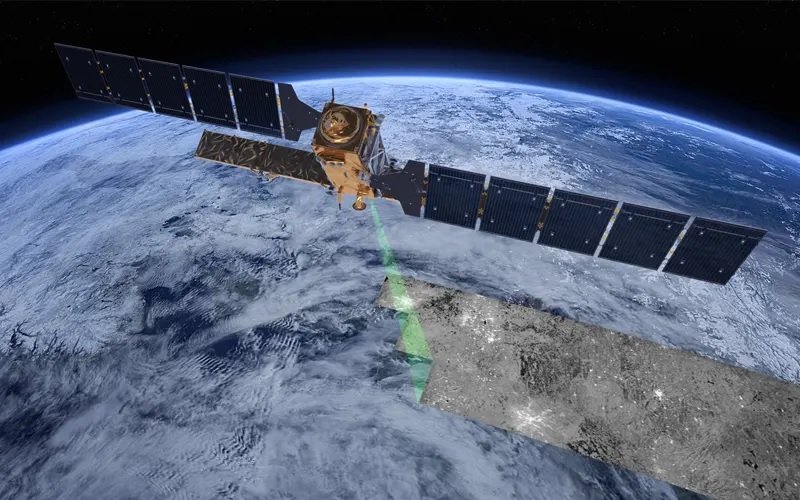
India is rapidly strengthening its military surveillance capabilities in space. In a bold and ambitious move, the government has approved a plan to launch 52 dedicated defence satellites by the year 2029. This network of satellites will act as a permanent eye in the sky, keeping constant watch over India’s borders with China and Pakistan, as well as the strategically important Indian Ocean Region.
The project, known as Space-Based Surveillance Phase-3 (SBS-III), received clearance from the Cabinet Committee on Security (CCS) in October 2024. With a budget of ₹26,968 crore, the initiative marks one of the largest investments in India’s space-based defence infrastructure to date.
A Lesson from Operation Sindoor
This major space push was triggered by the operational experiences of Operation Sindoor, a classified military mission that involved precision air and missile strikes deep inside enemy territory. The operation heavily relied on space-based intelligence and real-time satellite data to locate and neutralize high-value targets. It clearly demonstrated how crucial modern surveillance technology is for military success in today’s rapidly changing warfare environment.
Who’s Building the Satellites?
The ambitious plan will be jointly executed by the Indian Space Research Organisation (ISRO) and the private sector. Out of the total 52 satellites:
-
21 will be built and launched by ISRO
-
31 will be developed and deployed by three private Indian aerospace companies
The entire program will be managed by the Defence Space Agency (DSA), which operates under the Integrated Defence Staff (IDS) of the Ministry of Defence.
How Will These Satellites Work?
The new satellites will be deployed in two types of orbits:
-
Low Earth Orbit (LEO) — roughly 300 to 1,200 km above Earth. These satellites will offer high-resolution, rapid-revisit surveillance, ideal for border and maritime monitoring.
-
Geostationary Orbit (GEO) — at around 36,000 km above Earth. These will provide continuous coverage over specific strategic regions like the Indian Ocean and neighboring territories.
The satellites will carry advanced optical imaging systems, Synthetic Aperture Radar (SAR) for all-weather and night-time surveillance, electronic intelligence (ELINT) sensors, and AI-powered data analysis tools for quick and accurate threat detection.
This combination ensures that India will be able to track troop movements, missile launches, naval deployments, and other potential security threats in near real-time.
Faster, Smarter Launch Capability
To meet the tight deadlines and respond swiftly during emergencies, India will rely on its new Small Satellite Launch Vehicle (SSLV) technology. These smaller, more agile rockets can quickly send satellites into space with short preparation times, allowing rapid reinforcement of space assets if needed.
Complementary Systems: High-Altitude Pseudo Satellites (HAPS)
In addition to satellites, India is also working on High-Altitude Pseudo Satellites (HAPS) — unmanned, long-endurance aircraft that fly at stratospheric heights, performing surveillance tasks like satellites, but at a much lower cost and with greater flexibility.
These will provide an extra layer of persistent surveillance over sensitive areas, supporting and enhancing satellite operations.
A New Military Space Doctrine
India’s armed forces are currently finalizing a comprehensive military space doctrine to manage these new assets. This doctrine will set guidelines for how satellites are used in joint military operations, how to protect them from enemy actions (including anti-satellite weapons), and how to counter potential threats in space.
A Giant Leap in Military Preparedness
The deployment of these 52 defence satellites marks a turning point in India’s military preparedness and space capability. It not only strengthens national security by enhancing intelligence gathering and early warning systems but also signals India’s arrival as a serious space power in an era where space is becoming an increasingly contested domain.
By 2029, India aims to have a powerful, persistent, and resilient space-based defence shield safeguarding the country’s strategic interests for decades to come.
——— End of Article ———