BERLIN : Europe’s long-dormant military-industrial engine is roaring back to life, and at its center stands a single German defense firm whose output now threatens to redraw the global balance of artillery power.
Rheinmetall, Germany’s largest defense manufacturer, is on course to reach an annual production capacity of 1.5 million 155mm artillery shells by 2027, a figure that would exceed the entire combined output of the United States defense industry. The milestone marks a historic inflection point for NATO rearmament, signaling that Europe—once derided for underinvestment and fragmentation—has emerged as the primary industrial backbone for high-intensity ground warfare.
The shift is not symbolic. It is measurable, structural, and already reshaping alliance planning.
A Single Company Outproducing a Superpower
According to company projections and publicly stated targets, Rheinmetall’s accelerated expansion will allow it to surpass the U.S. Department of Defense’s national artillery goal of 1.2 million shells annually, equivalent to 100,000 rounds per month. Washington aims to reach that level only by late 2025 or 2026, following years of industrial undercapacity exposed by Russia’s full-scale invasion of Ukraine.
The contrast is stark. While the United States relies on a network of government-owned, contractor-operated (GOCO) plants—many dating back to the Cold War and requiring extensive modernization—Rheinmetall operates as a fully commercial entity. That independence has allowed it to move faster, acquire competitors, and construct new facilities without the same legislative and bureaucratic constraints.
Over the past two years, Rheinmetall has expanded production lines across Germany, Hungary, Romania, Spain, and other NATO states. The acquisition of Spain’s Expal Systems alone significantly increased its explosives and shell-filling capacity, while multiple “greenfield” plants have been designed specifically for mass-production at wartime tempo rather than peacetime efficiency.
The result is a level of industrial concentration unprecedented in the modern Western defense industry: a single European company producing more artillery ammunition than an entire nation’s defense sector.
Europe’s Arsenal Reawakens
Rheinmetall’s surge is part of a broader continental transformation. Taken together, production across the European Union, the United Kingdom, and Ukraine is projected to reach between 2.8 and 3 million 155mm shells annually by 2026, placing Europe on par with—or potentially ahead of—Russia’s wartime output.
This expansion reflects a fundamental policy reversal. After decades of prioritizing expeditionary forces and airpower, European governments are now investing heavily in industrial depth, stockpiles, and sustained production capacity.
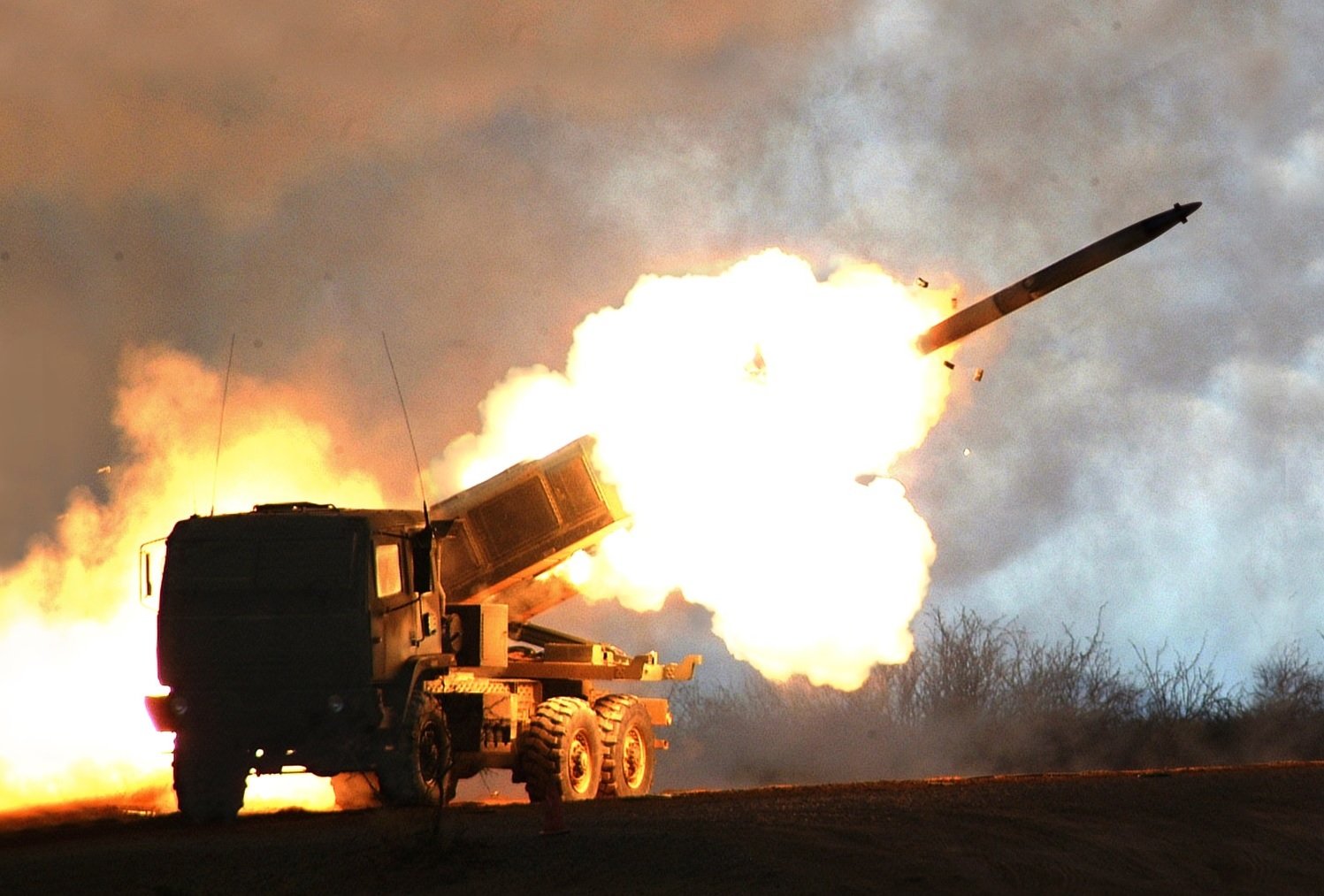
In the United Kingdom, BAE Systems is expanding operations at its Glascoed facility in Wales, targeting an annual output of roughly 500,000 shells. Across Northern and Eastern Europe, firms such as Nammo and the Czech Republic’s STV Group are scaling production of propellants, casings, and complete rounds, collectively aiming for more than half a million shells per year. France’s KNDS (Nexter) continues to ramp up output in support of CAESAR self-propelled howitzer deployments, with production cycles compressed from years to months.
NATO Secretary General Mark Rutte has summarized the transformation bluntly, confirming that Europe’s artillery shell production has increased sixfold in just two years—a pace unmatched since the Cold War.
Ukraine From Consumer to Producer
Perhaps the most consequential development lies inside Ukraine itself. Once almost entirely dependent on foreign deliveries, Kyiv is now building an indigenous defense industry capable of sustaining prolonged conflict.
President Volodymyr Zelenskyy has stated that by 2026, the combined production of Ukraine and the EU will match Russia’s artillery output. Rheinmetall has become a cornerstone of that effort, establishing joint ventures with Ukraine’s state defense conglomerate Ukroboronprom to manufacture ammunition on Ukrainian soil.
The localization of production serves multiple strategic goals: reducing logistical bottlenecks, hardening supply chains against political delays, and embedding Ukraine permanently within Europe’s defense-industrial ecosystem. New plants are being designed with dispersal and protection in mind, reflecting lessons learned from Russian strikes on Ukrainian infrastructure.
A Strategic Reversal for NATO
For decades, NATO strategy rested on a core assumption: in any major war, the United States would act as the industrial backstop, supplying allies with ammunition at scale. The current trajectory suggests that, at least for land warfare, that assumption no longer holds.
Rheinmetall CEO Armin Papperger has openly acknowledged the reversal, noting that Europe’s faster and more predictable funding streams have enabled sustained expansion, while U.S. production has been slowed by political gridlock, budget cycles, and aging infrastructure.
As Europe approaches the mid-2020s, it is not merely replenishing depleted stockpiles. It is constructing an industrial system designed for continuous, high-volume output, capable of sustaining deterrence over years rather than months.
A New Industrial Center of Gravity
The implications extend beyond Ukraine. Artillery remains the decisive arm in large-scale ground combat, and control over its production equates to strategic endurance. With Rheinmetall poised to outproduce the United States and Europe collectively approaching Russian levels of output, the center of gravity in conventional munitions manufacturing is shifting decisively eastward across the Atlantic.
What was once NATO’s weakest link has become one of its strongest. By the end of the decade, Europe may not just be defending itself—it may be setting the global standard for how modern industrial warfare is sustained.
——— End of Article ———