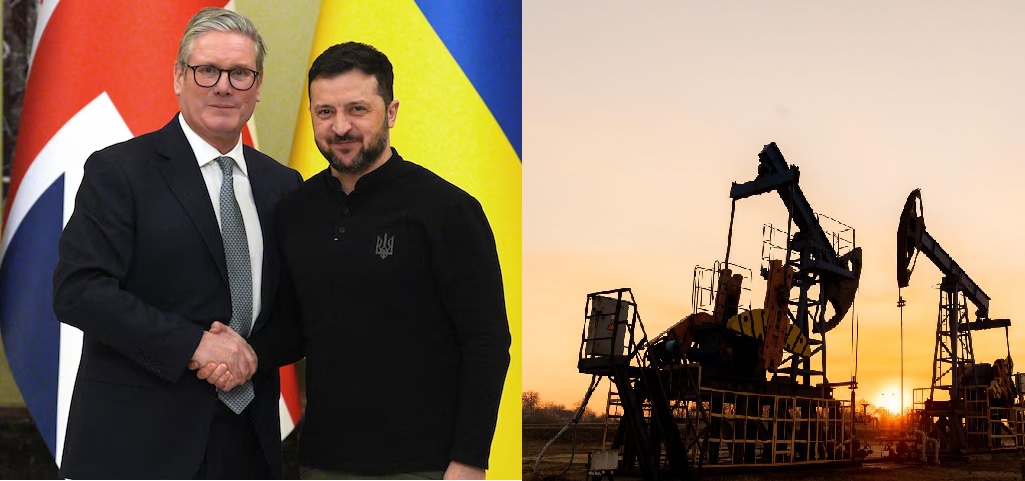
LONDON, Feb. 24, 2026 : The United Kingdom has introduced its largest sanctions package against Russia since 2022, announcing nearly 300 new measures on the fourth anniversary of Moscow’s full-scale invasion of Ukraine. The package targets Russia’s energy exports, military supply chains, financial institutions and associated international networks, according to a UK government press release issued on February 24.
The measures are designed to further reduce revenue streams supporting Russia’s war effort and to tighten enforcement against sanctions evasion mechanisms, including oil trading structures operating outside Western regulatory systems.
Energy Sector and Pipeline Operator Targeted
A central component of the package is the designation of PJSC Transneft, the state-controlled company responsible for transporting more than 80% of Russia’s crude oil exports through its extensive pipeline network for oil and petroleum products.
The UK also sanctioned 175 companies linked to the Dubai-based 2Rivers oil network. The network, previously associated with Coral Energy Group and linked to individuals including Tahir Garayev, has been identified by British authorities as one of the largest operators involved in trading Russian crude oil through what is commonly referred to as the “shadow fleet.”
As part of the enforcement action, 48 oil tankers connected to these operations were designated. The shadow fleet typically consists of older vessels that operate outside standard Western insurance frameworks and tracking practices, including ship-to-ship transfers and disabling of automatic identification systems to facilitate crude exports while avoiding compliance with the G7 price cap mechanism.
The UK further sanctioned Maritime Mutual Insurance Association, a New Zealand-based marine insurer reported to be facilitating shipments linked to Russian oil exports.
LNG and Nuclear Sector Restrictions
The sanctions package also addresses Russia’s liquefied natural gas (LNG) and civil nuclear sectors.
Six LNG-related targets were designated, including vessels, traders, and the Portovaya and Vysotsk export terminals located in the Baltic Sea. These terminals play a role in Russia’s LNG export operations to international markets.
In the nuclear sector, three civil nuclear energy companies were sanctioned along with two individuals associated with overseas nuclear contract negotiations connected to Rosatom Energy PJSC. The individuals named include Andrei Rozhdestvin and Ilya Vergizayev, identified in connection with international nuclear installation agreements.
Military Supply Chain and Technology Controls
To restrict the resupply of Russia’s armed forces, the UK designated 49 entities and individuals involved in supplying microelectronics, machine tools, drone components and other technology used in weapons systems manufacturing.
These measures are aimed at disrupting procurement networks that source components internationally for use in unmanned aerial vehicles and other military equipment deployed in Ukraine.
Financial Sector and Media Designations
The financial measures include sanctions on nine Russian banks involved in processing cross-border payments. The restrictions are intended to limit Russia’s access to international financial markets and complicate transaction settlements.
In addition, two Georgian television channels — Imedi TV and POSTV — were sanctioned for broadcasting state-aligned disinformation related to the war.
Under the expanded regime, the UK has now sanctioned more than 3,000 individuals, entities and vessels connected to Russia since 2022.
Legal and Transport Restrictions
The newly announced designations impose asset freezes, prohibitions on trust services, director disqualifications and transport restrictions on designated ships and aircraft. The measures are structured to increase operational costs for oil trading networks that have redirected exports to markets including China, India and Turkey.
According to UK government assessments, Russian oil revenues are currently at their lowest level since 2020. Western officials estimate that cumulative international sanctions have deprived Russia of approximately $450 billion in potential revenue over the past four years.
UK Support Package for Ukraine
The sanctions announcement coincided with a visit to Kyiv by UK Foreign Secretary Yvette Cooper. During the visit, Cooper announced an additional £30 million in funding for Ukraine.
Of this amount, £25 million is allocated for repairing and strengthening Ukraine’s damaged energy infrastructure and supporting displaced civilians. A further £5 million is designated for international justice and accountability initiatives related to alleged war crimes connected to the conflict.
The additional funding brings total UK support for Ukraine to £21.8 billion since the start of the war.
Separately, Minister for Europe Stephen Doughty participated in related discussions at the United Nations Security Council in New York on the anniversary of the invasion.
The measures were formally detailed in the UK government’s sanctions notice and accompanying press release issued on February 24, 2026.
——— End of Article ———