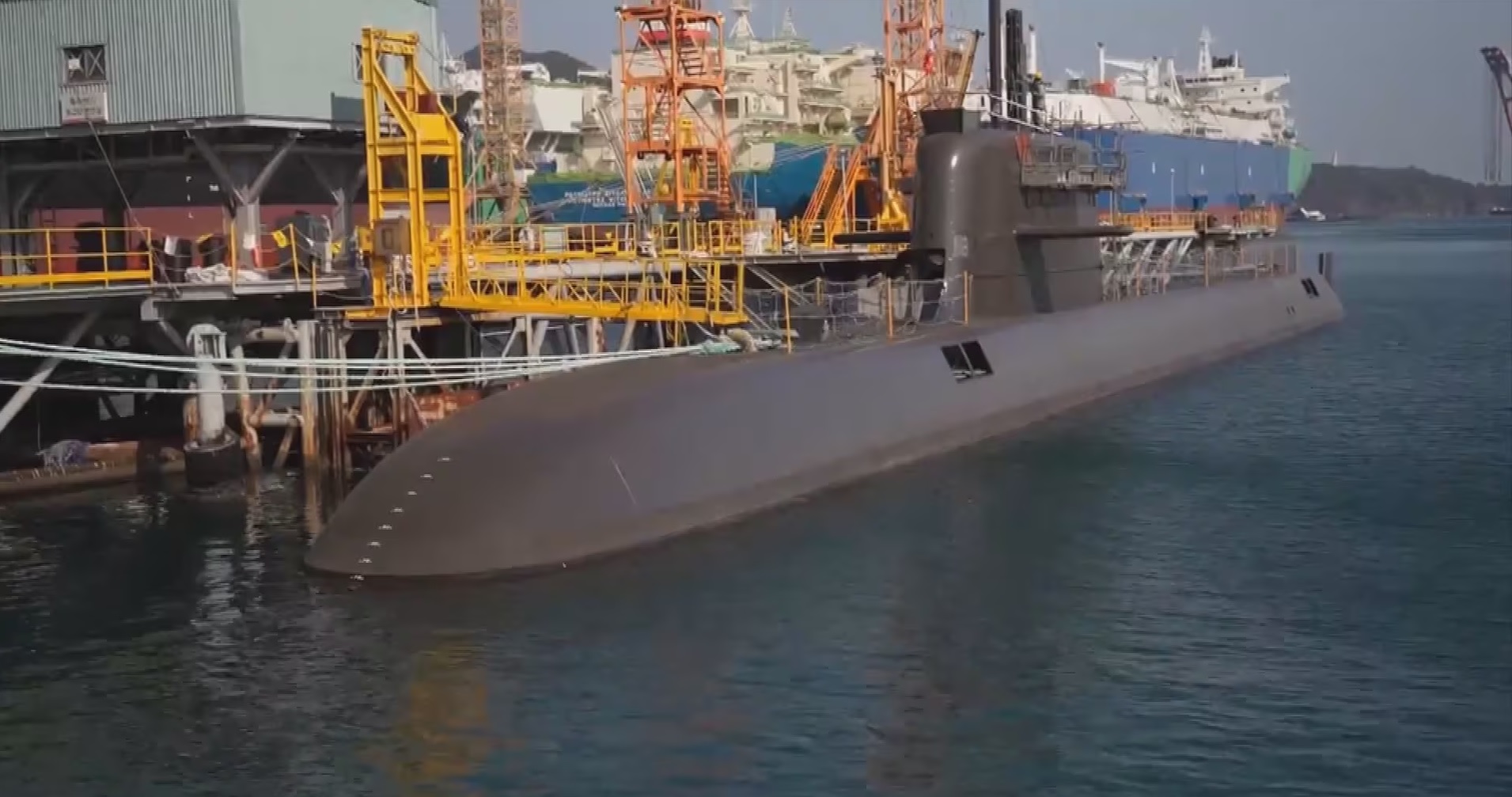
GEOJE, South Korea : Canada’s Secretary of State for Defence Procurement, Stephen Fuhr, visited the Hanwha Ocean shipyard in Geoje this week as part of ongoing engagement related to Canada’s Canadian Patrol Submarine Project (CPSP). While the visit was formally focused on naval procurement, it also became a platform for South Korea’s Hanwha Group to present a wider industrial and defense cooperation proposal covering land, sea, and industrial manufacturing sectors.
According to officials familiar with the discussions, the proposal goes well beyond the supply of conventionally powered submarines and outlines a long-term partnership centered on domestic production, technology transfer, and private-sector collaboration in Canada.
Submarine Program at the Core of Discussions
The Geoje visit centered on Hanwha Ocean’s bid for the CPSP, which seeks to replace the Royal Canadian Navy’s aging Victoria-class submarines. Hanwha is offering a variant of its KSS-III Batch-II diesel-electric submarine, with localized sustainment and industrial participation as part of the bid.
As part of the naval package, Hanwha proposed establishing a torpedo manufacturing facility in Canada to support fleet readiness and sovereign sustainment requirements. Officials indicated that the facility would be designed to support both operational needs and long-term maintenance of the submarine force.
While Canada’s current requirement remains non-nuclear submarines, sources noted that South Korea’s parallel work on nuclear-propulsion technologies for future platforms was discussed in general terms. No formal proposal involving nuclear-powered submarines was made, but analysts suggested that sustained cooperation could provide future strategic options, particularly for Arctic operations.
Land Systems and Firepower Alignment
Beyond naval systems, Hanwha’s proposal includes a land combat package aligned with ongoing and anticipated Canadian Army modernization programs. This includes the K9 Thunder, the K239 Chunmoo, and the Redback IFV.
Defense officials noted that these systems correspond closely with Canada’s requirements for long-range precision fires and a future infantry fighting vehicle to replace aging platforms. The Chunmoo system has attracted international attention following its adoption by Poland in the Homar-K configuration, supporting guided rockets and tactical missile options.
Proposal for Domestic Manufacturing
A central element of the Hanwha offer is the construction of a heavy armored vehicle manufacturing facility in Canada. The proposed plant would mirror the Hanwha Armoured Vehicle Centre of Excellence in Geelong, Australia, supporting local production of Redback IFVs and related systems.
Industry sources said the Canadian facility would enable domestic assembly, testing, lifecycle maintenance, and export-oriented production where permitted. The emphasis is on long-term industrial employment and integration with Canadian supply chains, rather than limited final-assembly work.
Broader Industrial and Private-Sector Cooperation
Hanwha’s proposal also extends into non-defense industrial cooperation. Company representatives outlined plans for collaboration with Canadian heavy industry, the automotive sector, and the aerospace industry. This includes previously announced private-sector investments and partnerships involving steel production, satellite communications, and space systems manufacturing.
Officials indicated that these initiatives are intended to support both military programs and civilian industrial growth, linking defense procurement with broader economic development objectives.
Hanwha’s Growing Presence in Canada
The proposal builds on several years of engagement by Hanwha Aerospace, Hanwha Systems, and Hanwha Ocean at Canadian defense exhibitions and industry forums. Company officials said this sustained presence reflects an intention to establish long-term partnerships rather than transactional sales.
By contrast, South Korea’s other major shipbuilder, HD Hyundai Heavy Industries, is managing a full order book but also hosted Canadian officials at its Pangyo Global R&D Center, focusing on digital shipbuilding and lifecycle management technologies.
Next Steps in the CPSP Process
The Canadian government is expected to continue technical evaluations and industrial negotiations with shortlisted bidders later this year. Officials emphasized that no procurement decisions have been made and that proposals will be assessed against operational requirements, cost, delivery timelines, and domestic industrial benefits.
The discussions in Geoje highlighted the growing scale of industrial participation tied to major defense programs, with Canada’s submarine replacement increasingly linked to domestic manufacturing capacity and long-term defense sustainment.
——— End of Article ———