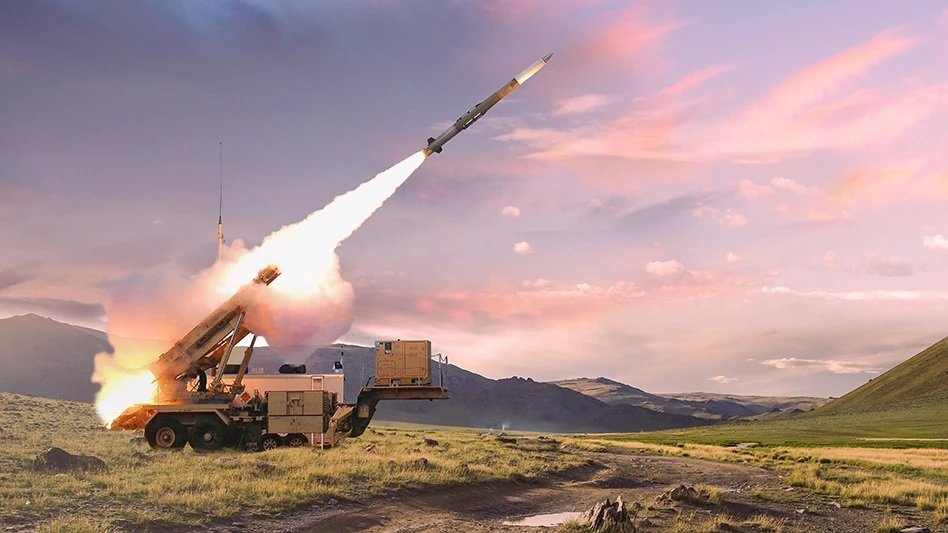
As Prime Minister Narendra Modi prepares to visit Brazil between July 5 and 8 for the BRICS summit and bilateral talks, one of the most strategic areas of focus is defence cooperation. Among the key agendas under discussion is Brazil’s growing interest in acquiring India’s Akash air-defence system—a proven indigenous weapon that recently demonstrated remarkable combat effectiveness during the high-stakes Operation Sindoor.
This potential defence pact could mark a new chapter in Indo-Brazilian military ties, with Akash at its center—not just as a missile system, but as a symbol of India’s maturing defence manufacturing ecosystem.
Brazil Turns to India for Air Defence Modernization
Brazil has long lacked a credible, medium-range, mobile surface-to-air missile system capable of countering evolving aerial threats such as cruise missiles, UAVs, and standoff munitions. With growing security needs, Brazil is now actively evaluating systems that offer reliability, affordability, and combat experience.
According to recent reports from BharatShakti and The Economic Times, Brazilian defence officials have already begun technical assessments of the Akash system, with discussions leaning toward a government-to-government deal possibly backed by EXIM Bank financing. The agreement could also pave the way for co-production under a “Make in Brazil” model, aligning with Brazil’s local manufacturing push.
Akash’s Rise After Operation Sindoor
Akash’s reputation on the global stage surged dramatically following its heroic performance in Operation Sindoor, a four-day military conflict in May 2025 in which Pakistan launched a coordinated assault using Turkish-supplied Bayraktar TB2 drones and Fatah-1 short-range ballistic missiles.
In that engagement, the Indian Air Defence Forces, supported by the Akash and its digitized command system Akashteer, achieved a 100% kill rate, intercepting over 600 hostile aerial targets without a single failure. Akash’s radar-guided interceptors demonstrated high precision, especially in downing Turkish drones and neutralizing multiple Fatah-1 missiles that were aimed at key Indian military installations.
Akash’s success not only drew global attention but also highlighted its capability to perform under saturation attack conditions—a vital benchmark for any modern air defence system.
The Akash Family: Three Variants and Growing
India’s Akash air defence system has evolved into a family of versatile solutions tailored for various threat spectrums. Currently, there are three primary variants:
-
Akash Mk-I
-
Range: 25–30 km
-
Altitude: Up to 18 km
-
Radar: Rajendra 3D phased array
-
Guidance: Command guidance
-
Warhead: 60 kg fragmentation
-
Ideal for neutralizing aircraft, UAVs, and helicopters.
-
-
Akash Mk-II (Under advanced development)
-
Extended range of 40–50 km
-
Enhanced seeker and ECCM features
-
Designed for faster response and higher kill probability in complex jamming environments.
-
-
Akash-NG (Next Generation)
-
Range: 70–80 km
-
Features: Active RF seeker, dual-pulse solid motor, canisterized launch
-
Capable of engaging cruise missiles, stealth drones, and fast maneuvering jets
-
Reduced reaction time and higher precision for saturated attack scenarios.
-
Each variant builds upon the last, offering increased range, accuracy, and survivability. The Akash-NG, in particular, has been tested with the Indian Air Force and is now entering production. Brazil’s interest reportedly centers around this next-gen model, due to its modular design and export-oriented roadmap.
A Strategic Complement to the S-400
While India has deployed Russian-made S-400 Triumf systems for long-range defence, the Akash fills the vital medium-range air defence layer, covering zones of 25–80 km. During Operation Sindoor, the Akash-S400 pairing proved especially effective: while the S-400 managed wide-area early tracking, Akash’s faster response and multiple-target engagement capability neutralized threats closer to the national airspace.
Brazil, which does not possess S-400 equivalents, views Akash as a cost-effective alternative to expensive Western and Russian systems—yet with the same level of battlefield credibility.
Why Akash Attracts the World Now
India has already exported Akash systems to countries like Armenia and received interest from Southeast Asian and African nations. After Operation Sindoor, demand has surged.
Key reasons for its global appeal include:
-
Battle-proven in real conflict, not just test ranges
-
100% interception accuracy against UAVs and SRBMs
-
Integrated ECCM capability to defeat jamming and decoys
-
Modular design for ease of deployment, even in remote terrains
-
Competitive pricing, estimated at 1/3rd of Western systems with similar performance
-
Export readiness, backed by EXIM financing and tech-transfer willingness
As Brazil seeks to modernize its armed forces, India is emerging as not just a defence supplier but a trusted strategic partner. PM Modi’s visit to Brazil in early July is expected to yield a series of military-to-military agreements, with the Akash air defence system likely to take center stage.
The growing popularity of Akash—especially the NG version—marks India’s coming-of-age moment in the global air defence market. Once seen as a regional player, India is now being recognized as a serious competitor to legacy producers like Raytheon, Almaz-Antey, and Rafael.
If the Brazil deal materializes, it could open the gates for a wider Latin American interest, firmly establishing Akash as the new front-runner in combat-proven, cost-effective missile defence.
From the deserts of Rajasthan to the diplomatic halls of Brasília, Akash is proving that Indian defence technology is ready to compete with the best in the world—and win.
——— End of Article ———