India’s land warfare capabilities are on the verge of a major leap forward with the upcoming land-based version of the BrahMos-NG (Next Generation) supersonic cruise missile. Once inducted, this lighter and more compact missile is expected to double or even triple the Indian Army’s current missile salvo strength, significantly enhancing its ability to strike quickly and decisively.
The BrahMos-NG is being developed as a more agile and compact version of the original BrahMos missile, which is already in service with the Indian Army, Navy, and Air Force. While the existing land-based BrahMos systems allow for only three missiles per launcher, the NG variant’s reduced size and weight could allow six to nine missiles to be loaded onto a single Transporter Erector Launcher (TEL) vehicle.
This enhanced capacity will dramatically boost the Army’s ability to execute salvo strikes—a combat strategy that involves launching multiple missiles in quick succession to overwhelm enemy air defenses. More missiles per launcher mean fewer vehicles needed for the same or greater firepower, making the force more mobile, lethal, and efficient in battlefield scenarios.
The technical edge of the BrahMos-NG lies in its compact design. Weighing around 1.3 tonnes, it is about half the weight of the original BrahMos (which weighs around 3 tonnes). Despite the size reduction, the NG version will retain a similar strike range of 290 kilometers, thanks to its advanced propulsion and lightweight airframe. It is also expected to fly at speeds exceeding Mach 2.8 (roughly 3,400 km/h), enabling it to reach high-value targets before they can react.
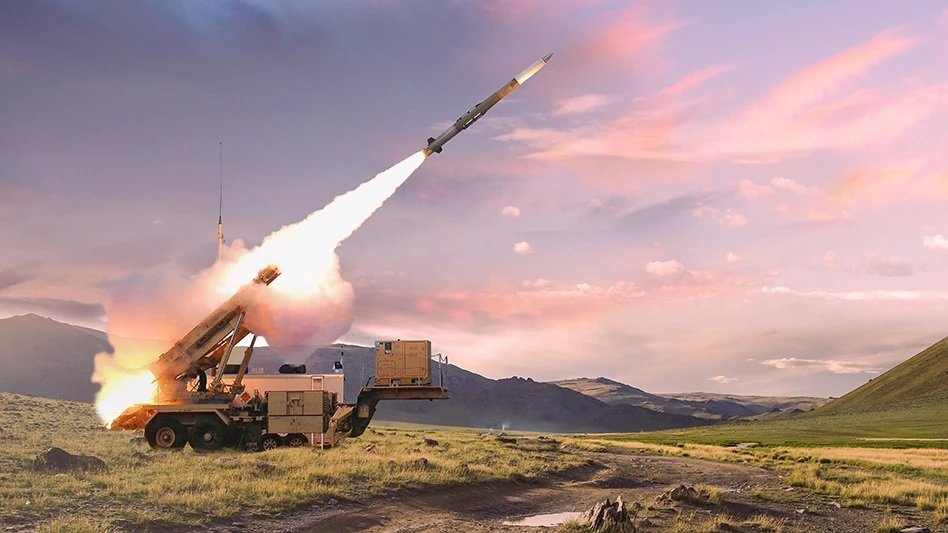
To ensure compatibility with the Army’s existing mobile launch platforms, the land-based BrahMos-NG will include a booster stage, giving it the necessary thrust at launch. This addition makes it suitable for rapid deployment across India’s varied terrain, from plains to mountainous regions.
Originally designed for the Indian Air Force to equip fighter jets like the Tejas LCA—which cannot carry the heavier standard BrahMos—the NG variant is now gaining the interest of the Indian Army due to its versatility and scalability. For the Air Force, it means more aircraft can be armed with supersonic cruise missiles. For the Army, it means more missiles in the field, less logistical footprint, and greater fire saturation in combat.
According to Sudhir Mishra, former head of BrahMos Aerospace, the Indian Army’s active interest in the land-based BrahMos-NG underscores the missile’s strategic and operational importance. It is a core part of India’s broader plan to modernize its armed forces while maintaining strategic autonomy and technological superiority.
The BrahMos-NG represents not just another weapon system, but a significant upgrade to India’s military posture. Its successful deployment across all three services would reinforce India’s precision-strike capabilities and strengthen its position as a powerful and technologically advanced military force in the region.
——— End of Article ———