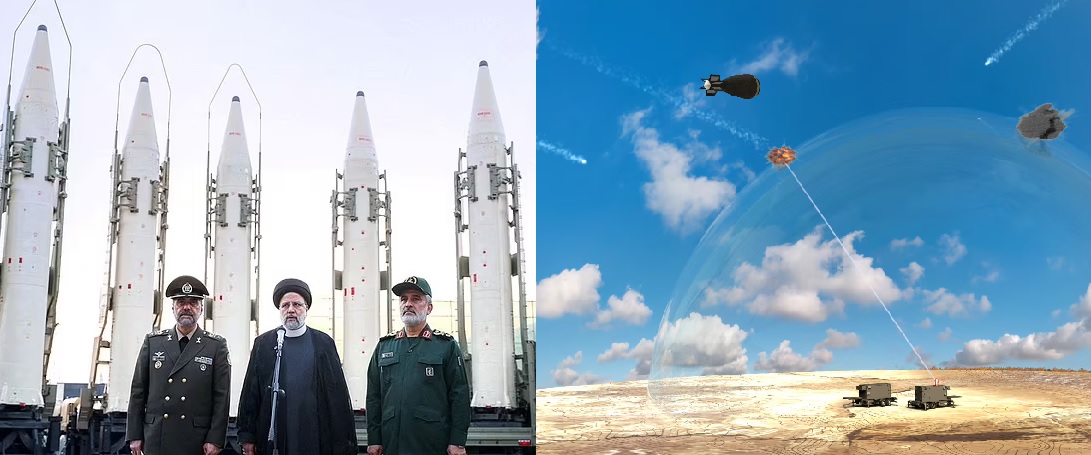
Tensions between Iran and Israel are once again reaching a dangerous peak. Intelligence reports cited by The New York Times warn that Tehran is preparing for a much larger and deadlier confrontation than before. Iran’s missile factories are working around the clock, and its military is reportedly building the ability to launch up to 2,000 missiles at once at Israel — a dramatic escalation compared to the 500 missiles fired over 12 days during the June 2025 clashes.
This time, both countries are moving beyond ordinary military posturing. Iran is preparing for a fast, overwhelming strike, while Israel is strengthening its defenses — not only against ballistic missiles but also developing new systems to intercept hypersonic weapons, a threat that could soon enter the Middle East battlefield.
Iran’s New Plan: Overwhelm, Not Contain
Iran’s military planners appear to have drawn lessons from previous engagements. Instead of smaller, controlled retaliations, Tehran now aims to unleash a single, massive wave of missile fire designed to overwhelm Israel’s air defenses.
The missiles Iran is producing — including Zolfaghar, Qiam, and Emad variants — have ranges of up to 2,000 kilometers, easily covering all of Israel. By launching them simultaneously, Iranian strategists hope to exhaust Israel’s interceptors and sensors, allowing some warheads to hit key targets such as military bases, energy facilities, and command centers.
U.S. intelligence assessments also indicate that despite former President Donald Trump’s claim that he “destroyed” Iran’s nuclear program, most of Iran’s uranium stockpile survived and has been moved to secret underground facilities. These sites are now believed to be heavily fortified, suggesting Tehran expects airstrikes and is preparing to endure them.
Israel’s Response: Stronger Shields and Smarter Weapons
Israel is not waiting for the next attack to happen. The Israeli Defense Forces (IDF) have accelerated upgrades across their entire defensive network and expanded cooperation with U.S. and European partners on missile tracking and counter-hypersonic technology.
The backbone of Israel’s defense remains its multi-layered air defense system, which includes:
-
Iron Dome – intercepts short-range rockets and mortars.
-
David’s Sling – targets medium-range ballistic and cruise missiles.
-
Arrow 2 and Arrow 3 – intercepts long-range ballistic threats, even outside the atmosphere.
After Iran’s missile attack in June 2025, Israel enhanced its radar coverage and improved coordination between defense layers. However, military officials acknowledged that a 2,000-missile salvo could test even the most advanced systems.
That realization led Israel to unveil its newest weapon: Iron Beam — the first laser-based air defense system ever deployed for real-world protection.
Iron Beam: The First Operational Laser Defense System
The Iron Beam, developed by Rafael Advanced Defense Systems, has now entered active service, marking a historic milestone for Israel’s defense capabilities. Using a high-energy laser, the system destroys incoming rockets, mortars, drones, and short-range missiles by heating and disintegrating them mid-air.
Unlike conventional interceptors, which cost thousands of dollars per missile, each Iron Beam shot costs only a few dollars of electricity. This makes it the perfect counter to the kind of mass-attack strategy Iran is preparing for — especially against cheap, numerous projectiles.
Israel’s Defense Minister Yoav Gallant announced earlier this year that Iron Beam units are already deployed in southern Israel and will soon be stationed near major cities. It can neutralize threats within a 10-kilometer radius and will be upgraded to cover larger distances in future versions.
“For the first time, Israel has a defense weapon that intercepts at the speed of light,” Gallant said.
“Iron Beam will become a key layer in protecting the country against rockets and drones.”
Next Step: Defending Against Hypersonic Missiles
Beyond defending against traditional ballistic and cruise missiles, Israel is also developing systems to intercept hypersonic weapons — missiles that travel at more than five times the speed of sound (Mach 5) and can maneuver unpredictably.
Iran, along with Russia and China, has shown growing interest in hypersonic technology. Iranian state media even hinted at the development of a prototype hypersonic missile in 2024. Though unverified, such announcements have alarmed Israeli and Western defense planners.
In response, Israel Aerospace Industries (IAI) and the Defense Ministry’s Missile Defense Organization (IMDO) have started work on an advanced interceptor known as Arrow-4 and other classified projects aimed at tracking and neutralizing hypersonic threats. These new systems are being designed to react within seconds, combining next-generation radar sensors, AI-based tracking, and possibly laser-assisted interception.
A senior Israeli defense scientist stated that Israel “cannot afford to wait” until hypersonic missiles appear in the region.
“We are developing a shield for the threats of tomorrow — fast, maneuvering, and unpredictable weapons. Hypersonic interception is no longer science fiction for Israel.”
If successful, Israel would become one of the first nations — after the U.S. — to possess operational hypersonic defense capability.
Building a Multi-Layered Future Shield
With Iron Beam now operational and hypersonic defense under development, Israel’s future air shield will consist of multiple, overlapping layers:
-
Iron Dome and Iron Beam for short-range threats.
-
David’s Sling for medium-range missiles.
-
Arrow 2, Arrow 3, and the upcoming Arrow 4 for long-range and hypersonic threats.
This setup is intended not only to protect against Iran but also to counter growing dangers from Hezbollah in Lebanon, militias in Syria and Iraq, and potential Houthi missile attacks from Yemen.
The Countdown to Conflict
Both Iran and Israel are racing toward a confrontation that many experts say is inevitable. Iran is producing more missiles and dispersing them in hidden silos, while Israel is responding with lasers, advanced interceptors, and preparations for preemptive strikes.
Tehran believes that a massive missile attack can break Israel’s defenses. Israel believes that technology and speed will keep it safe.
But as both sides continue to prepare, the risk of war grows by the day. As one Israeli official put it:
“The next war will happen in minutes, not days — with hundreds or thousands of missiles in the air.”
In the race between Iran’s missiles and Israel’s lasers, one thing is clear: the Middle East is standing at the edge of a new era in warfare — where the outcome will depend on who can strike faster and defend smarter.
——— End of Article ———