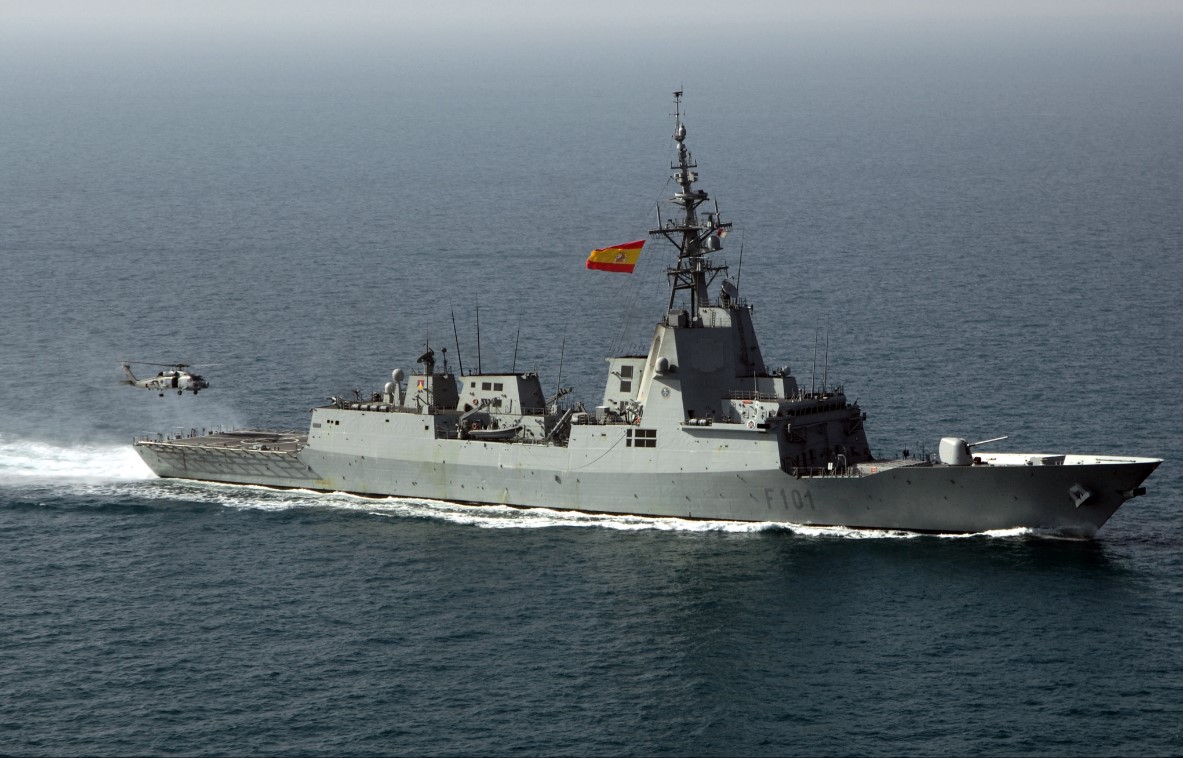
MADRID/WASHINGTON, July 1, 2026 — The U.S. Navy has awarded Lockheed Martin a $103.9 million contract to begin the initial phase of the Spanish Navy's Álvaro de Bazán-class (F-100) frigate mid-life modernization program. The contract, awarded on June 26, 2026, marks the first procurement phase of a broader effort to modernize Spain's principal surface combatants and maintain their interoperability within the U.S.-developed Aegis naval defense architecture.
The contract is structured as a cost-only undefinitized contract action (UCA), allowing engineering activities to begin while the final scope, pricing, and technical requirements are refined. Of the total award, $51.4 million has been immediately obligated to procure long-lead materials, conduct preliminary engineering work, and establish specialized testing facilities ahead of the physical modernization of the ships.
Approximately 90 percent of the engineering and planning work will be carried out at Lockheed Martin's naval combat systems facility in Moorestown, New Jersey, which has served as the company's primary center for Aegis combat system development since the 1970s. Additional work will be performed in Clearwater, Florida, and Madrid, Spain.
The contract was awarded on a sole-source, non-competitive basis under international agreement authority because the F-100 frigates are built around Lockheed Martin's proprietary Aegis combat system architecture, making the company the only qualified integrator for the modernization effort.
First Phase of $1.7 Billion Modernization Program
The contract represents the first active procurement following the January 2026 approval by the U.S. State Department of a Foreign Military Sale (FMS) package for Spain valued at an estimated $1.7 billion.
The broader modernization program is expected to include upgraded Aegis Weapon System shipsets, MK 41 Baseline VIII Vertical Launching Systems, and Next Generation Surface Search Radars, along with supporting combat system integration and testing.
The mid-life upgrade is intended to extend the operational service life of the frigates while improving their ability to integrate modern weapons, advanced electronic warfare systems, and updated radar technologies required to address evolving air, missile, and surface threats.
Spain's Most Capable Surface Combatants
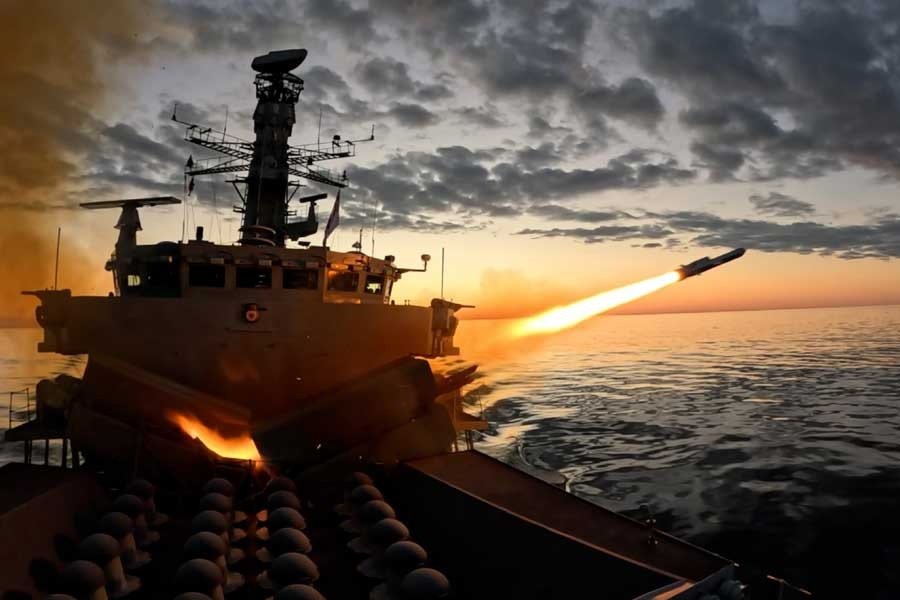
Built by Spanish shipbuilder Navantia, the Álvaro de Bazán-class frigates entered service beginning in 2002. Each vessel displaces approximately 6,050 tonnes, measures 147 meters (482 feet) in length, and was designed from the outset around the AN/SPY-1D phased-array radar and the Aegis combat management system.
The class was historically significant as the first non-U.S. warship design built from inception with the full Aegis combat system, providing advanced air defense capabilities and allowing the ships to track and engage multiple aerial and missile threats simultaneously.
Spain currently operates five F-100 frigates:
- Álvaro de Bazán (F-101)
- Almirante Juan de Borbón (F-102)
- Blas de Lezo (F-103)
- Méndez Núñez (F-104)
- Cristóbal Colón (F-105)
Over the past two decades, the fleet has participated in NATO operations, maritime security missions, and multinational deployments across the Mediterranean, Atlantic, and other regions.
Operational Experience Supports Modernization
One of the class's most notable recent deployments occurred in December 2023, when Méndez Núñez (F-104) was deployed to the Red Sea as part of an international maritime security coalition responding to drone and missile attacks launched by Houthi forces against commercial shipping.
According to Spanish Defense Minister Margarita Robles, the deployment represented the first time an Álvaro de Bazán-class frigate operated in a contested, live-fire environment. The mission provided valuable operational data on the performance of the Aegis combat system under real combat conditions and helped inform future modernization requirements.
Importance for Allied Navies
The Spanish Navy's F-100 modernization program is also being closely monitored by allied nations because the frigate's design formed the basis for other Aegis-equipped warships.
Norway's Fridtjof Nansen-class frigates and Australia's Hobart-class destroyers both share significant design characteristics and combat system architecture derived from the F-100 program. As a result, engineering solutions, software integration methods, and system upgrades developed during Spain's modernization are expected to provide a reference for future mid-life upgrades in both fleets.
Once completed, the modernization program will extend the operational life of Spain's F-100 frigates while ensuring they remain fully compatible with U.S. Navy and NATO naval operations and capable of addressing evolving maritime security requirements.
——— End of Article ———