LONDON/TOKYO, July 1, 2026 — Japan, the United Kingdom, and Italy have agreed to extend the development contract for the Global Combat Air Programme (GCAP) through the end of 2027, providing long-term funding certainty for the trilateral sixth-generation fighter aircraft project after months of budget-related uncertainty.
The 18-month contract extension follows the publication of the United Kingdom's Defence Investment Plan on June 30, 2026, which unlocked the financial commitments needed to keep the multinational programme on schedule. The agreement resolves a funding impasse that had forced the project to operate under temporary bridge funding since April.
The extension is expected to be formally signed between the GCAP International Government Organisation (GIGO), which manages the programme on behalf of the three governments, and Edgewing, the joint venture responsible for the aircraft's design and development.
UK Budget Approval Resolves Funding Uncertainty
Earlier this year, delays in the UK's long-term defence budget created uncertainty for the programme and its industrial partners. Without multi-year funding commitments, the three nations approved a temporary three-month bridge contract worth £686 million (approximately $907 million) beginning on April 2, 2026, allowing development work to continue until the end of June.
The temporary arrangement raised concerns about the programme's future. BAE Systems had warned that more than 4,000 UK-based engineers working on GCAP could be reassigned to other defence programmes if long-term funding was not secured. The uncertainty also prompted Italy to revise its programme cost estimates, while Japanese defence officials reportedly evaluated contingency options should the project experience further delays.
The situation changed after British Prime Minister Keir Starmer announced the UK's Defence Investment Plan on June 30. The plan allocates more than £8 billion (approximately $10.6 billion) to GCAP over the next four years as part of a broader £15 billion increase in UK defence investment, enabling the programme to move forward with long-term financial stability.
The United Kingdom had already committed around £2 billion to the programme since 2021, and the latest budget settlement provides the additional funding required for continued development.
Edgewing Continues Development Toward Demonstrator Flight
GCAP was formally established by treaty in late 2023 to develop a sixth-generation combat aircraft designed to replace the Eurofighter Typhoon fleets operated by the United Kingdom and Italy, as well as Japan's Mitsubishi F-2 fighter aircraft.
Industrial development is led by Edgewing, a joint venture established in June 2025 and headquartered in Reading, England. The company is equally owned by BAE Systems of the United Kingdom, Leonardo of Italy, and Japan Aircraft Industrial Enhancement Co. Ltd., a consortium supported by Mitsubishi Heavy Industries.
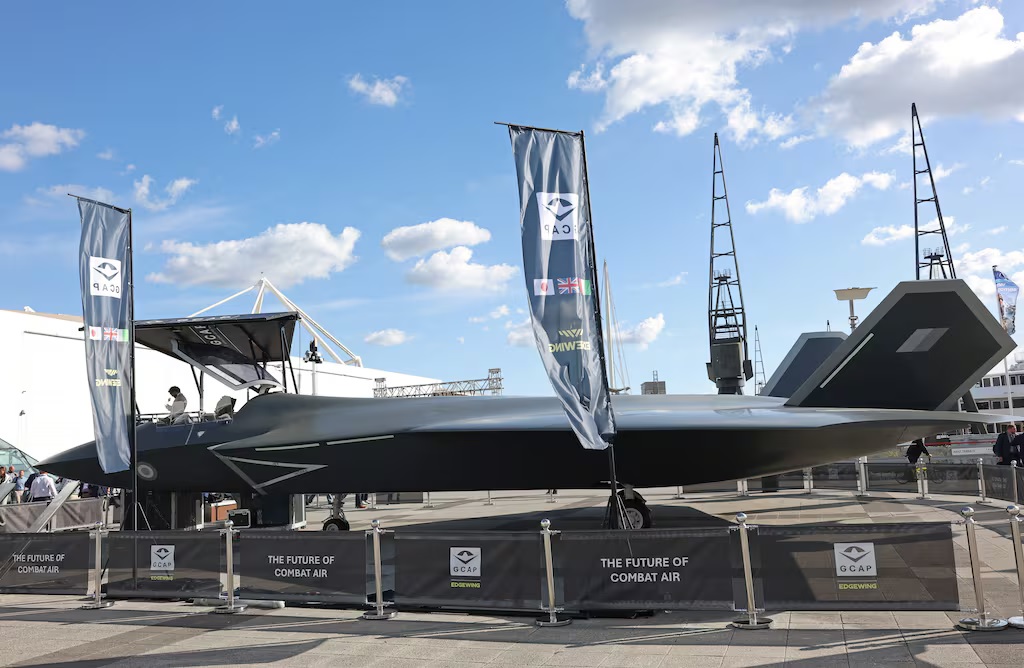
The contract extension provides Edgewing with the financial certainty needed to retain its workforce and continue development of the programme's demonstrator aircraft. The prototype is expected to make its maiden flight before the end of 2027 and will serve as a platform to evaluate key technologies, including advanced stealth design, next-generation sensors, electronic warfare capabilities, and new propulsion systems.
The demonstrator will also be the first British combat-air prototype developed since the Eurofighter programme nearly four decades ago.
Service Entry Target Remains 2035
The three partner nations continue to target 2035 for the aircraft's entry into operational service. Japan has repeatedly stated that this schedule is a critical requirement because it coincides with the planned retirement of its aging Mitsubishi F-2 fleet.
Japanese officials have maintained that any changes to the programme, including the addition of new partner nations, should not delay the planned 2035 service entry date.
International Interest Continues
GCAP has attracted growing international attention as development progresses. Canada joined the programme as an observer in March 2026, while Saudi Arabia has continued to express interest in becoming a future participant.
Reports that the rival Future Combat Air System (FCAS) programme involving France, Germany, and Spain has encountered significant difficulties have also increased speculation that Germany could consider closer involvement with GCAP as it evaluates future combat aircraft options.
Despite this international interest, the existing partners have emphasized that maintaining the programme schedule remains the priority. Japan, in particular, has made clear that expanding membership should not affect the project's 2035 operational deadline.
With funding now secured through 2027, the contract extension provides greater stability for the programme's industrial base and allows development to continue toward the demonstrator aircraft's first flight while supporting work on the technologies that will form the foundation of the future sixth-generation combat air system.
——— End of Article ———