KYIV — Ukraine has successfully tested a domestically developed ballistic missile, marking a significant step in the country's efforts to strengthen its indigenous missile capabilities. The successful launch took place on July 14, the same day President Volodymyr Zelenskyy’s government was dismissed as part of a cabinet reshuffle.
The announcement was made by outgoing Defence Minister Mykhailo Fedorov in a farewell message reflecting on his seven-month tenure at the Ministry of Defence. Fedorov confirmed that the missile program was developed under the ministry's responsibility and described the timing of the successful test as symbolic, as it coincided with the government's dismissal.
According to Fedorov, the development team made several key improvements during the program, including revising the missile's technical requirements, increasing its targeting accuracy, and reducing overall production costs by 30 percent. He did not identify the missile by name but said the project represented an important advancement for Ukraine's domestic missile industry.
Ballistic Missile Marks New Capability
The successful test represents an important development in Ukraine's long-range strike capability. Unlike drones and cruise missiles, which fly relatively low and are powered throughout most of their flight, ballistic missiles follow a different trajectory. They are launched by rocket propulsion on a steep ascent before following a high-speed arc toward their target, reducing the time available for air defence systems to respond.
Ukraine has increasingly focused on expanding its domestic missile production as part of broader efforts to reduce dependence on foreign military supplies while strengthening its defence industry during the ongoing war.
Analysts Point to Sapsan Missile System
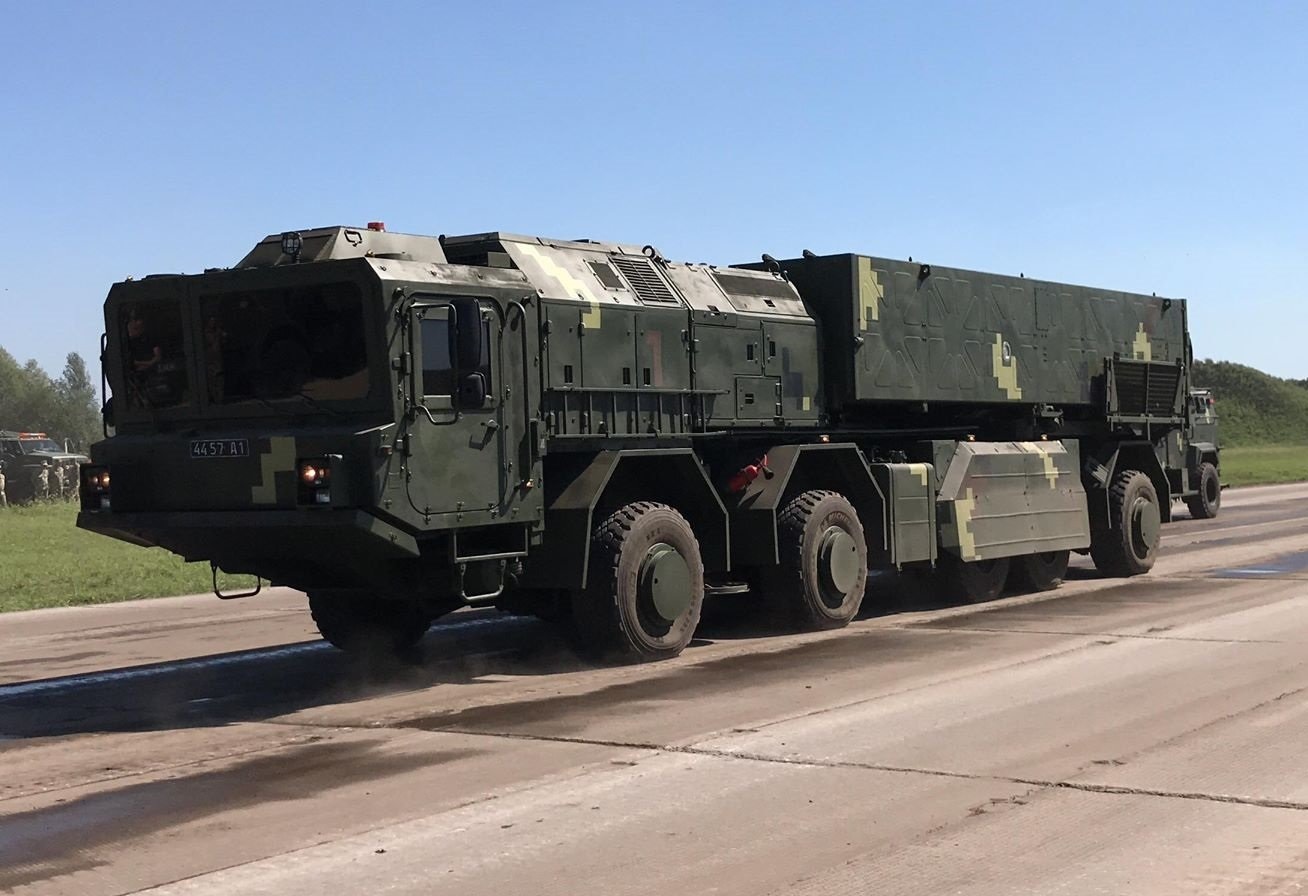
Although Fedorov did not disclose the missile's identity, Ukrainian defence publication Militarnyi assessed that the tested system is likely the 1KR1 Sapsan operational-tactical ballistic missile system, also known by its export designation Hrim-2.
Analysts noted that Fedorov specifically described the program as a Ministry of Defence project, making it unlikely to be the privately developed FP-7 or FP-9 ballistic missiles produced by Ukrainian company Fire Point.
The Sapsan missile system, developed by the state-owned KB Pivdenne design bureau, reportedly entered serial production and systematic operational use in 2025. According to publicly available information, the missile can carry a 480 to 500-kilogram warhead to ranges of up to 500 kilometers, with reported speeds between Mach 5.2 and Mach 7.
Procurement Reforms and Lower Production Costs
Fedorov linked the missile program's achievements to wider procurement reforms introduced during his time as Defence Minister.
He has promoted greater competition in defence procurement by expanding the use of open tenders instead of traditional closed purchasing processes. Earlier, Fedorov said a competitive tender for 155 mm artillery shells reduced the unit price by approximately $1,000 per shell, generating total savings of around $100 million for Ukraine.
It remains unclear whether the reported 30 percent reduction in ballistic missile production costs resulted from procurement reforms, engineering improvements, or a combination of both.
Long-Term Missile Production Plans
Ukraine has accelerated investment in domestic missile production over the past two years. President Volodymyr Zelenskyy previously confirmed progress toward mass production of the Sapsan missile system in 2025.
In March 2026, Ukraine's Defence Procurement Agency signed long-term contracts with domestic manufacturers covering both cruise missiles and ballistic missiles. Initial deliveries are expected to begin this year, with additional deliveries scheduled through 2027.
Earlier in June 2026, Fedorov also stated that funding for Ukraine's ballistic missile development program had been fully secured, describing long-range missile capabilities as an important part of the country's defence strategy.
Test Coincides With Political Transition
The missile launch occurred during a major political transition in Kyiv. Parliament voted to dismiss the government, leading to the resignation of the entire cabinet, including Fedorov.
Following the reshuffle, lawmakers approved Serhii Koretskyi, the former head of state energy company Naftogaz, as Ukraine's new prime minister.
The cabinet changes have triggered protests in central Kyiv and added political pressure on President Volodymyr Zelenskyy's administration as the war continues. Despite the leadership transition, the successful ballistic missile test indicates that Ukraine's domestic defence development programs are continuing under long-term procurement and production plans.
Officials have not released additional technical information about the missile's performance, range during the test, or operational deployment timeline, citing security considerations.
Source : Social Post
——— End of Article ———