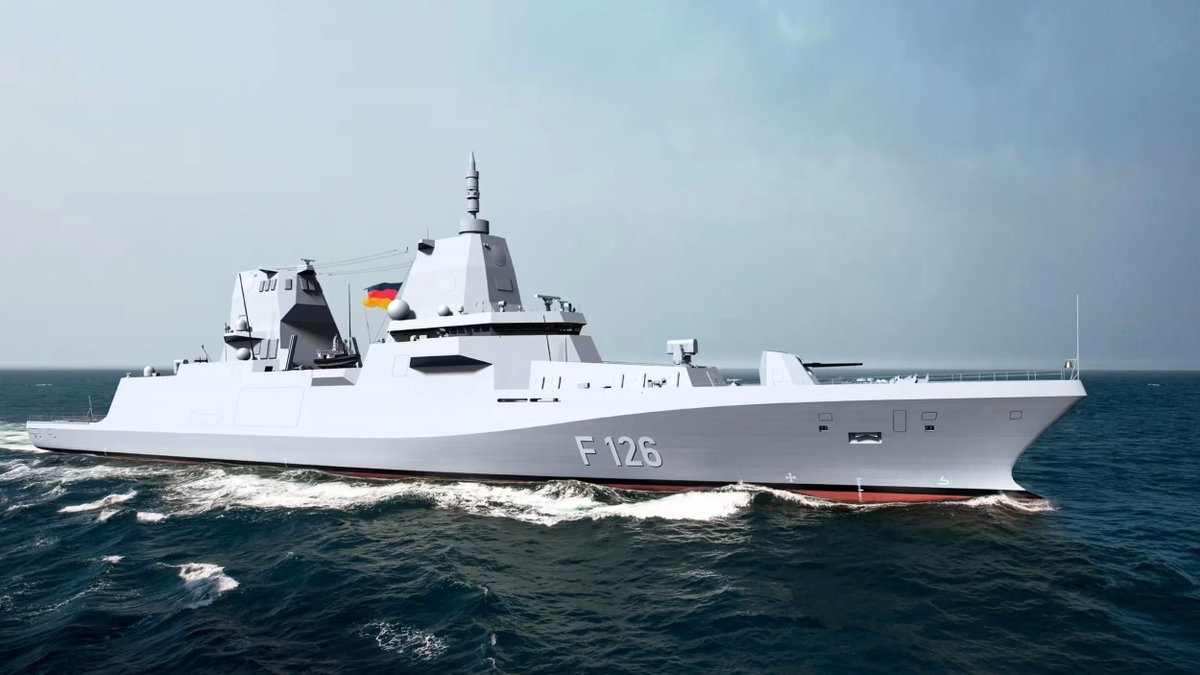
STOCKHOLM — Swedish defense company Saab has secured a contract worth approximately SEK 8.7 billion (around US$830 million) from thyssenkrupp Marine Systems (TKMS) to supply and integrate combat systems, sensors, and composite structures for the German Navy's new MEKO A-200 DEU class frigates.
Under the agreement, Saab will provide equipment for four frigates that will be built in Germany, with TKMS serving as the prime contractor for the program. Saab's deliveries are scheduled to take place between 2029 and 2032. The contract also includes an option to equip additional frigates if Germany expands the program in the future.
Contract Supports German Navy Modernization
The order is part of Germany's broader effort to modernize its naval fleet and strengthen its capabilities in air, surface, and underwater warfare. The new MEKO A-200 DEU frigates are expected to improve the German Navy's operational readiness while supporting interoperability with NATO partner navies through modern combat management and command-and-control systems.
Saab said the integrated combat systems will help simplify joint operations and information sharing with allied naval forces that operate compatible command-and-control networks.
Commenting on the contract, Micael Johansson, President and CEO of Saab, said the agreement reflects the company's long-standing partnership with Germany and the Bundeswehr.
"It is with great pride that we continue to build on our long and strong relationship and commitment to Germany and the Bundeswehr, while together with TKMS strengthening the German Navy. These deliveries will significantly enhance the Navy's anti-air-, anti-submarine- and anti-surface warfare capabilities," Johansson said.
Saab to Deliver Combat Systems, Radars and Composite Structures
As part of the contract, Saab will equip the frigates with its 9LV Combat System, which combines a Combat Management System (CMS) and a Fire Control System (FCS). Together, these systems manage sensor data, coordinate weapons, and support command decisions during naval operations.
The sensor package includes:
- Sea Giraffe 4A Fixed Face, a long-range Active Electronically Scanned Array (AESA) surveillance radar capable of detecting targets at distances of up to 400 kilometers and tracking more than 1,000 targets simultaneously.
- Sea Giraffe 1X, a lightweight multi-mission radar designed to detect low-flying aircraft, unmanned aerial systems, fast attack craft, and sea-skimming missiles at ranges of up to 75 kilometers.
- Passive sensor systems, which conduct electronic surveillance and detect threats without transmitting signals, helping improve situational awareness while reducing the vessel's electronic signature.
Composite Superstructures to Reduce Weight and Radar Signature
In addition to the combat systems and sensors, Saab will manufacture composite superstructures for the new frigates. Compared with conventional steel structures, composite materials reduce overall ship weight, improve corrosion resistance and structural durability, and help lower the vessels' radar signature.
The lighter structures are also expected to improve operational efficiency, support long-term maintenance, and enhance survivability in modern maritime environments.
Cooperation Between Saab and TKMS
The project combines Saab's naval combat-system technology with TKMS's shipbuilding expertise. While the frigates will be constructed in Germany, Saab will integrate the ships' combat systems and mission equipment during the delivery period from 2029 to 2032.
The agreement also provides an option to equip additional frigates beyond the initial four ships, allowing flexibility for future expansion of the German Navy's fleet.
The MEKO A-200 DEU program is expected to become an important element of Germany's naval modernization strategy over the coming decade by introducing updated combat systems, advanced surveillance capabilities, improved survivability, and enhanced interoperability for future national and NATO maritime operations.
Source : saab
——— End of Article ———