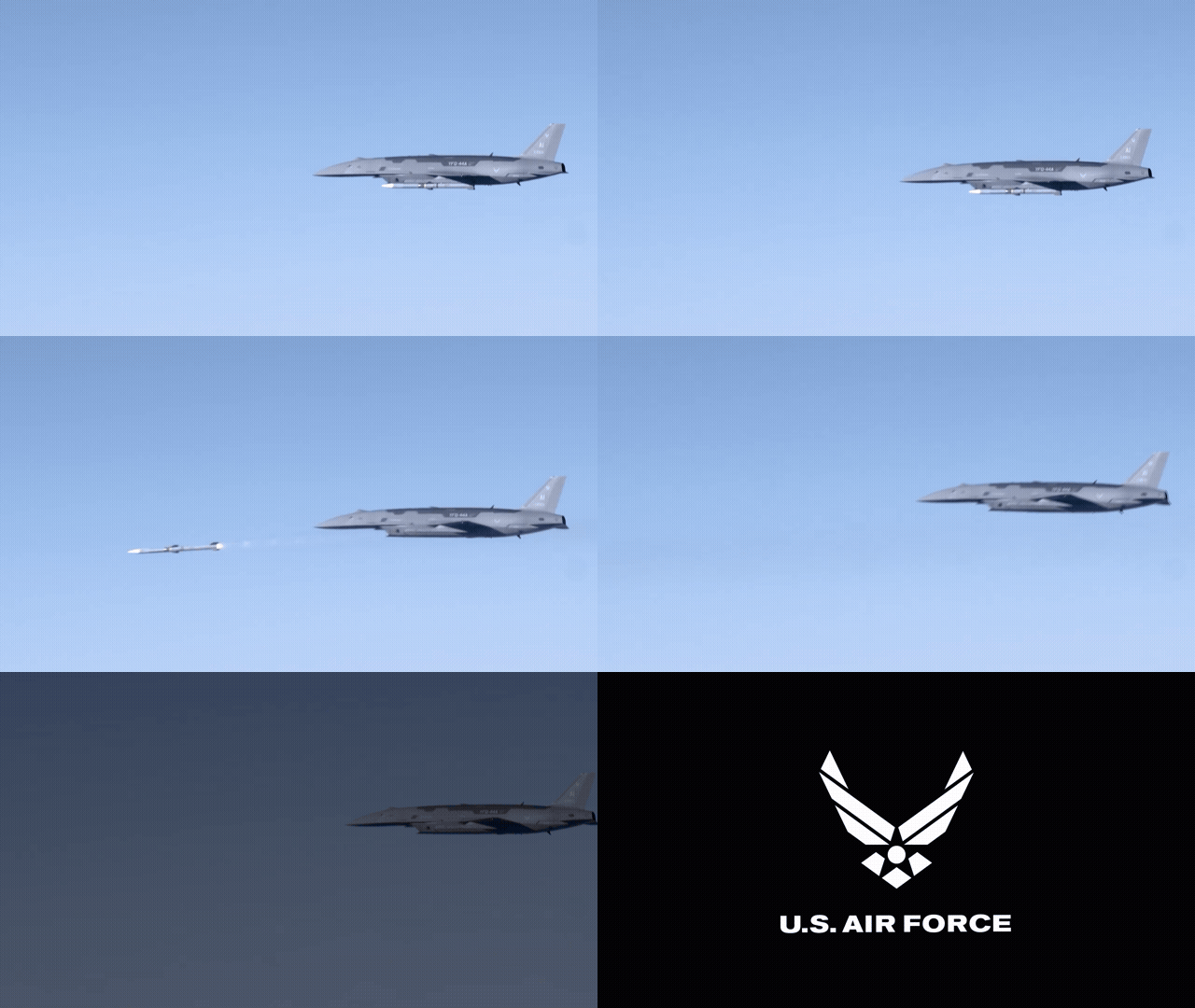
EDWARDS AIR FORCE BASE, Calif. — The U.S. Air Force has successfully completed the first live missile launch from an unmanned Collaborative Combat Aircraft (CCA), marking a major milestone in the service's effort to develop autonomous wingman drones for future air operations.
The test took place over a restricted training range in the Mojave Desert using the YFQ-44A "Fury", an unmanned aircraft developed by Anduril Industries. During the demonstration, the drone launched a live AIM-120 Advanced Medium-Range Air-to-Air Missile (AMRAAM) against a digital target in an end-to-end, beyond-line-of-sight engagement.
According to the Air Force, the YFQ-44A operated from Edwards Air Force Base and received target tracking information through Anduril's Lattice software platform, which processed the data before the engagement. Air Force Chief of Staff Gen. Kenneth Wilsbach confirmed that the AIM-120 successfully tracked the target immediately after launch.
The live-fire event represents the first successful weapons test by an aircraft in the Air Force's Collaborative Combat Aircraft (CCA) program, which is intended to introduce unmanned aircraft capable of operating alongside crewed fighter jets.
Human Operator Controlled the Weapon Release
Although the YFQ-44A is designed with advanced autonomous flight and maneuvering capabilities, the Air Force emphasized that the aircraft is not authorized to make autonomous decisions to use lethal force.
During the test, a human operator received the target track, evaluated the engagement, and issued the command to launch the missile. The drone fired the AIM-120 only after receiving direct authorization, maintaining human oversight throughout the weapon employment process.
Gen. Kenneth Wilsbach described the demonstration as an important step in the CCA program.
"This live-fire test is an important next step in the development of Collaborative Combat Aircraft. We're one step closer to delivering capabilities to the warfighter," he said.
Mark Shushnar, Anduril's Vice President of Autonomous Airpower, said the demonstration validated the complete operational sequence rather than simply releasing a weapon. According to him, the test confirmed the aircraft's ability to receive target data, process operator instructions, and execute the engagement as intended.
Test Followed Months of Development
The successful missile launch was the result of a phased testing campaign conducted over several months.
Earlier in 2026, the YFQ-44A carried an inert (non-explosive) AIM-120 missile during captive-carry flights to evaluate the aircraft's handling characteristics and aerodynamic performance with the weapon attached.
Following those flights, engineers verified the communication links between the aircraft and the missile system in simulated environments to ensure commands from the operator would be transmitted and executed correctly before progressing to a live-fire event.
The final missile launch was coordinated by the 412th Test Wing's Air Dominance Combined Test Force, which includes active-duty military personnel, government civilians, and defense contractors responsible for evaluating new air combat systems.
Gen. Dale White, the Pentagon's portfolio manager for Critical Major Weapon Systems, said transitioning from inert weapon carriage to an actual missile launch provides valuable flight data that helps validate the program's digital integration models.
Part of the Collaborative Combat Aircraft Program
The YFQ-44A "Fury" is one of two aircraft selected for Increment 1 of the Air Force's Collaborative Combat Aircraft (CCA) program. The second design is the YFQ-42A, developed by General Atomics.
The YFQ-44A completed its first flight on October 31, 2025, and continues to undergo testing as the Air Force moves toward operational deployment.
The CCA program aims to field relatively affordable autonomous aircraft that can fly alongside crewed fighters such as the F-35, F-22, and the future F-47. These robotic wingmen are intended to carry additional sensors and weapons, perform higher-risk missions, extend the reach of crewed aircraft, and increase the combat capability available to a single pilot.
Rather than replacing human pilots, the aircraft are designed to support crewed operations while keeping human operators responsible for decisions involving the use of weapons.
To enable large-scale procurement, the Air Force plans to acquire Collaborative Combat Aircraft at approximately one-third the cost of an F-35A, which has a unit cost of about $83 million.
Further Testing Planned
The Air Force has already approved production contracts for the first phase of the CCA program. While Anduril's YFQ-44A has now completed the program's first live-fire demonstration, General Atomics is expected to conduct a similar live missile test with its YFQ-42A "Dark Merlin" later this fall.
The United States is not alone in developing autonomous combat aircraft. Similar loyal wingman programs are also progressing internationally, including Australia's MQ-28 Ghost Bat and Turkey's Kızılelma, both of which have recently conducted weapon-related testing as countries continue developing unmanned aircraft designed to operate alongside manned fighter fleets.
Source : Anduril Industries
——— End of Article ———