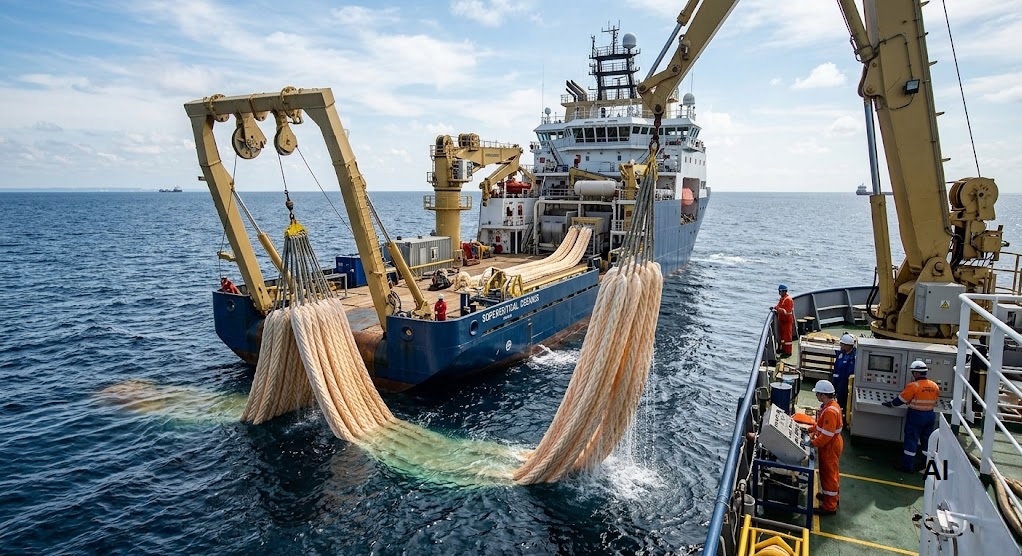
AUSTIN, Texas — SuperCritical Materials, an Austin-based nuclear fuel infrastructure company, has secured an exclusive license from the U.S. Department of Energy (DOE) to commercialize a patented technology that extracts uranium directly from seawater. The agreement, announced on July 14, gives the company exclusive rights to manufacture and deploy the technology at an industrial scale in the United States, with plans to expand into allied countries in the future.
The licensed technology was developed through the DOE's Office of Nuclear Energy, with research led by scientists at the Pacific Northwest National Laboratory (PNNL). It is designed to help strengthen long-term domestic nuclear fuel supplies as the United States expands the use of advanced nuclear reactors and works to reduce dependence on imported uranium.
Technology Designed to Recover Uranium From Seawater
Although uranium exists in seawater at extremely low concentrations of about 3.3 parts per billion, the world's oceans contain an estimated 4.5 billion metric tons of dissolved uranium. According to the DOE, this is more than 1,000 times the world's identified land-based uranium reserves, making it a potential long-term source of nuclear fuel if extraction can be carried out economically.
The patented process uses specially treated acrylic fibers coated with proprietary adsorption materials. These fibers are placed in seawater, where they selectively capture dissolved uranium ions and certain other strategic metals. Once the fibers become saturated, they are brought back onshore, where the captured materials are removed through chemical processing. The fibers can then be reused in future extraction cycles.
After recovery, the uranium enters the conventional nuclear fuel cycle, including conversion, enrichment, and fuel fabrication before it can be used in nuclear power plants.
Commercial Production Plans
SuperCritical Materials plans to build its first commercial facility in Texas, although the company has not yet made a final investment decision. The proposed plant is expected to produce approximately 1.85 million pounds (839,150 kilograms) of uranium annually and operate for at least 40 years.
According to the company, that level of production could provide enough nuclear fuel to generate electricity for about four million households each year.
SuperCritical expects commercial uranium production could begin in 2030 or 2031, subject to project approvals and development. The company said deployment in Texas will require coordination with multiple regulatory agencies, including the Texas Commission on Environmental Quality, the Texas Railroad Commission, and the U.S. Coast Guard.
To support its commercialization plans, SuperCritical has raised $4.5 million in private funding and is preparing to seek a public listing on the Nasdaq later this year.
Supporting U.S. Nuclear Fuel Security
The project comes as the United States seeks to strengthen its domestic nuclear fuel supply chain. The country currently imports much of its enriched uranium from foreign suppliers, including Russia, France, and Germany. In recent years, the U.S. has enacted legislation banning imports of Russian uranium, although temporary waivers remain available until 2028.
Alexander Canon Bryan, founder and Chief Executive Officer of SuperCritical Materials, said the company's long-term objective is to strengthen the domestic nuclear fuel industry.
"Our long-term goal is to transform the U.S. from a net importer to a net exporter of uranium and nuclear fuels."
Bryan said a reliable domestic nuclear fuel supply will be important as electricity demand continues to grow from industries such as artificial intelligence, advanced manufacturing, and robotics.
DOE Highlights Long-Term Potential
The Department of Energy said laboratory-scale research has already demonstrated that uranium can be extracted from seawater, and continued development could help improve long-term fuel security.
Ted Garrish, Assistant Secretary of Nuclear Energy, said:
"Uranium extraction from seawater has been demonstrated at lab scale. DOE has invested in proving that this extraction process works. As the United States accelerates advanced nuclear energy deployment, ensuring reliable domestic sources of nuclear fuel becomes increasingly important. This technology represents a potentially significant contribution to America's long-term fuel security and industrial competitiveness."
Potential Beyond Uranium
In addition to uranium, the adsorption technology can also capture certain strategic and critical minerals dissolved in seawater. SuperCritical said future commercial operations could include recovering these materials alongside uranium, supporting broader U.S. efforts to strengthen domestic supply chains for critical minerals and reduce reliance on foreign sources.
While the technology has been successfully demonstrated at the laboratory level, large-scale commercial deployment remains the next step. If successfully developed, seawater uranium extraction could become an additional long-term source of nuclear fuel alongside conventional uranium mining, helping diversify future nuclear fuel supplies as demand for nuclear energy continues to grow.
Source : nucnet
——— End of Article ———