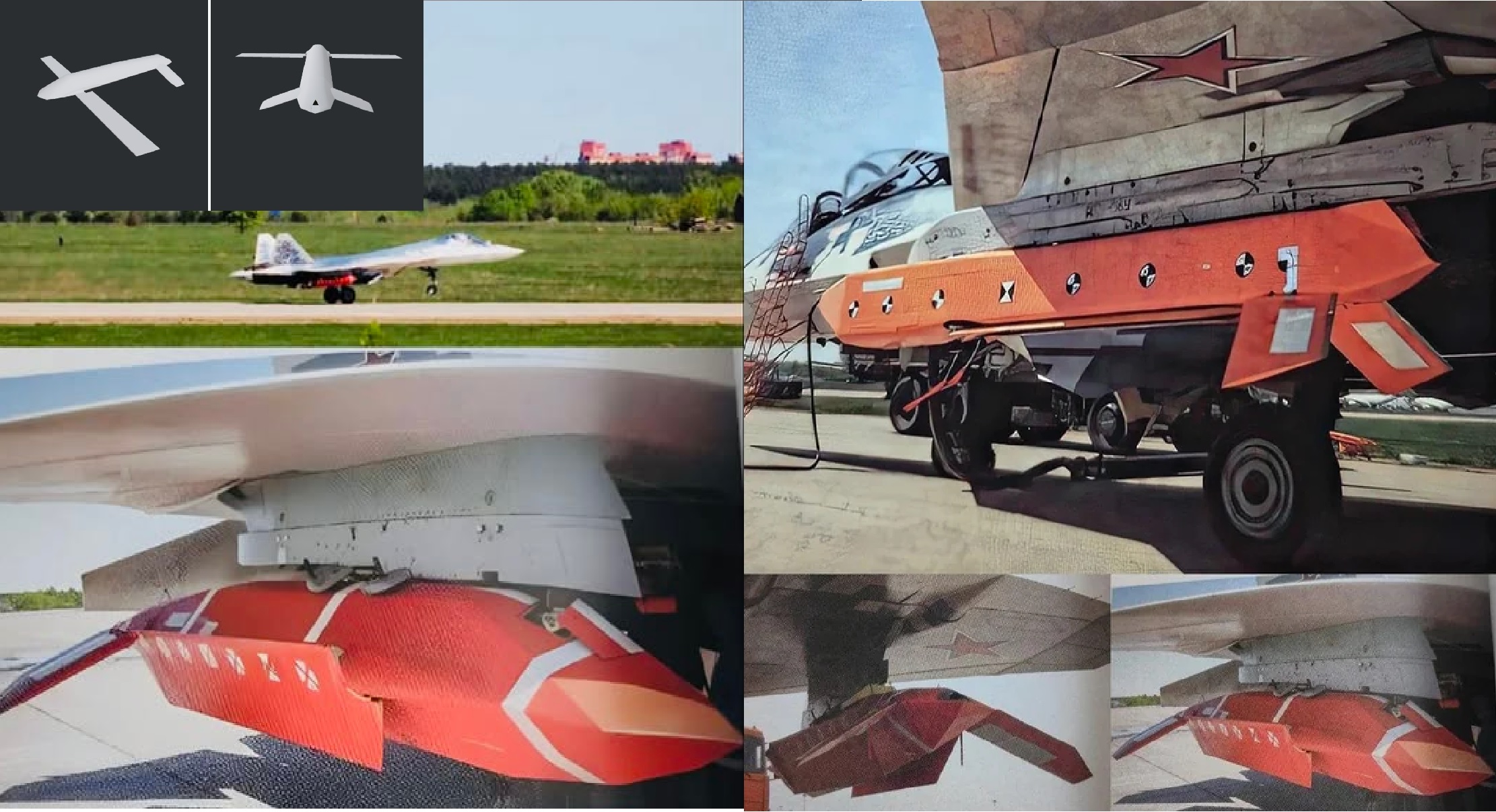
KYIV, — April 27, 2026 : Ukraine’s Main Directorate of Intelligence (GUR) has published a comprehensive technical analysis of the Russian S-71K “Kovyor” air-launched cruise missile, providing one of the most detailed public breakdowns of a modern Russian strike system since the start of the full-scale conflict. The report, released via the GUR’s War and Sanctions portal under its “Components in Weapons” section, includes an interactive 3D model alongside a full teardown of the missile’s internal systems and electronic architecture.
The disclosure focuses on both the structural design and the international sourcing of components used in the missile, highlighting continued gaps in export control enforcement despite ongoing sanctions targeting Russia’s defense industry.
Origins and Development
According to the GUR, the S-71K represents a departure from traditional Russian missile development practices. The system is assessed to be the first significant cruise missile project undertaken by United Aircraft Corporation (UAC/OAK), a firm historically associated with aircraft production rather than guided munitions.
The missile was developed specifically for deployment from the Sukhoi Su-57, Russia’s fifth-generation stealth combat aircraft. Ukrainian intelligence indicates that the S-71K entered operational use in late 2025.
By combining a low-observable launch platform with a standoff weapon, Russian forces are able to reduce exposure to air defense systems. The GUR also reported that Russian defense planners are evaluating integration of the missile with the Sukhoi S-70 Okhotnik unmanned combat aerial vehicle, which would enable forward deployment of the weapon without risking manned aircraft.
Structural Design and Warhead Integration
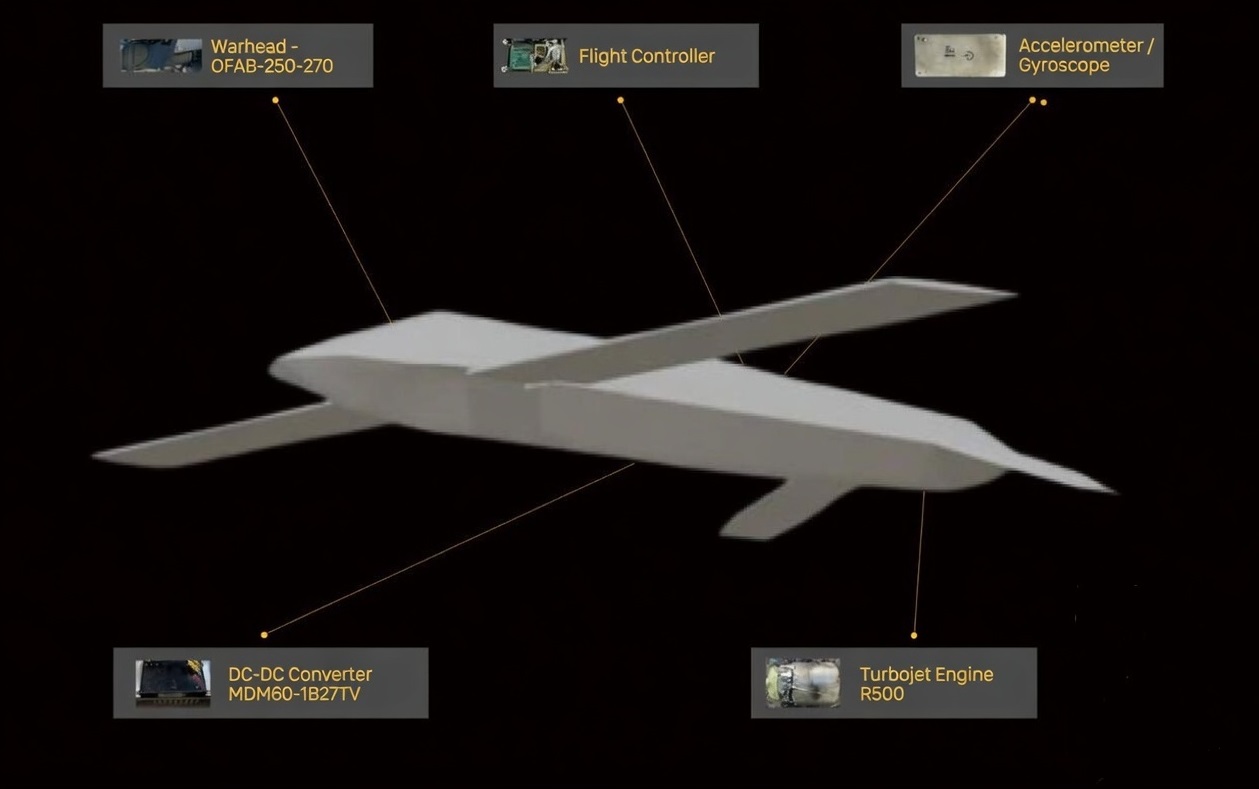
The GUR’s analysis identifies a design approach centered on adapting existing Soviet-era ordnance into a guided delivery system. The missile incorporates a 250-kilogram OFAB-250-270 high-explosive fragmentation aerial bomb directly into the load-bearing structure of its forward section.
This configuration eliminates the need for a purpose-built warhead and is optimized for strikes against fixed targets, including infrastructure, logistics hubs, and exposed military facilities.
The airframe is constructed from multi-layer fiberglass-based composite material (glass-textolite), reinforced to withstand aerodynamic and structural loads during carriage and powered flight. Internal load-bearing components are manufactured from aluminum alloys to balance structural rigidity with weight reduction. The GUR report notes that available data does not confirm whether the missile incorporates low-observable shaping or materials.
Propulsion and Range
The S-71K is powered by an R500 turbojet engine produced by Reynolds LLC, a subsidiary within the United Aircraft Corporation structure. The propulsion system is supported by one main fuel tank and two lateral tanks.
Based on available data, the GUR estimates the missile’s operational range at up to 300 kilometers. This range allows the launch platform to remain outside certain air defense engagement zones while conducting strikes against pre-identified targets.
Guidance and Navigation Systems
The missile’s onboard control architecture is described as relatively simple and optimized for pre-planned strikes rather than dynamic target engagement. The system relies on an inertial navigation system (INS) using basic sensor inputs.
Identified onboard components include a flight controller, air-pressure measurement module, accelerometer, gyroscope, battery management board, onboard voltage regulator, DC-DC converter, servo drives, and rechargeable battery units. The guidance system is designed for coordinate-based targeting against fixed or pre-surveyed locations.
The GUR noted that earlier independent reporting had described the broader S-71 series as incorporating features such as swept wings, twin-fin control surfaces, and optical sensors with automated target recognition. However, the specific S-71K variant analyzed in this report appears to rely on a simpler INS-based guidance architecture.
Foreign Components and Supply Chain Analysis
A central element of the GUR publication is the identification of foreign-manufactured electronic components used within the missile. The intelligence directorate states that the majority of the S-71K’s electronics originate from suppliers outside Russia.
According to the report, components were traced to manufacturers in the United States, China, Switzerland, Japan, Germany, Taiwan, and Ireland. These include critical subsystems such as flight control electronics, sensing modules, power regulation systems, and actuator components.
The GUR presents this finding as evidence of persistent vulnerabilities in global export control regimes. Despite sanctions imposed on Russia’s defense sector, the continued availability of foreign microelectronics and precision components has enabled the development and production of new guided weapons systems.
Operational Context and Future Outlook
The S-71K is designed to function as a standoff strike weapon, extending the engagement range of its launch platforms while maintaining operational flexibility. Its integration with stealth aircraft such as the Su-57 enhances survivability during mission execution, while potential deployment on unmanned platforms like the S-70 Okhotnik could further expand its operational applications.
The GUR report forms part of a broader effort by Ukrainian intelligence to document and expose the technological and industrial foundations of Russian weapons systems. The agency has previously released data on production networks associated with the Su-57 and continues to publish technical findings through its War and Sanctions portal.
Ukrainian officials have called for strengthened international measures to restrict the flow of sensitive technologies into Russia’s defense supply chains. The latest disclosure underscores the role of globally sourced components in sustaining Russia’s ability to field new strike capabilities.
No additional information on production volumes, deployment scale, or specific strike outcomes beyond the missile’s initial use in late 2025 was included in the release. Further technical disclosures are expected as part of GUR’s ongoing analysis of Russian military systems.
——— End of Article ———