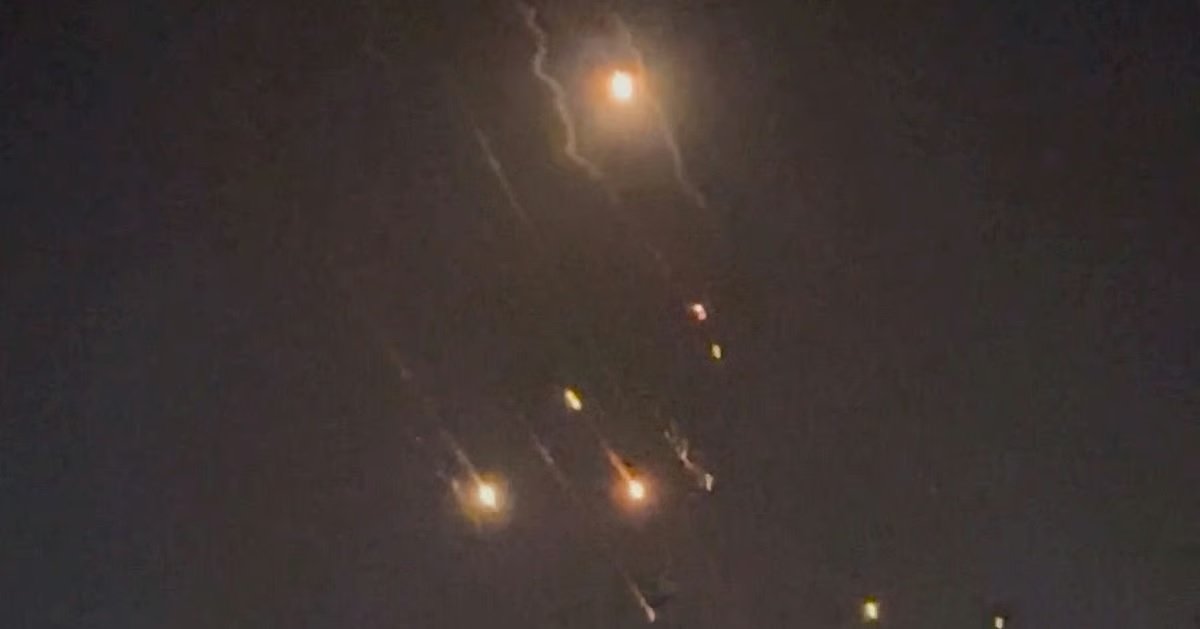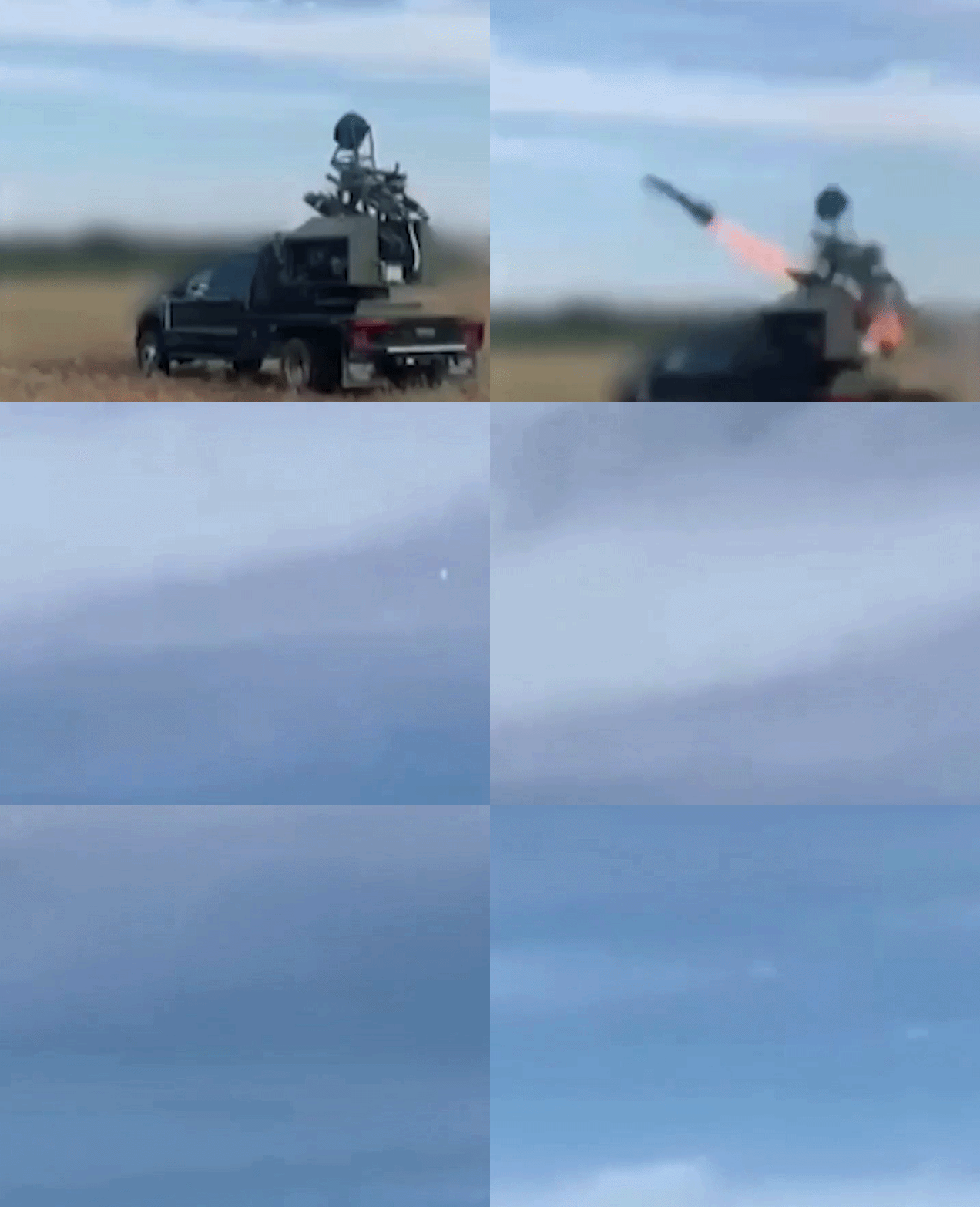
KYIV, Ukraine — New footage circulating online appears to show Ukraine operating an upgraded, highly mobile version of its STASH short-range air defense system mounted on a Ford F-350 chassis. The video, published on July 28, 2026, and attributed on social media to Ukraine's 208th Anti-Aircraft Missile Brigade, shows the system tracking and intercepting a Russian Shahed/Geran-series strike drone.
The footage has not been independently authenticated by Ukrainian authorities at the time of writing. If confirmed, it would represent the first public appearance of the truck-mounted STASH configuration, several months after the system entered Ukrainian service in a trailer-mounted form.
New Mobile Configuration
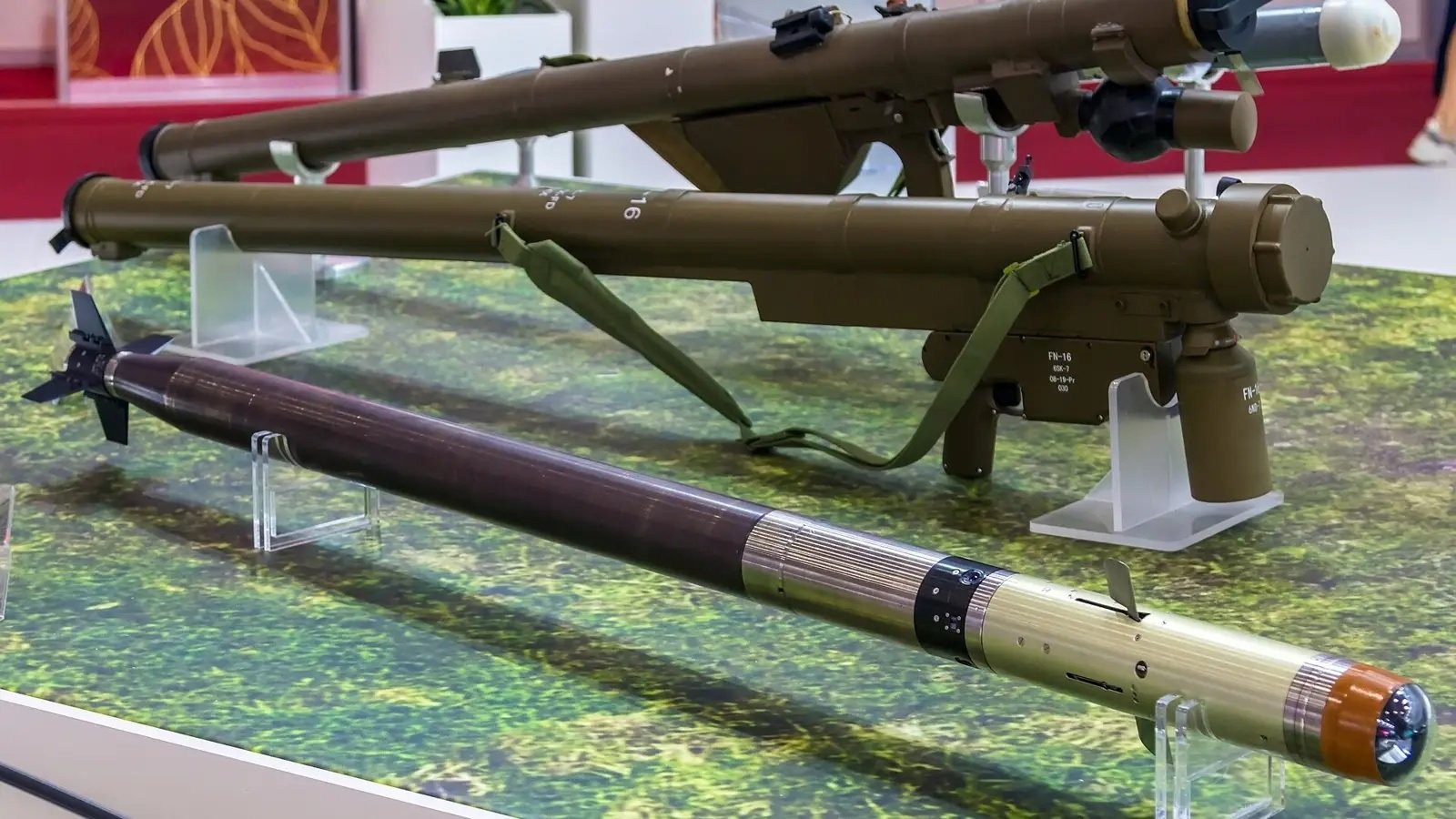
The latest version of the STASH system integrates an Israeli-origin RADA radar, a launcher armed with U.S.-made AGM-114L Longbow Hellfire missiles, and fire-control equipment on a single modified Ford F-350 heavy-duty truck.
The July 28 footage is described as showing the interception of a jet-powered Shahed/Geran-type drone. Compared with slower propeller-driven variants, jet-powered drones reduce the time available for air defense crews to detect and engage incoming threats.
The AGM-114L Longbow Hellfire, originally developed for anti-armor missions, uses a millimeter-wave active radar seeker that provides a fire-and-forget capability. Once launched, the missile can continue tracking its target without requiring continuous guidance from the launcher.
The system's Israeli-origin RADA radar is paired with the missile launcher to detect and engage low-altitude aerial targets. Open-source reporting identifies the radar as the RPS-42 Active Electronically Scanned Array (AESA) radar, an S-band system designed to detect slow and low-flying targets. Publicly available information states that some configurations have an instrumented detection range of about 30 kilometers.
Public reporting also indicates the AGM-114L has an engagement range of roughly 7 to 11 kilometers, depending on flight trajectory, and carries an approximately 9-kilogram warhead. The missile has been adapted for aerial targets, including drones and helicopters.
Evolution From Trailer-Mounted System
The STASH system first appeared in Ukrainian service in May 2026.
During a large Russian drone attack on May 1, Ukraine's Air Command West released footage showing the system operating from a concealed four-wheeled trailer configuration. The attack reportedly involved more than 400 unmanned aerial vehicles, with at least 58 drones reported shot down in the western sector. At the time, STASH was presented as a compact, low-profile platform designed to defend against low-altitude threats such as Shahed-type drones.
The newly observed Ford F-350 configuration replaces the separate trailer and towing vehicle by integrating the radar, launcher, and fire-control system onto a single platform.
Defense analysts note that this arrangement can reduce deployment and relocation time while allowing crews to move more quickly between firing positions. A vehicle-mounted configuration may also reduce the time spent at launch locations and improve the ability to reposition during large-scale drone attacks. Ukraine has not released official information regarding the new version's mobility requirements, crew size, or operational doctrine.
Links to V2X Tempest Platform
Open-source intelligence and defense analysts have linked STASH to the Tempest mobile fires platform developed by American defense company V2X.
V2X introduced Tempest in October 2025 during the Association of the United States Army exhibition. The platform was designed as a commercially based, rapid-response air defense system capable of engaging multiple classes of unmanned aircraft while operating with limited exposure.
Early Tempest demonstrations used lightweight all-terrain vehicles, commonly described as Can-Am Maverick X3-style buggies, equipped with dual Hellfire launchers and a compact RADA RPS-42 AESA radar.
While publicly available information indicates that STASH uses components or design concepts derived from Tempest, it has not been officially confirmed whether the Ford F-350 configuration is a production variant supplied by V2X or a Ukrainian-developed integration based on the original design.
Role in Ukraine's Air Defense Network
STASH is part of Ukraine's layered short-range air defense network developed to counter Russian one-way attack drones.
The system is intended to engage lower-altitude aerial threats, allowing longer-range surface-to-air missile systems to be reserved for more demanding targets. Open-source reporting notes that the AGM-114L Hellfire missile is relatively expensive compared with the drones it is used to intercept, meaning operators may prioritize higher-value targets or employ the system when other interceptors are unavailable.
The deployment of mobile STASH systems by units such as the 208th Anti-Aircraft Missile Brigade, which is tasked with defending southern regions including Kherson and Mykolaiv, reflects Ukraine's continued effort to strengthen defenses against persistent drone attacks using radar-guided interceptors and mobile air defense platforms.
——— End of Article ———