WASHINGTON — The U.S. Federal Communications Commission (FCC) has adopted new rules blocking the import, marketing, and sale of new foreign-made advanced robotic devices and connected power inverters that are considered national security risks. The decision primarily affects Chinese manufacturers and is part of a broader U.S. effort to strengthen the security of critical technology supply chains.
The measures, announced on July 28 and effective immediately, apply only to new device models that have not yet received FCC equipment authorization. Existing models that were previously authorized can continue to be imported, sold, marketed, and used in the United States. Software and security updates for already authorized products will continue to be permitted through at least January 1, 2029.
The restrictions do not apply to fixed stationary industrial robotic arms, which are exempt from the new rules.
FCC Expands Covered List
The FCC updated its Covered List, preventing newly designated products from obtaining the equipment authorization required for sale in the United States.
According to the FCC, national security agencies concluded that certain foreign-produced advanced robotic devices and connected power inverters create unacceptable risks to U.S. economic and national security and could threaten critical infrastructure.
In a statement, the FCC said these devices could create supply chain vulnerabilities capable of disrupting U.S. economic and national security while also introducing cybersecurity risks.
FCC Chairman Brendan Carr said the agency is acting to secure America's critical supply chains and that the FCC will continue working alongside national security agencies to address emerging technology risks.
Concerns Over Advanced Robots
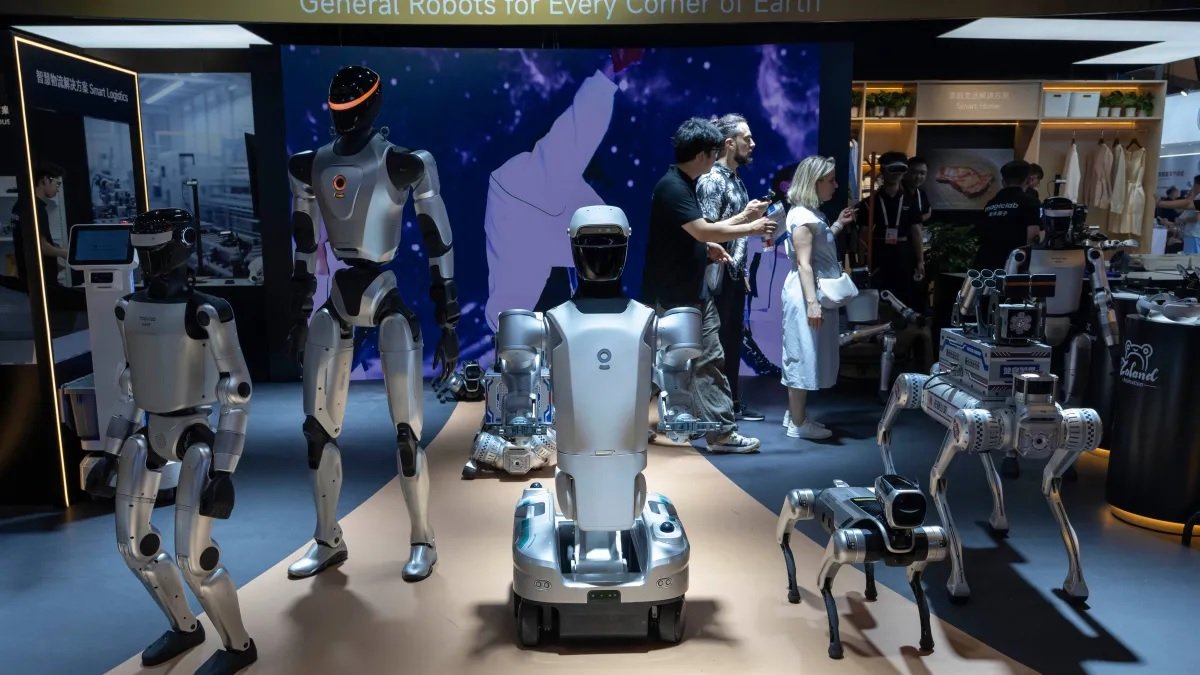
The new rules define advanced robotic devices as mobile robots, including humanoid robots and quadruped robotic systems, commonly known as robot dogs.
According to the FCC, these network-connected robots collect large amounts of data through cameras, sensors, microphones, and other onboard systems. Officials warned that such information could potentially be exploited by malicious actors for surveillance, support foreign intelligence operations, or allow remote control of the robots through cyberattacks.
The restrictions are intended to reduce risks associated with connected robotic systems that may become increasingly common in industrial, commercial, research, and consumer environments.
Power Inverters Also Included
The FCC also added connected power inverters to the Covered List.
Power inverters convert direct current (DC) electricity into alternating current (AC) and are widely used in renewable energy systems, battery storage, power grids, and data centers.
According to the FCC, the remote connectivity features built into many modern inverters could introduce cybersecurity vulnerabilities if exploited. Officials warned that compromised inverters could potentially be used to disable equipment, collect sensitive data, enable unauthorized remote access, or support cyberattacks targeting critical infrastructure.
The agency noted that these risks become increasingly important as inverter-based energy resources continue expanding across the U.S. electricity grid.
Conditional Approval Process
The updated rules include a process allowing manufacturers to seek Conditional Approval for affected products.
For advanced robotic devices, approvals can be granted by the Department of War. For power inverters, approvals may be issued by either the Department of War or the Department of Homeland Security if those agencies determine that specific products or classes of products do not present unacceptable national security risks.
Devices receiving Conditional Approval would remain eligible for FCC equipment authorization.
Sources familiar with the process indicated that the FCC is expected to exempt many non-Chinese suppliers, consistent with previous actions involving foreign drones and networking equipment.
Impact on Chinese Manufacturers
China currently dominates much of the global humanoid robotics industry.
According to research firm Omdia, approximately 15,000 humanoid robots are expected to ship globally in 2025. Chinese companies Unitree and AGIBOT each shipped more than 5,000 units, while U.S. companies including Tesla and Figure AI shipped significantly fewer during the same period.
Reports estimate that China controls around 85% of the global humanoid robot market, while Counterpoint Research estimates that Unitree holds just under one-fifth of the global market.
Unitree was recently added to the Pentagon's list of companies alleged to have links to the Chinese military, a designation Beijing rejects.
The company also partnered with Nvidia to integrate the company's Blackwell AI chips into future robotic systems. Nvidia has stated that data collected by these robots remains within the United States and that many of Unitree's customers are U.S. academic and research institutions.
Tesla CEO Elon Musk has also acknowledged China's manufacturing strength, stating that Chinese companies are likely to become Tesla's largest long-term competitors in the humanoid robot market.
Concerns Over the Inverter Market
China is also the world's largest manufacturer of power inverters, led by companies including Sungrow Power Supply and Huawei.
Chinese manufacturers have expanded their presence in Western markets by offering lower-priced products.
The U.S. Department of Defense is already prohibited from purchasing solar photovoltaic cells, modules, or power inverters produced by foreign entities of concern.
Officials have also pointed to lessons from the Volt Typhoon cyber campaign disclosed in 2023, in which attackers compromised privately owned routers to help conceal cyber operations targeting U.S. critical infrastructure.
Industry and Political Response
U.S. Representative John Moolenaar, chairman of the House Select Committee on China, welcomed the FCC's decision, saying it protects the United States and strengthens the country's robotics industry.
Treasury Secretary Scott Bessent recently warned that Chinese artificial intelligence companies could face sanctions if they are found to have stolen U.S. intellectual property.
Industry analysts, however, said the restrictions are unlikely to significantly slow China's overall robotics development because of its large domestic manufacturing base and access to other export markets.
Morgan Stanley projects that the global humanoid robotics market could reach $15 billion by 2030.
Morningstar analyst Kangyuxiao Li said the restrictions may shield U.S. developers from price competition but are unlikely to materially affect China's broader robotics industry.
Lian Jye Su, chief analyst at Omdia, said the policy could disrupt existing research and development cooperation between U.S. and Chinese technology companies.
China Criticizes the Decision
The Chinese Embassy in Washington criticized the U.S. action, urging Washington to stop targeting Chinese companies and threatening them with sanctions. The embassy said China would take necessary measures to protect the interests of its businesses.
Speaking in Beijing, Chinese Foreign Ministry spokesperson Mao Ning said the United States was overstretching the concept of national security to suppress Chinese companies.
She said protectionism would not improve U.S. competitiveness and would instead harm the interests of American businesses and consumers. Mao added that China would take all necessary measures to protect the legitimate rights and interests of Chinese companies.
Broader U.S.-China Technology Strategy
The latest restrictions are part of broader U.S. efforts to reduce dependence on foreign technology supply chains and strengthen cybersecurity protections for critical infrastructure.
The FCC has previously added certain foreign drones, drone components, and networking equipment to its Covered List over national security concerns.
The new measures also come ahead of a planned September meeting between U.S. President Donald Trump and Chinese President Xi Jinping, where technology, trade, and national security issues are expected to remain key topics of discussion.
——— End of Article ———