HAMHUNG, North Korea — North Korea has constructed a new production building at its primary short-range ballistic missile factory and later buried the structure beneath earth, according to an analysis of Planet Labs satellite imagery published by NK Pro on July 29. Analysts say the move appears intended to improve protection for one of the country's most important missile production sites as Pyongyang continues expanding its manufacturing capacity.
The facility, known as the February 11 Factory, or Plant No. 11, is part of the Ryongsong Machine Complex in Hamhung. It is the only publicly known manufacturer of the Hwasong-11 series of short-range ballistic missiles (SRBMs), designated KN-23 by Western countries. The missiles have been used by Russian forces in strikes against Ukraine since late 2023, while Ukrainian officials have also said North Korea has supplied Russia with launchers and other military equipment.
New Building Buried Beneath Earth
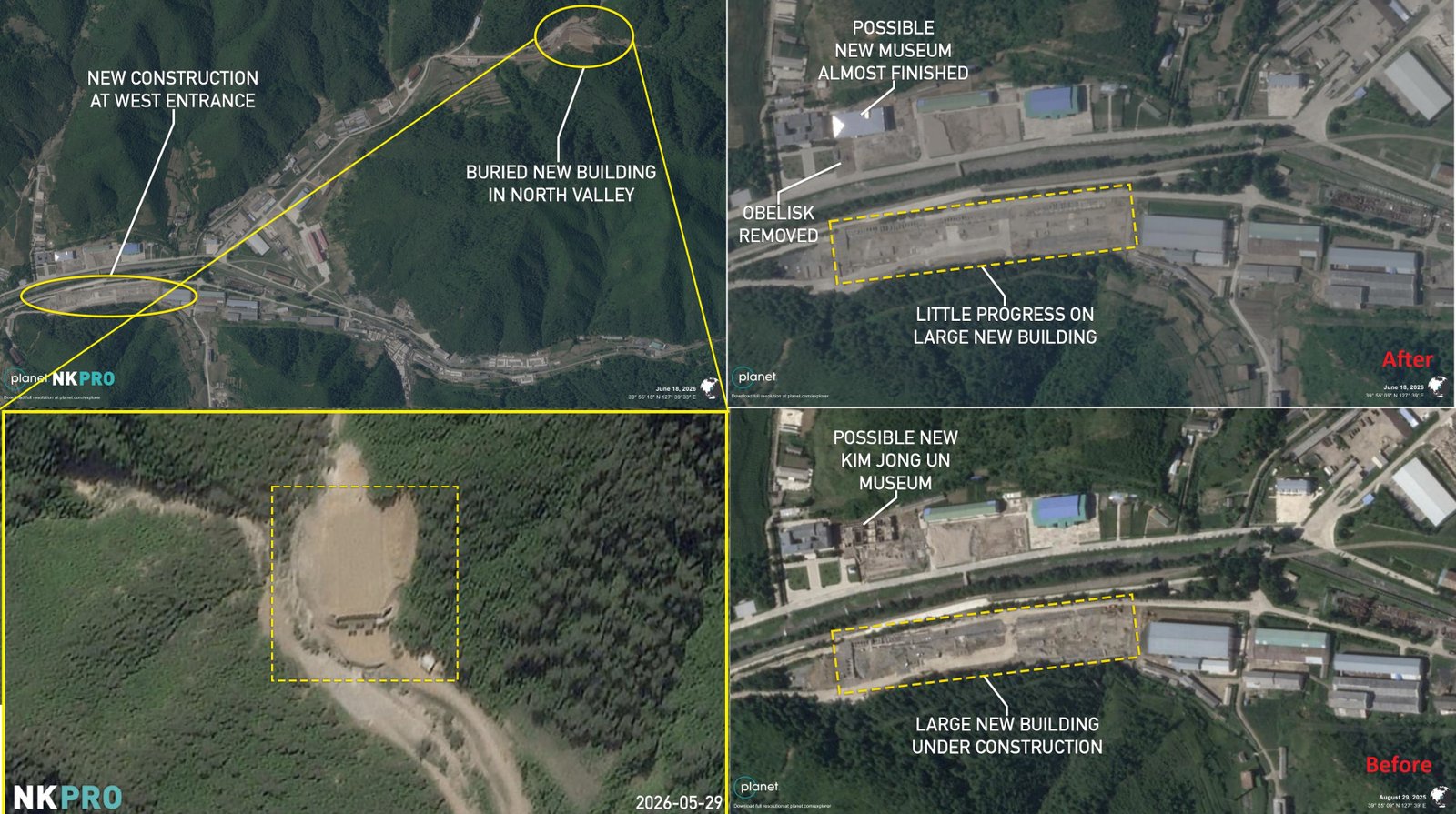
According to NK Pro's analysis, a new building measuring approximately 65 meters by 35 meters and standing two to three stories high was constructed in a secluded valley at the northern end of the complex between late 2024 and February 2026.
Satellite imagery shows the structure was fully completed before being covered with earth between March and May 2026, effectively integrating it into the adjacent mountainside.
The building's internal layout, featuring a large open central hall surrounded by smaller rooms, closely resembles assembly and inspection facilities seen at other North Korean weapons production sites.
Designed to Improve Protection and Safety
Analysts assess that the buried structure follows North Korea's cut-and-cover construction method, which provides greater protection than conventional above-ground buildings.
The design is believed to serve two purposes. Covering the facility with earth can reduce its vulnerability to aerial attack while also helping contain the effects of accidental explosions during missile manufacturing. However, analysts note that such structures provide less protection than production facilities excavated deep inside mountains.
Satellite imagery and state media footage from Kim Jong Un's visits indicate that the factory's most sensitive machining equipment is already located inside underground tunnels, while above-ground buildings are primarily used for final missile assembly and inspection.
Several existing buildings at the complex are also protected by packed-earth berms designed to limit blast damage from industrial accidents.
Key Missile Production Site
The February 11 Factory remains one of North Korea's most significant missile manufacturing facilities.
Images released during Kim Jong Un's inspections, including photographs published following a visit in June 2026, showed rows of Hwasong-11 missiles inside assembly halls. Previous state media images have also suggested the factory may manufacture airframes for longer-range missiles and satellite launch vehicles (SLVs).
Open-source monitoring has consistently identified the site as North Korea's principal production center for the Hwasong-11 missile family.
Larger Expansion Project Appears Stalled
The newly buried facility is part of a broader effort to expand production capacity at the factory.
In August 2025, North Korean construction crews demolished three existing buildings near the western entrances to the underground production tunnels to make room for a much larger structure measuring at least 330 meters long and 50 meters wide.
Satellite imagery shows foundations were completed around the perimeter, while partial walls for edge rooms were erected on the northern and western sides. The design also suggests a large open central area suitable for missile assembly or inspection.
However, imagery indicates construction has shown little or no progress since November 2025, suggesting the project has been suspended or significantly delayed.
If completed, the facility would substantially increase missile assembly capacity and could support higher production for North Korea's own military requirements as well as future exports.
Part of Wider Military Construction
The construction at Hamhung reflects North Korea's continued investment in protected military infrastructure.
The country has previously used similar earth-covered construction methods at the Hagap site, which open-source assessments have linked to North Korea's nuclear program. Satellite imagery also continues to show tunneling activity at sensitive military locations in Songgan and Kusong.
Growing Military Cooperation with Russia
The developments at the February 11 Factory coincide with expanding military cooperation between North Korea and Russia.
On July 25, 2026, Ukrainian President Volodymyr Zelenskyy, citing Ukrainian intelligence, said Russia is seeking an additional 30,000 North Korean troops and is preparing to receive new North Korean ballistic missile launchers. He also stated that facilities in Russia's Voronezh region have been prepared since June to accommodate the additional personnel.
Ukraine has previously stated that North Korea has supplied Russia with Hwasong-11 ballistic missiles, artillery systems, and other military equipment used during the war.
Other Changes at the Factory
Satellite imagery also shows continued redevelopment at the February 11 Factory beyond missile production facilities.
A new building under construction near the western gate, begun in May 2025, appears close to completion and is believed to be a history museum dedicated to Kim Jong Un. It is located next to an existing museum honoring former leaders Kim Il Sung and Kim Jong Il.
In mid-June 2026, the factory's main "Tower of Immortality" monument, a common feature at North Korean industrial sites, was dismantled. The reason for its removal has not been disclosed.
Ongoing Modernization Effort
The February 11 Factory has been inspected by Kim Jong Un several times in recent years, with state media regularly highlighting missile production activities at the site.
The latest satellite imagery indicates that North Korea continues to modernize and reorganize one of its most important missile manufacturing complexes. Although one major expansion project appears to have stalled, the completion and burial of the new production building demonstrate continued efforts to strengthen the protection and operational resilience of the facility.
——— End of Article ———