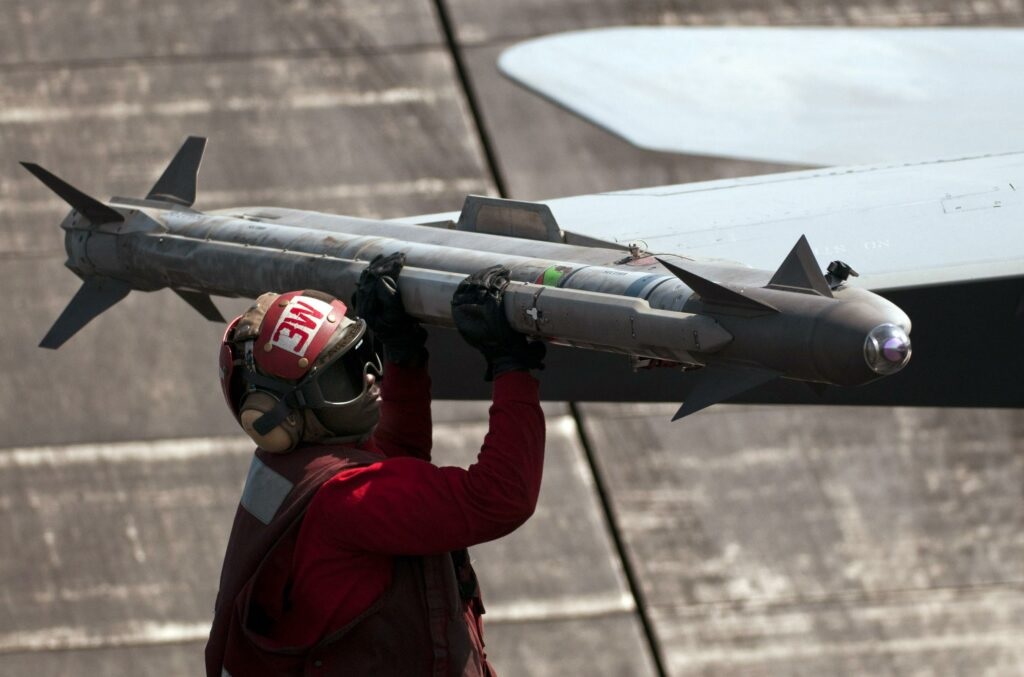
WASHINGTON, — April 23, 2026 : The U.S. Department of State has approved a possible Foreign Military Sale (FMS) to the Government of Lithuania for AIM-9X Sidewinder Block II missiles and associated equipment, with an estimated total value of $214 million. The proposed transaction was formally notified to the U.S. Congress on April 22, 2026, and will proceed under standard FMS procedures.
The package represents a substantial expansion of an earlier FMS case valued at $19.5 million, which had remained below the congressional notification threshold. That initial case included 16 AIM-9X Block II tactical missiles, two tactical guidance units, and a range of support elements such as training, spare parts, and logistics assistance.
Procurement Expansion and Combined Inventory
The newly approved request significantly increases Lithuania’s planned inventory. It includes 152 additional AIM-9X Block II tactical missiles, eight tactical guidance units, and six captive air training missiles. The package also incorporates U.S. government and contractor-provided engineering, technical, and logistics support services, along with training equipment, spare parts, and broader program support.
Following the addition of the new procurement, Lithuania’s combined acquisition will total 168 AIM-9X Block II tactical missiles, 10 tactical guidance units, and six captive air training missiles. The inclusion of training variants is intended to support operational readiness without requiring the use of live munitions during exercises.
The principal contractor for the deal will be RTX Corporation, headquartered in Arlington, Virginia. U.S. officials stated that the proposed sale will not adversely affect American defense readiness.
System Capabilities and Technical Characteristics
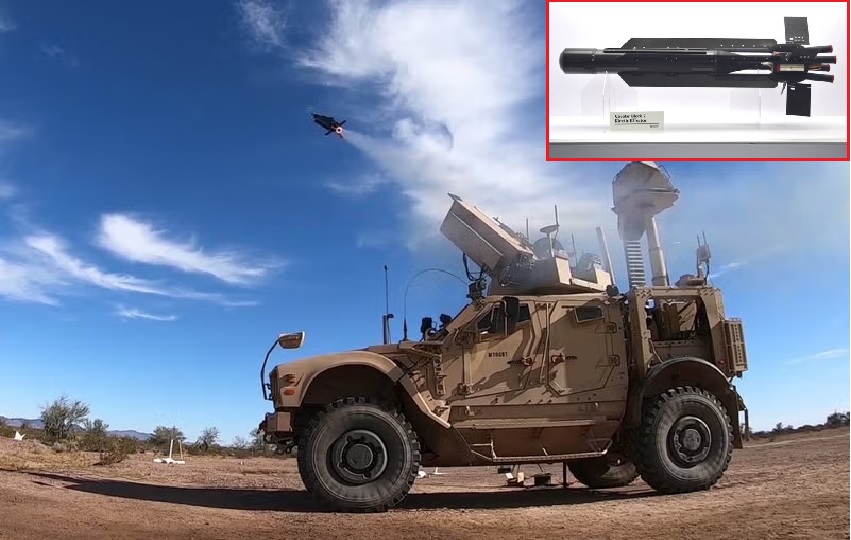
The AIM-9X Block II is a short-range air-to-air missile equipped with an imaging infrared seeker and thrust-vectoring control, enabling high maneuverability. It incorporates a two-way datalink that allows for lock-on-after-launch capability and in-flight target updates. The missile measures approximately 3.02 meters in length and has a launch weight of about 84 kilograms, powered by a solid-propellant rocket motor.
Designed to engage a range of aerial threats, the missile is capable of targeting fixed-wing aircraft, helicopters, cruise missiles, and unmanned aerial vehicles. In addition to air-to-air applications, the AIM-9X Block II is also employed in ground-based configurations as a short-range interceptor.
Integration with NASAMS and Air Defense Architecture
Lithuania integrates the AIM-9X Block II into its NASAMS (National Advanced Surface-to-Air Missile System), where it functions as a short-range interceptor within a layered air defense network. The country has received multiple NASAMS deliveries, including additional systems reported in April 2026, as part of an ongoing effort to expand its ground-based air defense capability.
Within this framework, AIM-9X missiles complement other systems such as IRIS-T, contributing to a multi-layered defensive structure. Lithuania does not operate fixed-wing combat aircraft, making ground-based air defense systems the central component of its national airspace protection strategy.
The addition of missiles under this FMS is expected to increase the operational inventory available to NASAMS batteries, supporting both training requirements and potential operational deployment. The inclusion of captive air training missiles enables routine drills that replicate real engagement conditions without expending live ordnance.
Strategic Context and NATO Interoperability
According to the U.S. State Department, the proposed sale supports U.S. foreign policy and national security objectives by strengthening the defense capabilities of a NATO ally. Lithuania occupies a strategic position on NATO’s eastern flank, bordering Belarus and the Russian exclave of Kaliningrad, and has prioritized the development of integrated air defense systems.
The transaction is also aligned with NATO interoperability standards. NASAMS is operated by multiple alliance members, and the use of AIM-9X missiles enhances compatibility in joint operations and training environments.
U.S. officials indicated that Lithuania is expected to integrate the systems without difficulty. The State Department further noted that the sale will not alter the basic military balance in the region.
Program Implementation and Support Structure
In addition to hardware, the package includes a comprehensive support structure covering engineering assistance, technical services, logistics, and training. These elements are intended to ensure sustainment, maintenance capability, and operational proficiency over the lifecycle of the system.
No offset agreements have been identified in connection with the proposed sale at this stage. The Defense Security Cooperation Agency has completed the required certification process, enabling the program to move forward into the contracting and implementation phase.
The transaction forms part of Lithuania’s broader effort to expand its air defense capacity, improve readiness levels, and maintain a sufficient запас of interceptors for both operational use and training within its NASAMS-based architecture.
——— End of Article ———