WASHINGTON — April 28, 2026 : The United States has conducted a sustained military airlift operation into the Middle East over the past several days, with continuous flights of heavy transport aircraft reinforcing logistics networks across the U.S. Central Command (CENTCOM) area of responsibility.
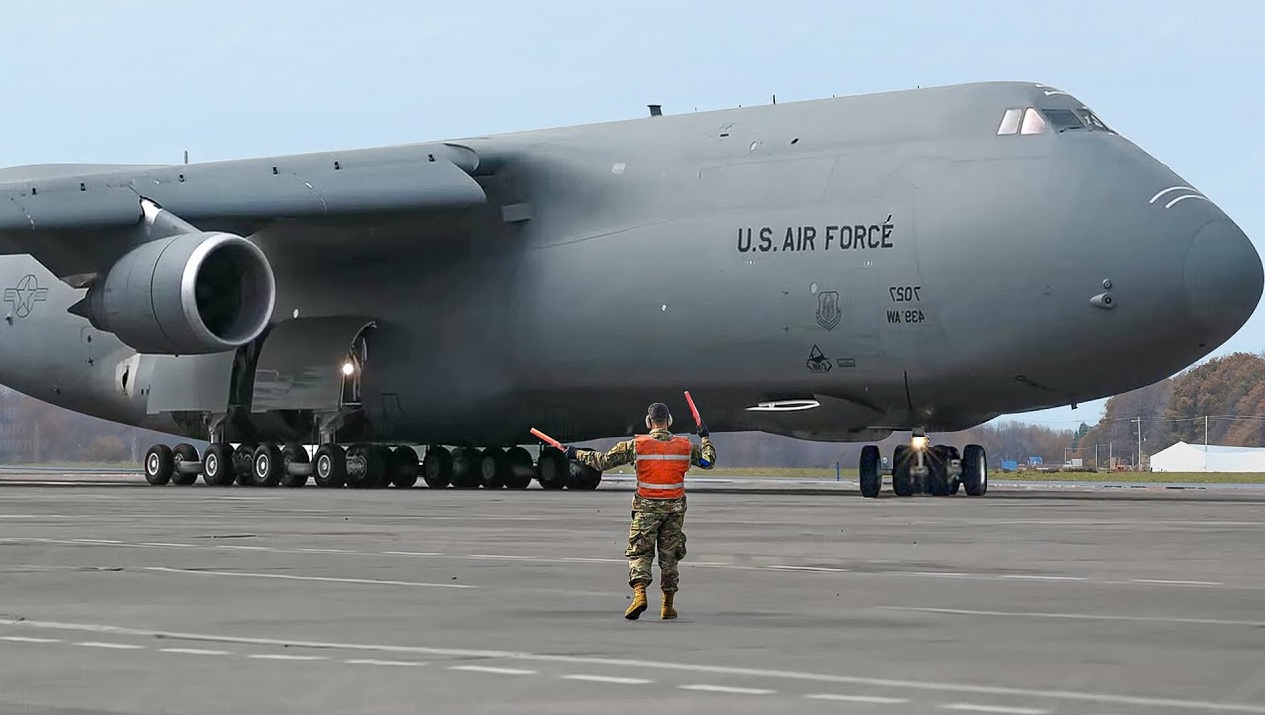
Open-source flight tracking data and defense monitoring indicate that multiple waves of C-17A Globemaster III and C-5M Super Galaxy aircraft have transited from the United States and Europe into the region. Many of these flights routed through European hubs, including Ramstein Air Base, before continuing toward operational locations in the Middle East.
Sustained Airlift Activity
Data collected over the past 24 hours shows at least 31 heavy transport aircraft delivering cargo to destinations supporting U.S. operations in Israel, Saudi Arabia, and Djibouti. Over a 72-hour period, the total number of such missions reached approximately 97 flights, reflecting a continuous logistical flow rather than isolated sorties.
The airlift has been supported by aerial refueling platforms, including the KC-135 Stratotanker and KC-46A Pegasus, enabling long-range operations from the continental United States and forward bases such as RAF Lakenheath in the United Kingdom.
Munitions and Logistics Role
The primary purpose of the operation appears to be the replenishment and buildup of munitions stockpiles at CENTCOM facilities. The transported cargo is assessed to include precision-guided missiles, aerial bombs, and other military supplies required to sustain ongoing and potential operations.
The C-17A Globemaster III is designed for rapid deployment of troops and cargo into both established and austere airfields, while the C-5M Super Galaxy is capable of carrying oversized equipment, including large air defense systems and bulk munitions loads. Together, they form the backbone of the U.S. Air Force’s strategic airlift capability.
Regional Force Posture
The airlift coincides with a broader increase in U.S. military presence across the CENTCOM region. Defense assessments indicate that approximately 330 U.S. military aircraft are currently deployed in the Middle East, representing an increase of about 10 percent in recent days.
Key operational hubs receiving logistical support are believed to include Al Udeid Air Base, Muwaffaq Salti Air Base, and Prince Sultan Air Base, although specific delivery points have not been officially confirmed.
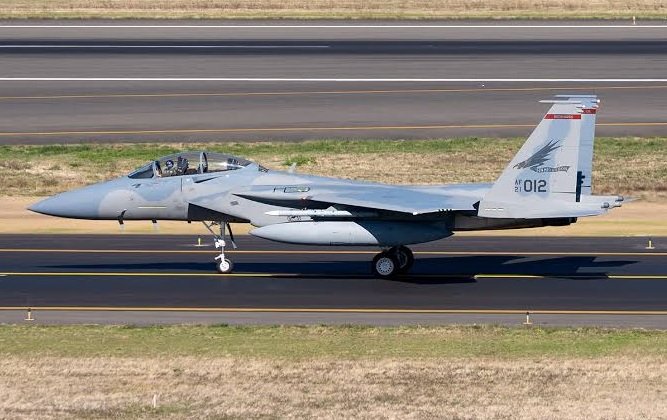
This logistics effort follows the deployment of additional combat assets, including F-35A Lightning II, F-15E Strike Eagle, and F-22 Raptor aircraft, along with missile defense systems such as Patriot missile system and Terminal High Altitude Area Defense.
Official Position
U.S. Central Command has not issued a formal statement detailing the specific objectives of the current airlift activity. However, the pattern of sustained transport flights aligns with established logistical practices aimed at maintaining supply levels and operational readiness for forward-deployed forces.
The ongoing operation reflects standard military sustainment procedures designed to ensure that personnel and equipment in the region remain adequately supported.
——— End of Article ———