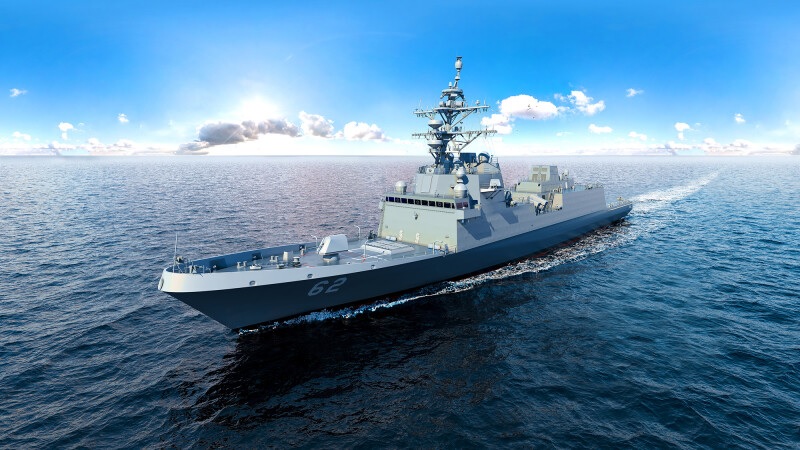
WASHINGTON, D.C. — May 2, 2026 : The U.S. Navy has outlined an accelerated acquisition and fielding strategy for its next-generation FF(X) frigate program in supporting documents for the Fiscal Year 2027 budget request, detailing timelines, funding allocations, and design priorities for what is intended to become a core element of the future surface fleet.
Program Overview and Strategic Context
The FF(X) program was initiated following the cancellation of the Constellation-class frigate effort in December 2025. The Navy selected a derivative of the Legend-class National Security Cutter as the baseline design to enable faster development and reduced technical risk. The approach is intended to deliver a proven, American-built platform capable of conducting maritime security, presence operations, and interdiction missions, while allowing larger surface combatants such as the Arleigh Burke-class destroyer to focus on high-end combat roles.
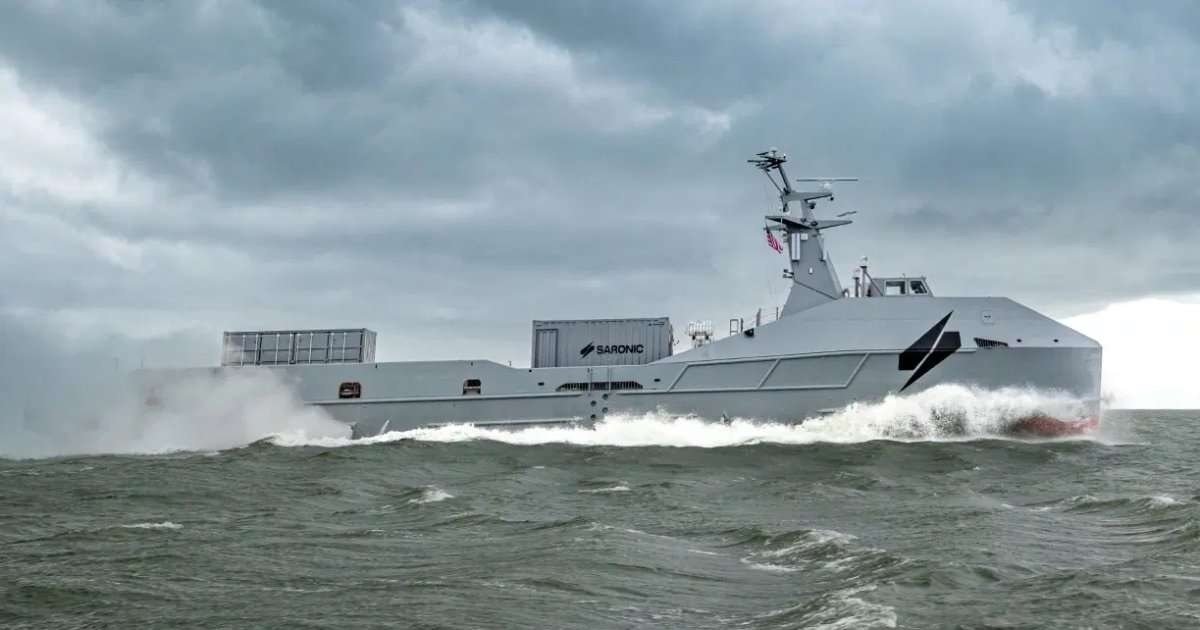
The frigates are also expected to serve as coordination nodes for unmanned surface and undersea systems, supporting the Navy’s evolving high/low fleet mix concept.
Accelerated Timeline and Construction Plan
According to the FY 2027 budget documentation, construction of the lead FF(X) frigate will be carried out by Huntington Ingalls Industries, with work assigned to its Ingalls Shipbuilding division in Pascagoula, Mississippi.
The Navy projects that the first ship will be launched in the first quarter of Fiscal Year 2029 (late calendar year 2028). Delivery is scheduled for the end of the third quarter of Fiscal Year 2030 (April to June 2030). If achieved, this would result in a procurement-to-delivery timeline of approximately four years, one of the shortest timelines for a new U.S. Navy surface combatant in recent decades.
To support this schedule, the Navy plans to incorporate components originally produced for the cancelled 11th Legend-class cutter. In April 2026, Ingalls Shipbuilding received a $282.9 million contract for lead yard support, including procurement of long-lead materials and pre-construction activities. The first two ships are being procured under a sole-source arrangement with HII.
Funding in the Fiscal Year 2027 Budget
The Department of the Navy has allocated approximately $1.429 billion in FY 2027 for procurement of the lead ship. An additional $212 million has been designated for research and development (R&D).
The R&D funding will support validation of ship systems, including combat system integration, future test planning, and development of modular payload capabilities. It also includes funding for integration of unmanned surface vessels (USVs) and design studies for Flight 2.
The FF(X) program is part of a broader shipbuilding request totaling $65.8 billion for 34 vessels in the FY 2027 budget.
Design Characteristics and Capabilities
The FF(X) frigate is designed to be approximately 421 feet in length, with a beam of 54 feet and a draft of 22 feet. The vessel will have a displacement of about 4,750 tonnes, a top speed of 28 knots, a range of 12,000 nautical miles, and an endurance of up to 60 days.
For Flight 1 ships, the Navy has opted for minimal modifications to the National Security Cutter baseline to maintain production speed. Key changes include the installation of a Rolling Airframe Missile launcher for point defense, integration of an SPS-77 variant air search radar, and modification of the stern boat ramp to support containerized payloads.
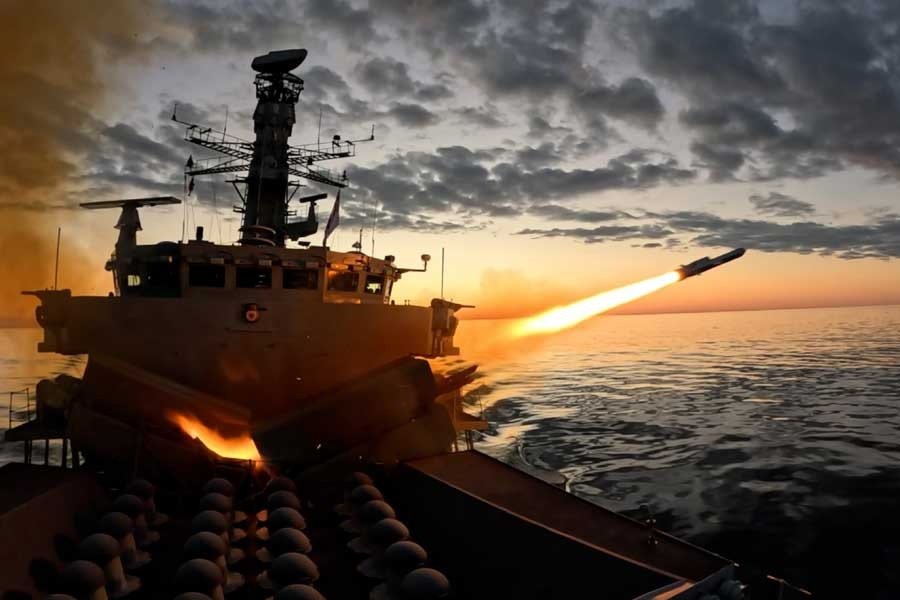
Primary armament for the initial configuration includes a 57 mm main gun, a 30 mm gun, a 21-cell RAM launcher, and electronic warfare systems such as the AN/SLQ-32 (V)6. The ships will also feature flexible stern stations capable of deploying up to 16 Naval Strike Missiles or 48 Hellfire missiles through containerized or unmanned systems.
Flight 1 Procurement and Operational Role
Procurement begins with one ship in FY 2027, with follow-on ships planned in subsequent years. At least the first two vessels will follow the Flight 1 configuration, emphasizing rapid production and operational availability over advanced built-in weapon systems.
The modular design approach allows the Navy to deploy mission-specific payloads while maintaining operational flexibility. Flight 1 vessels are expected to focus on lower-intensity operations, including maritime security and integration with unmanned platforms.
Flight 2 Development and Future Enhancements
Design work on Flight 2 frigates is already underway. The Navy is evaluating the integration of Vertical Launching Systems (VLS) into the hull to provide internal carriage of munitions, reducing reliance on containerized payloads.
Potential weapons for VLS-equipped variants include the RIM-162 Evolved Sea Sparrow Missile, SM-2 and SM-6 surface-to-air missiles, and the RUM-139 Vertical Launch Anti-Submarine Rocket.
Enhancing anti-submarine warfare (ASW) capabilities is identified as a key priority for later ships. The Navy plans to procure a total of 55 to 60 FF(X) frigates, with the majority expected to incorporate Flight 2 upgrades, including improved anti-air warfare (AAW) and ASW performance.
Industrial and Production Considerations
The decision to base the FF(X) on an existing cutter design allows construction to proceed alongside ongoing shipbuilding programs at Ingalls Shipbuilding, including destroyers and amphibious vessels. This approach is intended to reduce design complexity, streamline production, and maintain industrial base stability.
By leveraging an established platform and incorporating pre-existing components, the Navy aims to minimize delays typically associated with new ship classes.
Outlook
The FF(X) program represents a shift toward faster acquisition of adaptable surface combatants using proven designs. The combination of modular payload integration, unmanned systems coordination, and phased capability upgrades is intended to provide operational flexibility while maintaining a manageable development timeline.
Further details on system integration, Flight 2 configuration, and long-term procurement schedules are expected to be refined as the program progresses through the early stages of construction and testing under the FY 2027 funding framework.
——— End of Article ———