WASHINGTON — April 28, 2026 : The U.S. Navy has reaffirmed its plan to achieve Initial Operational Capability (IOC) for the AGM-88G Advanced Anti-Radiation Guided Missile–Extended Range (AARGM-ER) by September 2026, despite implementing a temporary pause in domestic procurement during fiscal year 2027.
The decision reflects a programmatic adjustment rather than a change in operational timelines, with Navy officials emphasizing that testing completion and software validation remain the immediate priorities before resuming large-scale acquisition.
Program Status and Procurement Strategy
The AGM-88G AARGM-ER, developed by Northrop Grumman, is designed to enhance the capability of carrier air wings to suppress and destroy advanced integrated air defense systems. The Navy has already procured dozens of missiles under earlier production contracts.
Under the fiscal year 2027 budget request, no funding has been allocated for additional U.S. procurement of the AGM-88G. Instead, production during that period will be redirected بالكامل toward fulfilling Foreign Military Sales (FMS) commitments tied to five signed international agreements.
A Navy spokesperson stated that U.S. procurement will resume in fiscal year 2028 following successful completion of all required testing milestones and software upgrades. At that point, production is expected to scale up to address a backlog exceeding 150 missiles.
During the interim year, manufacturing output will be dedicated to international customers, ensuring continuity of production lines while allowing additional time for system validation.
International Participation and Sales
Italy is a full development partner in the AARGM-ER program, contributing to both design and production phases. The United States has also approved or notified potential sales of the missile to multiple allied countries.
These include Australia, Finland—where up to 150 missiles have been cleared—the Netherlands with a potential acquisition of 265 units, and Poland. Norway has publicly indicated its intent to procure the system, although a finalized agreement has not yet been confirmed.
The U.S. Air Force is also acquiring the AGM-88G as part of its broader modernization efforts.
Design Evolution and Capabilities
The AGM-88G represents a significant redesign of the earlier AGM-88E AARGM, itself an evolution of the original AGM-88 High-speed Anti-Radiation Missile (HARM) developed in the 1970s.
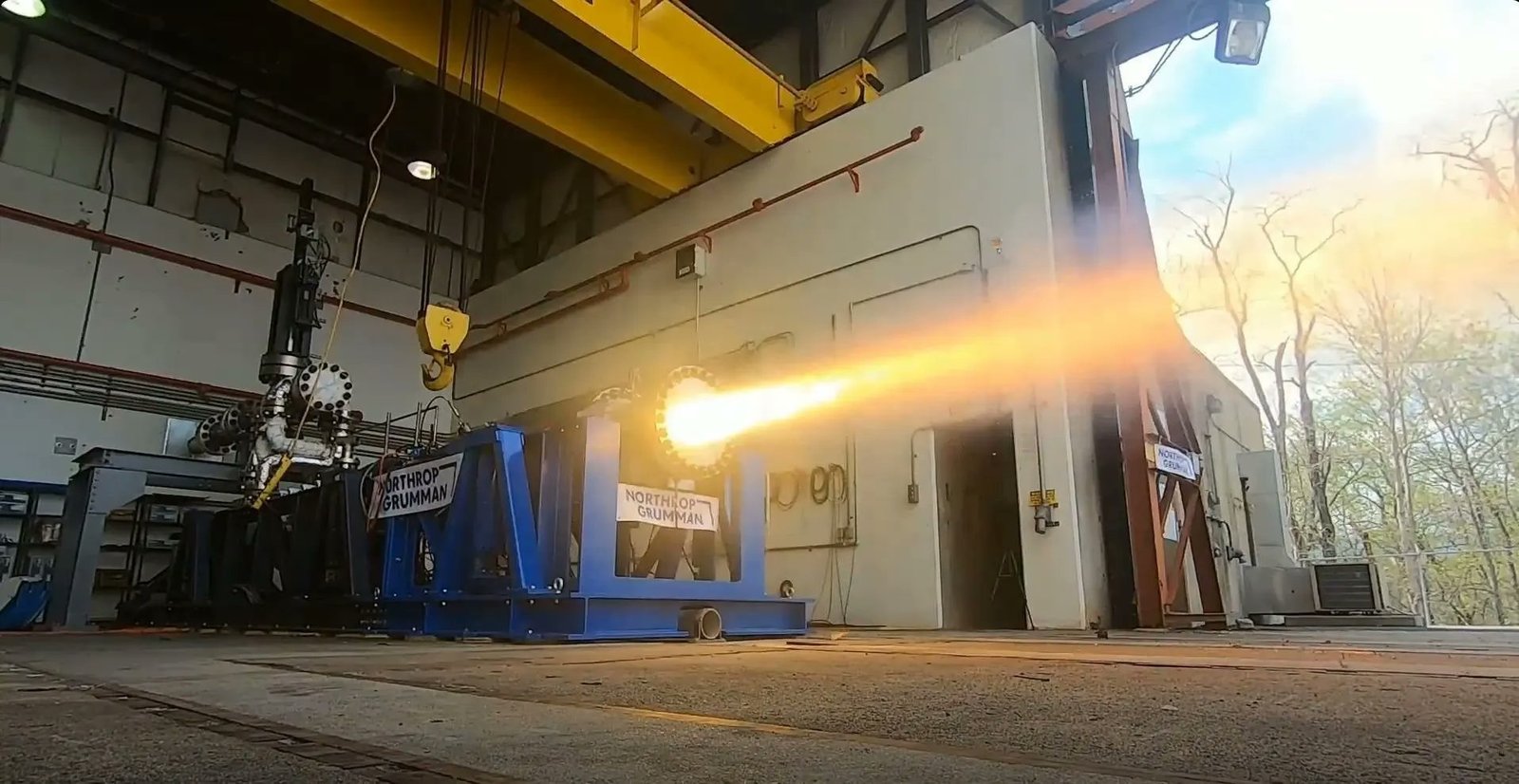
The updated missile incorporates a newly designed air vehicle optimized for higher speed and extended range, supported by a more powerful rocket motor and an improved control actuation system. Despite these structural changes, it retains the AGM-88E’s multi-mode guidance architecture.
This guidance suite combines a GPS-assisted inertial navigation system with a millimeter-wave radar seeker. The configuration enables the missile to continue tracking and engaging enemy radar systems even if those emitters shut down, a common countermeasure used by modern air defense networks.
In addition to its primary role, the AGM-88G maintains a secondary capability to strike fixed land or maritime targets using pre-designated coordinates.
Platform Integration Plans
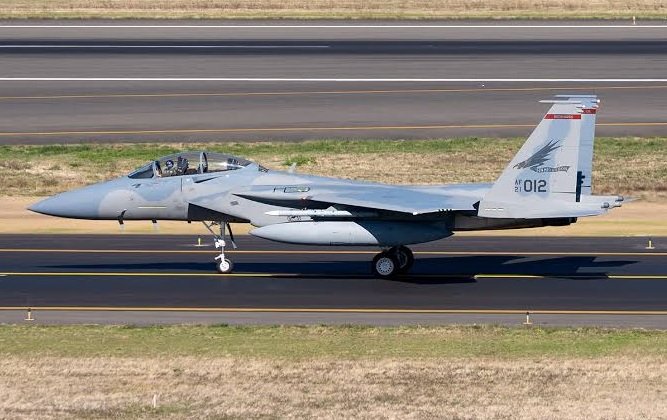
Initial operational integration of the AARGM-ER is planned on the Boeing F/A-18E/F Super Hornet and the Boeing EA-18G Growler, both of which already employ the AGM-88E variant.
The missile has also been dimensioned for internal carriage within the Lockheed Martin F-35A Lightning II and Lockheed Martin F-35C Lightning II. Future plans include external carriage compatibility across all F-35 variants as well as legacy Boeing F/A-18C/D Hornet aircraft.
Testing Progress and Technical Challenges
The program has experienced a series of technical and production challenges that have contributed to schedule adjustments. Issues identified during testing include deficiencies in the rocket motor, structural components, and software performance.
A June 2025 report by the Government Accountability Office cited these technical issues alongside supply chain constraints and delays in constructing a new production facility as key factors affecting the timeline.
During fiscal year 2025, three integrated weapon employment tests were conducted using F/A-18F aircraft. Only one test met all performance criteria, while the remaining two revealed discrepancies, prompting a temporary suspension of further testing pending corrective measures.
Additional oversight from the Office of the Director of Operational Test and Evaluation in its March 2026 report indicated that the IOC milestone could potentially shift into the first quarter of fiscal year 2027 if testing challenges persist.
However, the Navy has continued live-fire testing activities, including a successful missile event conducted in January 2026 at the Point Mugu Sea Range.
Related Programs and Future Concepts
In parallel with the AARGM-ER effort, the Navy is assessing requirements for a next-generation Advanced Emission Suppression Missile (AESM). The proposed system is expected to incorporate expanded capabilities, including the ability to engage airborne targets in addition to surface emitters.
The AESM concept does not appear in the fiscal year 2027 budget request, indicating that it remains in early exploratory stages.
Separately, the U.S. Air Force is advancing its own derivative program, designated the AGM-88J Stand-in Attack Weapon (SiAW). This variant is intended as a bridge capability focused on engaging time-sensitive, high-value ground targets such as missile launchers, air defense systems, electronic warfare assets, and anti-satellite infrastructure.
The Air Force has requested continued funding for the AGM-88J in fiscal year 2027 and maintains a target for fielding in 2026. Flight testing has included carriage on F-16 aircraft.
Northrop Grumman has also proposed a ground-launched version of the missile family, known as the Advanced Reactive Strike Missile (AReS), expanding potential deployment concepts beyond air-launched platforms.
Forward View
The Navy’s fiscal year 2027 procurement pause reflects a structured approach aimed at completing developmental testing and ensuring software reliability before expanding domestic acquisition. At the same time, ongoing production for international partners allows the program to maintain industrial momentum.
With IOC still targeted for September 2026, the program’s near-term trajectory will depend on the successful resolution of remaining technical issues and the completion of validation testing.
——— End of Article ———