WASHINGTON — April 30, 2026 : The U.S. Navy has formally identified 14 vessels for inactivation during fiscal year 2026, outlining a structured transition plan that includes recycling, dismantling, logistical repurposing, and transfer to federal asset management authorities. The decision was detailed in NAVADMIN 099/26, an administrative message released on April 27, providing a comprehensive framework for the phased removal of aging platforms from active service.
The inactivation schedule reflects the Navy’s continued effort to align force structure with evolving operational requirements, while reallocating resources toward next-generation surface combatants and submarine capabilities.
Submarine Fleet Transition Continues
Three submarines are scheduled for recycling under the Navy’s long-term undersea modernization strategy. These include the Los Angeles-class fast-attack submarines USS Newport News (SSN-750) and USS Alexandria (SSN-757), along with the Ohio-class guided-missile submarine USS Georgia (SSGN-729).
The Los Angeles-class submarines, many of which have approached or exceeded four decades of service, are being systematically retired as part of a transition toward the newer Virginia-class attack submarines. Both Newport News and Alexandria are expected to undergo defueling and dismantlement at Puget Sound Naval Shipyard in Bremerton, Washington. The retirement of USS Georgia is also consistent with the Navy’s broader realignment of its guided-missile submarine fleet.
Logistics Support Assets to Sustain Fleet Readiness
Four vessels will be redesignated as Logistics Support Assets (LSA), a classification that enables their use as sources for spare parts and critical equipment. The ships include the Ticonderoga-class guided-missile cruisers USS Shiloh (CG-67) and USS Lake Erie (CG-70), the Whidbey Island-class dock landing ship USS Germantown (LSD-42), and the Henry J. Kaiser-class underway replenishment oiler USNS John Ericsson (T-AO-194).
Under the LSA framework, these vessels will support maintenance and repair activities across the active fleet through systematic removal and reuse of functional components. The approach is intended to reduce supply chain pressure and extend the operational availability of frontline ships.
Continued Retirement of Ticonderoga-Class Cruisers
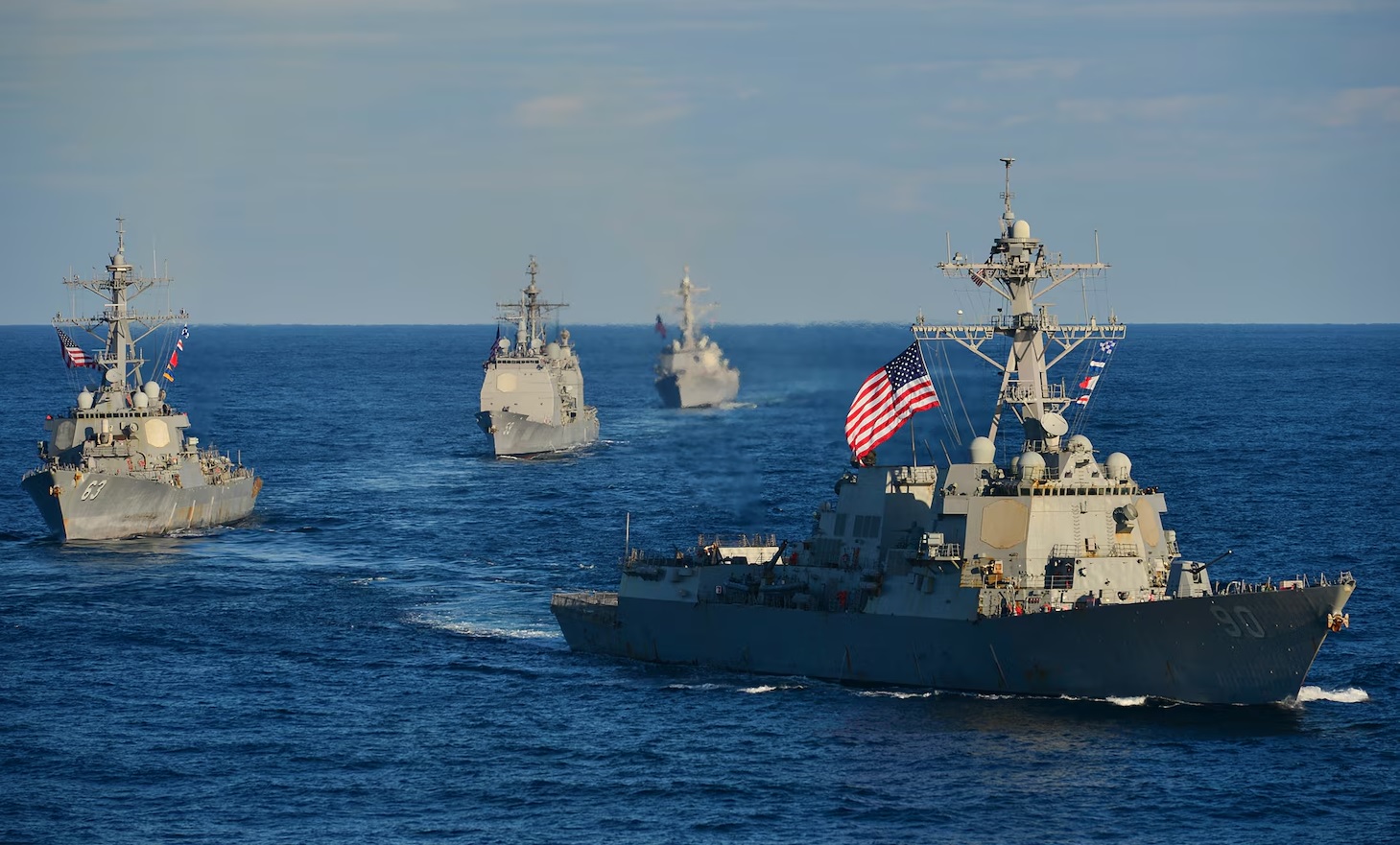
The inactivation of USS Shiloh and USS Lake Erie represents a further step in the phased retirement of the Ticonderoga-class cruiser fleet. First commissioned in 1980, the class consisted of 27 ships and introduced the Aegis Combat System, a radar-integrated weapons platform designed for multi-target detection and engagement.
As of April 23, 2025, 10 Ticonderoga-class cruisers remained in active service. The Navy has indicated that all remaining ships in the class are scheduled for retirement by fiscal year 2027, with replacement capabilities expected to be delivered through future large surface combatant and next-generation destroyer programs. In a related development, the final Ticonderoga-class cruiser previously homeported overseas began its return transit to the United States in March.
Littoral Combat Ship Program Adjustment
The Freedom-class littoral combat ship USS Fort Worth (LCS-3) has been designated for dismantling. The Freedom-class variant of the Littoral Combat Ship program has encountered persistent operational and maintenance challenges, including propulsion system issues, underperforming mission modules, and elevated lifecycle costs. The decision to dismantle Fort Worth is consistent with prior actions to reduce the number of early-generation LCS vessels in service.
Transfer of Support Ships to Maritime Administration
Six additional vessels will be transferred to the U.S. Maritime Administration (MARAD) for long-term management and eventual disposal. The ships include three Watson-class vehicle cargo vessels—USNS Red Cloud (T-AKR-313), USNS Watkins (T-AKR-315), and USNS Pomeroy (T-AKR-316)—as well as the Offshore Petroleum Distribution System (OPDS) vessel USNS Vadm. K. R. Wheeler (T-AG-5001).
Also included in the transfer are two Henry J. Kaiser-class underway replenishment oilers, USNS Pecos (T-AO-197) and USNS Big Horn (T-AO-198). These ships will be placed under the stewardship of MARAD, which is responsible for maintaining and disposing of retired naval and auxiliary vessels.
Structured Approach to Fleet Management
The fiscal 2026 inactivation plan continues a multi-year process through which the Navy has been retiring legacy systems while prioritizing investment in modern platforms. By designating certain ships for recycling, others for dismantlement, and some for secondary support roles, the Navy aims to manage lifecycle costs while maintaining operational readiness.
No additional details regarding decommissioning ceremonies or precise timelines beyond those outlined in NAVADMIN 099/26 were provided.
——— End of Article ———