WASHINGTON / MANAMA, Bahrain — April 19, 2026 : The United States Navy has deployed a range of unmanned underwater vehicles (UUVs) to the Strait of Hormuz to detect and clear naval mines laid by Iranian forces, as part of an ongoing effort to restore safe commercial navigation through one of the world’s most critical maritime chokepoints.
U.S. Central Command (CENTCOM) confirmed on April 11, 2026, that additional U.S. assets, including autonomous underwater drones, would join the mine-countermeasure mission. The operation is being conducted under the broader framework of Operation Epic Fury, with the objective of reopening the waterway to commercial shipping.
The Strait of Hormuz, which narrows to approximately 21 nautical miles, handles nearly 20 percent of global crude oil shipments. Recent mining activity attributed to Iran’s Islamic Revolutionary Guard Corps (IRGC) disrupted maritime traffic, leaving hundreds of commercial vessels unable to transit the corridor.
Mine Clearance Operations Underway
The U.S. Navy is employing unmanned and remotely operated systems to reduce risk to personnel and maintain operational distance from mined areas. The effort is supported by Littoral Combat Ships equipped with the Mine Countermeasures (MCM) mission package, which integrates unmanned surface vessels, underwater drones, and MH-60S helicopters.
Three Littoral Combat Ships are currently deployed for the mission. They are supported by two Avenger-class mine countermeasures vessels, USS Chief and USS Pioneer, which were recently deployed from Singapore to augment clearance operations.
Additionally, Arleigh Burke-class guided-missile destroyers USS Frank E. Petersen Jr. (DDG 121) and USS Michael Murphy (DDG 112) transited the strait to provide layered air and surface protection for ongoing operations.
Unmanned Systems and Capabilities
The mine-clearing effort relies on advanced sonar-equipped UUVs capable of mapping the seabed and identifying explosive threats in complex underwater environments.
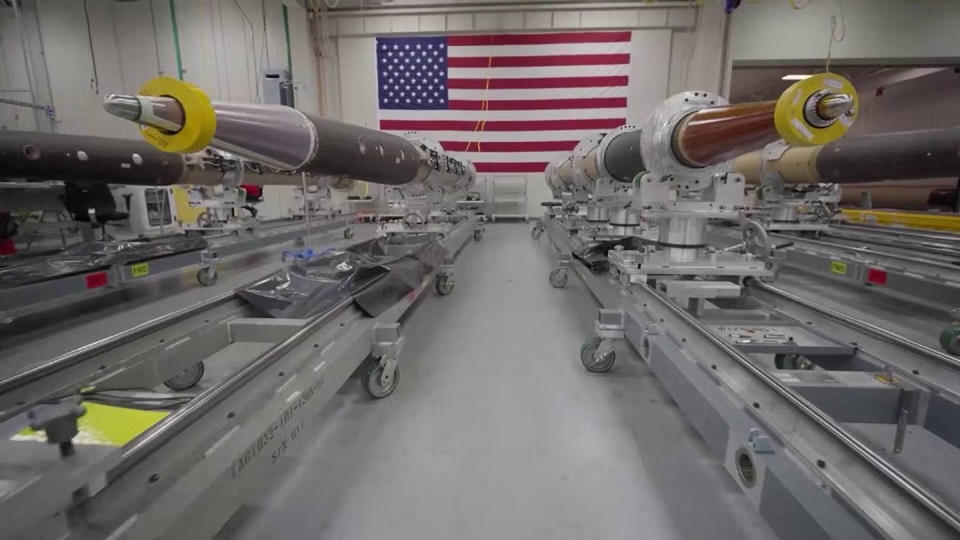
The Knifefish UUV, developed by General Dynamics, is a medium-class, torpedo-shaped system designed for deployment from Littoral Combat Ships. It uses low-frequency broadband sonar to detect, classify, and identify both buried mines and mines located in high-clutter environments. Operating as an off-board sensor, Knifefish allows host vessels to remain outside minefield boundaries while also collecting environmental data to support broader mine warfare systems.
The Navy is also deploying the Mk 18 Mod 2 Kingfish UUV, part of the Mk 18 family of unmanned systems. These autonomous vehicles conduct high-resolution seabed mapping and persistent mine detection using advanced sonar technologies.
Once mines are identified, neutralization is carried out using systems such as the Archerfish expendable remotely operated vehicle. Guided via fiber-optic cable, Archerfish delivers a shaped explosive charge to safely destroy detected mines.
Airborne support is being provided by MH-60S helicopters, which assist in coordination, surveillance, and surface-level detection alongside unmanned surface and underwater platforms.
Operational Context and Challenges
According to U.S. officials, Iranian forces deployed a mix of bottom mines, moored mines, and drifting mines using small boats. Reports indicate that Iran has not been able to account for the full extent of the mines laid in the area, complicating clearance operations.
CENTCOM Commander Admiral Brad Cooper stated that the immediate goal is to establish a secure transit corridor. He noted that once verified, the safe route will be communicated to the maritime industry to facilitate the resumption of commercial shipping.
The operation follows a breakdown in ceasefire negotiations between the United States and Iran. In parallel, U.S. President Donald Trump announced a blockade of maritime traffic entering and exiting Iranian ports, which took effect on April 13, 2026.
Defense analysts indicate that mine clearance in the Strait of Hormuz is expected to be gradual due to dense shipping lanes and challenging seabed conditions. The process requires repeated, high-resolution sonar sweeps to ensure that designated transit routes are fully cleared of explosive hazards before commercial operations can resume.
——— End of Article ———