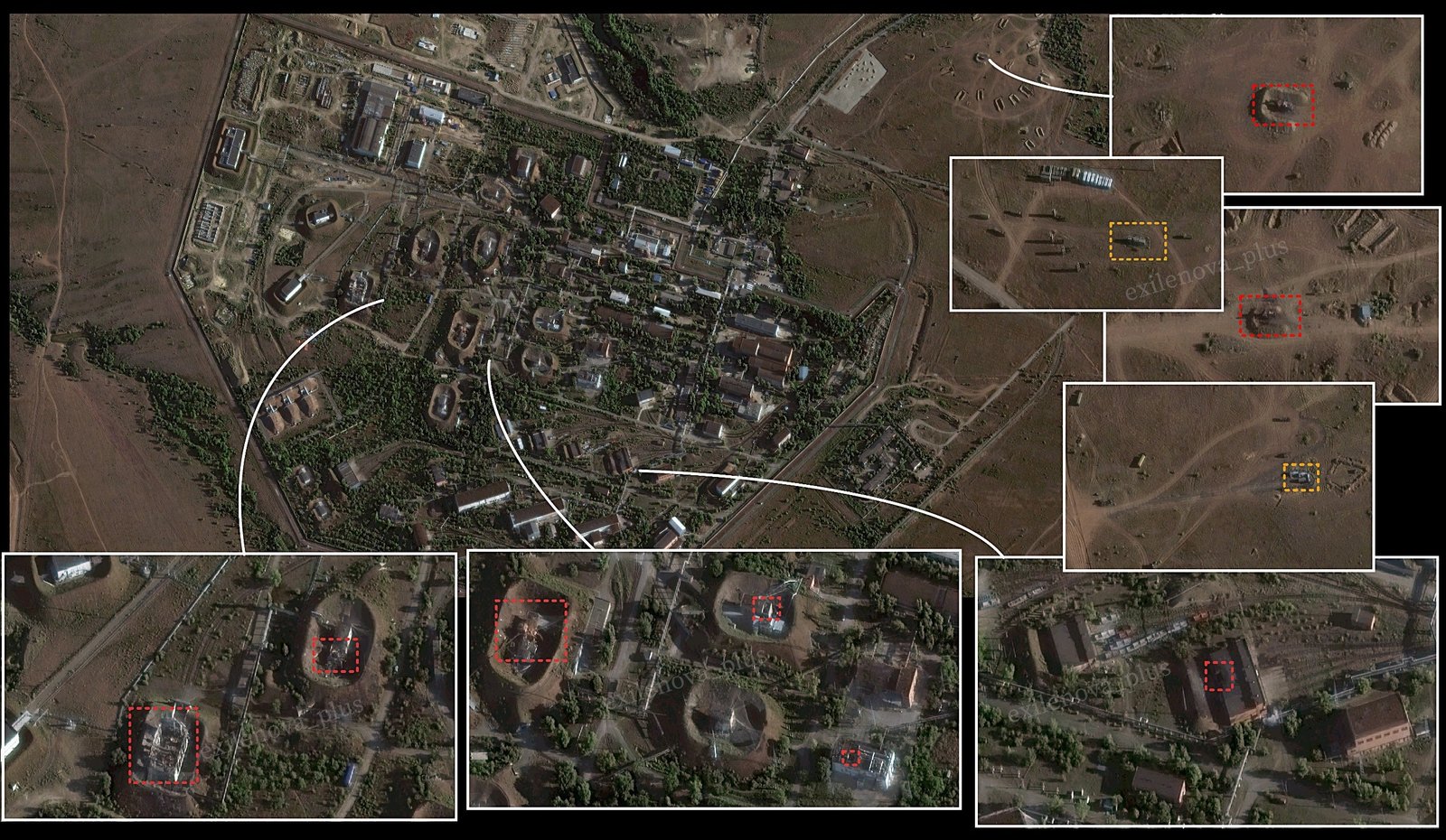
WASHINGTON — March 7, 2026 : The destruction of two key U.S. missile-defense radar systems in the Middle East has exposed significant challenges in restoring the region’s early-warning architecture. Replacing the AN/FPS-132 Upgraded Early Warning Radar in Qatar and the AN/TPS-59(V)3 tactical radar in Bahrain is expected to require substantial financial investment and multi-year manufacturing timelines, according to defense industry assessments.
The two radars performed different but complementary roles in the regional missile-defense network that supports systems such as Terminal High Altitude Area Defense (THAAD) and Patriot interceptors. Their loss has highlighted vulnerabilities in the supply chain for advanced radar technology, particularly due to reliance on gallium-based semiconductor materials largely produced under Chinese control.
Strategic Early-Warning Radar in Qatar
The AN/FPS-132 (Block 5) Upgraded Early Warning Radar (UEWR) located at Al Udeid Air Base in Qatar served as one of the most powerful ballistic-missile detection sensors in the region. Operated by the U.S. Space Force, the fixed-site radar provides long-range detection and tracking of ballistic missiles at distances of up to 5,000 kilometers.
The system was installed in 2013 under a contract valued at approximately $1.1 billion and manufactured by Raytheon. It forms part of a global network of upgraded early-warning radars used to monitor intercontinental and regional ballistic-missile threats.
Only a limited number of these radars exist worldwide. Approximately six UEWR installations operate globally, including sites in Thule, Greenland, Fylingdales in the United Kingdom, and several other strategic locations operated by the United States.
Unlike mobile radar systems, the AN/FPS-132 is a large, fixed installation composed of multiple multi-story structures containing three large phased-array antenna faces. Each antenna face integrates thousands of transmit-receive modules, specialized power systems, cooling infrastructure, and hardened facilities designed to maintain continuous surveillance.
Reconstructing such a system requires extensive site engineering, custom semiconductor manufacturing, antenna fabrication, and integration with existing missile-defense command networks. Industry estimates indicate that building a replacement radar could take between five and eight years, reflecting both the complexity of the system and the absence of rapid production capacity for such large strategic radars.
Tactical Air-Defense Radar in Bahrain
The second system destroyed was the AN/TPS-59(V)3 long-range tactical radar, deployed in Bahrain as part of regional air-defense operations. The radar is manufactured by Lockheed Martin and is primarily operated by the U.S. Marine Corps, with additional units exported to Bahrain and Egypt.
Unlike the fixed UEWR radar in Qatar, the AN/TPS-59 is a transportable L-band three-dimensional air-surveillance radar designed to detect and track aircraft, cruise missiles, and tactical ballistic missiles. The system has a maximum detection range of approximately 740 kilometers.
Development of the AN/TPS-59 family began in the 1980s, and only a limited number of systems were produced. Estimates indicate that approximately 21 units of various AN/TPS-59 variants have been built since its introduction, with roughly 12 of the AN/TPS-59(V)3 configuration currently in active or reserve service.
Although the radar is significantly smaller than the AN/FPS-132 and designed for mobility, replacing the destroyed unit is still expected to require 12 to 24 months. The estimated replacement cost ranges between $50 million and $75 million.
The timeline reflects the limited production infrastructure for the system. Because the radar’s core design dates back several decades, a replacement unit would likely require modernization of electronics and software before deployment.
Role in Regional Missile Defense
Both radar systems formed part of a layered missile-defense architecture across the Persian Gulf.
The AN/FPS-132 provided deep-range ballistic-missile detection and early warning, allowing interceptor systems to receive tracking data well before incoming missiles approached defended areas. This extended detection range increased the available response time for defensive systems such as THAAD and Patriot batteries deployed across Gulf states.
The AN/TPS-59(V)3, while shorter-range, provided theater-level surveillance and air-defense coordination. Its three-dimensional tracking capability enabled operators to monitor aircraft, cruise missiles, and ballistic missile trajectories while supporting Marine Corps air-defense operations and regional command networks.
The destruction of both radars reduces the redundancy and coverage of the existing early-warning network. Interim measures may include reliance on other sensors in the region, allied radar systems, and mobile replacements until permanent installations are restored.
Gallium Nitride Semiconductor Supply Constraints
A major factor affecting replacement timelines is the availability of specialized semiconductor materials required for modern radar systems.
Both the AN/FPS-132 and AN/TPS-59 utilize gallium nitride (GaN) semiconductor technology within their phased-array transmit-receive modules. GaN devices allow radar systems to operate at higher voltages and temperatures than older gallium arsenide (GaAs) components. This capability increases power efficiency and enables radars to scan larger volumes of airspace while maintaining extended detection ranges.
GaN technology is now widely used in several advanced U.S. defense systems, including the AN/SPY-6 naval radar and the AN/TPS-80 Ground/Air Task Oriented Radar (G/ATOR).
However, the global supply chain for the raw material used to produce GaN devices remains heavily concentrated. China controls roughly 98 percent of the world’s primary gallium production, creating a significant dependency for industries that require the material.
In late 2023, the Chinese government introduced export controls on gallium and germanium, citing national security considerations. These restrictions require exporters to obtain licenses before shipments can proceed.
Because the United States currently has limited domestic gallium production and refining capacity, defense manufacturers must rely on alternative sources such as recycling gallium-containing scrap or purchasing from the small number of non-Chinese producers. These alternatives provide far smaller quantities than global demand requires.
As a result, defense contractors such as Raytheon and Lockheed Martin face constraints when attempting to procure the large numbers of GaN semiconductor chips required for modern phased-array radar antennas.
Manufacturing and Integration Requirements
Replacing the AN/FPS-132 radar requires rebuilding the entire facility, including antenna arrays, hardened support structures, cooling systems, electrical infrastructure, and command-and-control integration. Each antenna array contains thousands of semiconductor transmit-receive modules that must be fabricated, calibrated, and installed with high precision.
Once construction is complete, the radar must undergo extensive testing to verify tracking accuracy, power performance, and integration with existing missile-defense networks.
The AN/TPS-59 replacement process is less complex but still requires manufacturing new antenna arrays, electronics shelters, radar processing equipment, and power systems configured for current operational requirements.
Procurement Status
As of March 2026, the U.S. Department of Defense has not publicly released a formal procurement timeline or contract announcement for replacing the destroyed radars.
Industry assessments indicate that material supply constraints, particularly gallium availability, represent the most significant bottleneck affecting production schedules. Until sufficient semiconductor components are secured, manufacturers may face delays in rebuilding the specialized radar arrays required for both systems.
Restoration of the full missile-defense sensor network in the Gulf region will therefore depend not only on funding and construction capacity, but also on the availability of critical semiconductor materials used in modern radar technology.
——— End of Article ———