WASHINGTON — The U.S. military's F-35 Lightning II is set to receive a major sensor upgrade under the aircraft's Block 4 modernization program, with the introduction of the AN/APG-85 active electronically scanned array (AESA) radar. Developed by Northrop Grumman, the new radar is expected to improve detection range, target tracking, processing power, and electronic warfare capabilities compared with the current AN/APG-81.
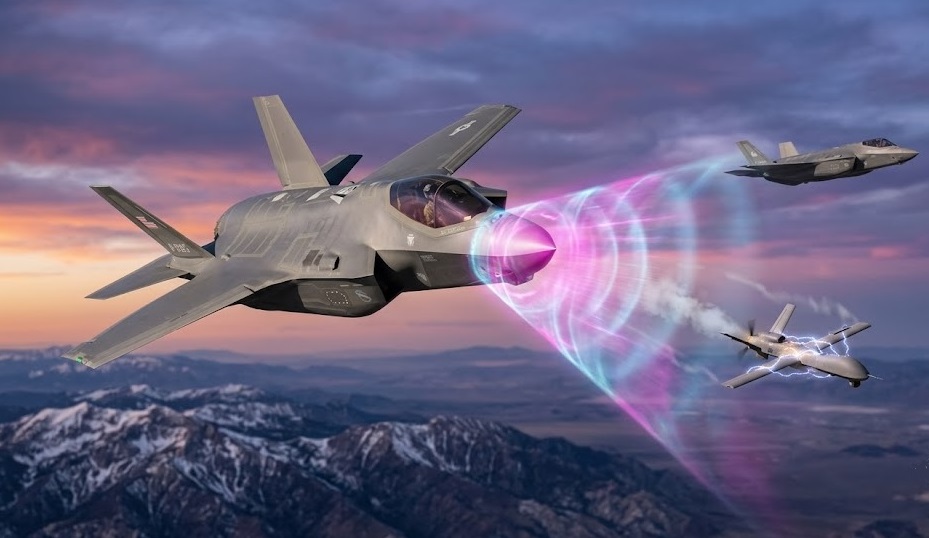
Recent discussions surrounding the radar have also raised the possibility that it could support high-power microwave (HPM) functions, allowing it to perform more than traditional radar missions. While U.S. officials have not confirmed such a capability, several defense analysts say the system's unusually high power and cooling requirements could indicate the potential for directed-energy applications.
Analysts Point to High-Power Microwave Potential
The AN/APG-85 uses gallium nitride (GaN) semiconductor technology, which is more efficient than previous radar technologies and allows operation across a wider range of frequencies while generating greater power output. These characteristics improve radar performance but could also support advanced electronic warfare functions.
According to analysts, including assessments published by the Australian Strategic Policy Institute (ASPI), the radar may be capable of operating in a high-power microwave (HPM) mode. In such a role, the system could direct concentrated bursts of radio-frequency energy toward enemy systems.
Instead of relying on kinetic weapons, high-power microwave energy could be used to jam, disrupt, or potentially damage electronic components in aircraft, air-defense systems, communications equipment, or missile seekers by overwhelming sensitive circuits. Such effects would occur at the speed of light and could provide an additional non-kinetic option during combat operations.
Although similar concepts have previously been discussed regarding the existing APG-81 radar, analysts believe the APG-85's increased power output and GaN-based design could significantly expand those capabilities.
How GaN-Based AESA Radars Could Support High-Power Microwave Functions
The AN/APG-85 is built using gallium nitride (GaN) technology, which offers higher power output, greater efficiency and better heat tolerance than older gallium arsenide (GaAs)-based radar systems. These characteristics allow modern Active Electronically Scanned Array (AESA) radars to generate stronger and more flexible radio-frequency signals.
Defense analysts note that a GaN-based AESA radar could, in theory, support high-power microwave (HPM) functions if designed for that role. Rather than simply scanning for targets, thousands of individual transmit/receive modules within the radar can electronically coordinate their output and direct concentrated radio-frequency energy toward a specific target.
In such a mode, the radar could perform electronic attack by transmitting powerful microwave energy to interfere with or overwhelm enemy radar, communications equipment, or missile seekers. Some analysts also suggest that, at relatively short distances and with sufficient power, concentrated microwave energy could potentially damage unprotected electronic circuits in drones, missiles or other military systems. However, there has been no official confirmation that the AN/APG-85 includes this capability.
Potential Capabilities and Operational Limits
Analysts emphasize that even if the APG-85 supports a high-power microwave mode, it would differ significantly from dedicated directed-energy weapons such as high-energy lasers (HELs).
High-power microwave systems are designed to disrupt or damage electronic components, rather than physically destroying a target. Unlike lasers, they do not burn through aircraft structures, armor or other materials.
Range is another important limitation. While an AESA radar can detect and track targets at long distances, the microwave energy needed to permanently damage electronics is generally effective only over much shorter ranges. At greater distances, the energy is more likely to provide electronic attack effects such as jamming or disrupting sensors rather than causing permanent damage.
Power generation and heat management also remain major engineering challenges. Operating a GaN-based AESA radar at very high power levels produces substantial heat, requiring advanced cooling systems to prevent overheating. This is consistent with the significantly higher cooling requirements identified for the AN/APG-85 during recent U.S. Senate hearings, where officials said the radar will require between 62 kW and 80 kW of cooling capacity, compared with approximately 30 kW in the current F-35 configuration.
Although analysts believe these requirements could support future high-power microwave functions, the U.S. Department of Defense and the F-35 Joint Program Office have not publicly confirmed that the AN/APG-85 is intended to operate as a directed-energy weapon. Most technical details of the radar remain classified.
Power and Cooling Requirements Raise Questions
Much of the speculation about the radar's possible directed-energy role comes from its power and thermal management requirements.
During recent hearings before the U.S. Senate Armed Services Committee, officials outlined the engineering challenges associated with integrating the APG-85 into the F-35 fleet.
The current F-35 cooling system is designed to manage approximately 30 kilowatts (kW) of heat. However, officials said the APG-85 will require between 62 kW and 80 kW of cooling capacity to operate at full capability.
Defense analysts note that this represents a substantial increase over existing requirements. They argue that such a large jump appears greater than what would normally be expected for radar sensing alone, leading to suggestions that the additional power could support high-power microwave functions alongside conventional radar operations.
Despite these assessments, the U.S. military has not officially confirmed that the APG-85 includes an operational HPM attack mode, and many of the radar's performance details remain classified.
Radar Delays Affect F-35 Deliveries
The rollout of the AN/APG-85 has also faced development and production delays.
During a June 2026 Senate hearing, Marine Corps Lt. Gen. Gregory Masiello, Executive Officer of the F-35 Joint Program Office, confirmed that the U.S. military had accepted at least six F-35B aircraft for the Marine Corps without radar systems installed.
Because the APG-85 uses different mounting hardware than the older APG-81, the aircraft cannot simply be fitted with the previous radar as a temporary solution. Instead, the radar compartment is fitted with ballast to maintain the aircraft's balance until the new radar becomes available.
Officials also indicated that similar radar-less deliveries are expected for Air Force and Navy variants. These aircraft remain flyable and can receive information through networked data links from other platforms, but they do not have their full onboard sensor capability and are not considered fully mission-capable in that configuration.
The first production batch of the AN/APG-85 is currently expected to be delivered in April 2028.
Additional Aircraft Upgrades Required
Installing the new radar is only one part of the Block 4 modernization effort.
To fully support the APG-85's electrical and thermal demands, the F-35 will also require the Engine Core Upgrade (ECU) and an upgraded Power and Thermal Management System (PTMS).
These improvements are intended to provide the additional electrical power and cooling needed not only for the radar but also for future avionics, mission computers, sensors, and electronic warfare systems. Current plans place these upgrades in the early 2030s.
The F-35's cooling capacity has long been identified as one of the aircraft's technical limitations, making thermal management a key element of the Block 4 program.
Part of a Broader Shift in Military Aviation
Modern combat aircraft increasingly require greater electrical power to support advanced sensors, electronic warfare equipment, secure communications, and onboard data processing. As a result, power generation and heat management have become major design priorities for next-generation fighter aircraft.
The APG-85 is expected to strengthen the F-35's sensor and electronic warfare capabilities as part of this broader trend. U.S. officials have described it as an advanced multifunction radar designed to address current and future air and surface threats.
While analysts believe the radar's technical characteristics could support high-power microwave operations, there has been no official confirmation that the AN/APG-85 will function as a directed-energy weapon. Its full capabilities are expected to become clearer as the Block 4 modernization program progresses and supporting aircraft modifications are introduced over the coming years.
——— End of Article ———