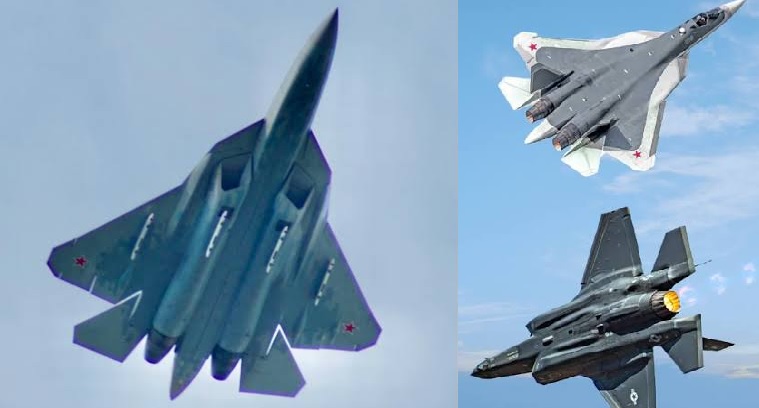
Moscow — Newly released footage from July 3 shows a Russian Aerospace Forces Su-57 fifth-generation fighter operating with an expanded air-to-air missile load, carrying four externally mounted R-77 series beyond-visual-range (BVR) missiles. The configuration indicates a shift toward homeland air defence missions, where increased firepower is prioritised over maintaining the aircraft's full stealth characteristics.
The Su-57 is designed to carry weapons inside its internal weapons bays to preserve its low radar signature. It is estimated to accommodate up to six R-77M air-to-air missiles internally. With four additional R-77 missiles mounted externally, the aircraft's total BVR missile load reaches ten.
Using external weapon stations increases the aircraft's missile capacity but also reduces its stealth advantage by increasing its radar signature. Military analysts say this configuration is more suitable for operations over Russian-controlled territory, where the aircraft is less likely to face long-range air-to-air threats and can focus on defending Russian airspace.
The aircraft is considered well suited for intercepting cruise missiles and one-way attack drones because of its advanced sensor suite and long endurance. The Su-57 is equipped with the N036 Belka radar system, which includes five distributed Active Electronically Scanned Array (AESA) radars, along with an infrared search-and-track (IRST) system. These systems allow the fighter to detect and track low-observable aerial targets while remaining on patrol for extended periods.
The footage does not clearly identify which version of the R-77 missile is being carried externally. Russia currently operates both the newer R-77M and the older R-77-1 variants.
The R-77M was developed specifically for the Su-57 and features cropped control fins that allow it to fit inside the aircraft's internal weapons bays. It has a reported engagement range of up to 200 kilometres, supported by a dual-pulse solid rocket motor and aerodynamic improvements. The missile also incorporates an AESA radar seeker with an active phased-array antenna, improving resistance to electronic jamming.
The older R-77-1 has a shorter reported range of about 110 kilometres and is generally carried externally on the Su-57 because its larger fin design is not compatible with the internal weapons bay. Although it offers lower performance than the R-77M, it is believed to be less expensive to produce, making it a practical option for external carriage during missions where stealth is not the primary requirement.
The Su-57 has gradually expanded its operational role since entering combat-related service. According to a January 2023 assessment by the British Ministry of Defence, the aircraft had been launching long-range stand-off missiles into Ukraine since at least June 2022.
Reports have also indicated that Su-57 fighters, together with MiG-31 interceptors, have employed the R-37M long-range air-to-air missile against Ukrainian aircraft while remaining inside Russian airspace.
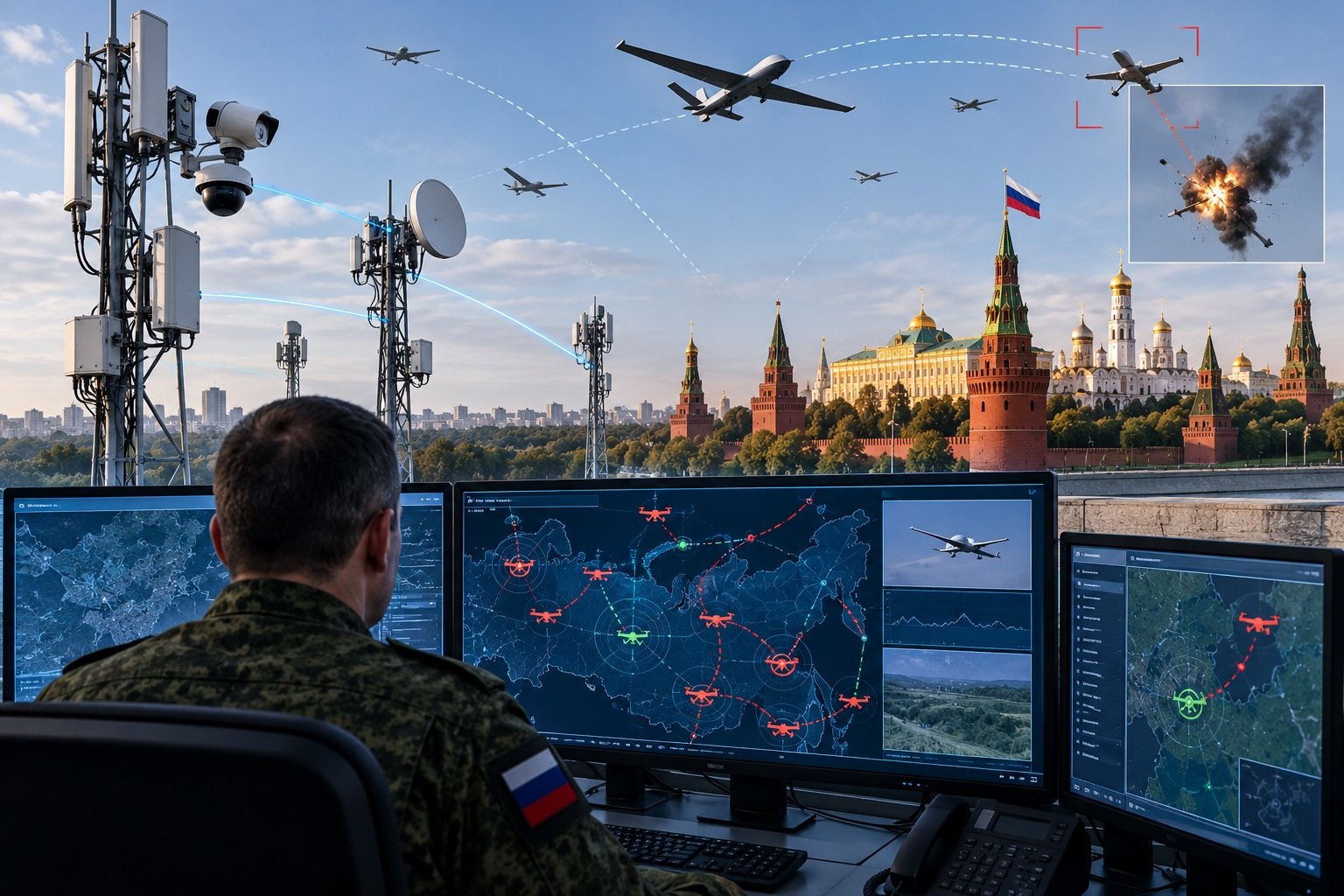
The latest configuration comes as Russia continues to strengthen its homeland air defence against long-range strike threats, including cruise missiles and drones targeting military facilities deep inside the country.
Over the past three years, the Russian Aerospace Forces have increased the number of production-standard Su-57 fighters in service and continued to develop new operational concepts for the aircraft. The latest sighting suggests that, alongside its traditional stealth role, the Su-57 is also being employed as a heavily armed air defence platform capable of carrying a significantly larger beyond-visual-range missile load when mission requirements allow.
Source: militarywatchmagazine
——— End of Article ———