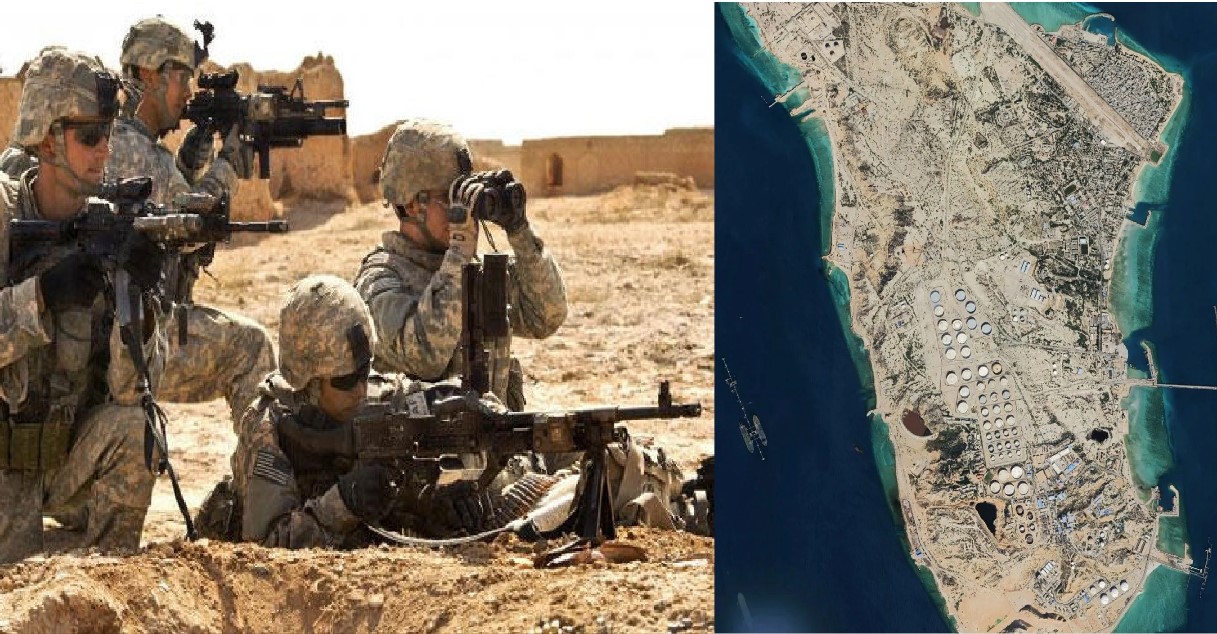
WASHINGTON — March 8, 2026 : Officials within the United States government are discussing potential contingency plans that include the seizure of Iran’s primary oil export hub, Kharg Island, along with a separate option involving the deployment of American special operations forces to secure Iran’s stockpile of highly enriched uranium. The discussions were first reported by Axios and are part of broader strategic deliberations linked to the regional conflict that began on February 28, 2026.
According to the report, the proposed measures would aim to simultaneously disrupt Iran’s primary source of export revenue and reduce the risk of a rapid nuclear weapons breakout by securing sensitive nuclear materials located inside the country.
Strategic Importance of Kharg Island
Crude oil produced in mainland Iranian fields is transported to the island through a system of five submarine pipelines connected to onshore production areas. Once the oil reaches Kharg Island, it is stored in a network of about 40 large storage tanks, which collectively provide 28 to 30 million barrels of storage capacity. The site’s storage capacity expanded in 2025, when an additional 2 million barrels were added.
The island contains multiple loading jetties and remote mooring points capable of servicing very large crude carriers (VLCCs). At maximum operational capacity, the terminal can load up to 7 million barrels of crude oil per day, allowing simultaneous berthing for as many as 10 VLCC tankers.
While the terminal has the technical capacity to load significantly higher volumes, actual exports have been lower in recent years. Iran’s crude oil exports through Kharg Island typically range between 1.3 million and 1.6 million barrels per day, although shipments have occasionally exceeded 2 million barrels per day.
Iran’s total crude production currently averages around 3.3 million barrels per day, with an additional 1.3 million barrels per day consisting of condensate and other petroleum liquids. The majority of exported crude from Kharg Island is shipped to buyers in Asian markets.
In 2023, Iran’s net oil export revenues were estimated at approximately $53 billion, highlighting the facility’s central role in generating foreign currency income for the country.
Infrastructure and Export Logistics
Kharg Island’s infrastructure includes central pumping stations, pipeline distribution systems, tanker berths, and control facilities that support continuous loading operations for international tankers. Oil arriving from the mainland is directed into storage tanks before being transferred to export vessels.
The island’s geographic location enables tankers to depart directly through the Persian Gulf and transit the Strait of Hormuz, one of the world’s most important maritime energy corridors.
Because the majority of Iranian crude exports pass through this single terminal, control of Kharg Island would disrupt the existing logistics chain that supports most of the country’s energy shipments.
Proposed Operation to Secure Enriched Uranium
In addition to the economic dimension involving Kharg Island, discussions reportedly include a separate operational concept focused on Iran’s nuclear program.
The option under consideration involves the deployment of U.S. special operations forces inside Iran to locate and secure highly enriched uranium currently held by the country. The operation would target Iran’s stockpile of uranium enriched to approximately 60 percent purity.
According to monitoring data from the International Atomic Energy Agency, Iran is believed to possess around 450 kilograms of uranium enriched to roughly 60 percent. This enrichment level is below the 90 percent threshold considered weapons-grade, but nuclear specialists note that material at this level can be further enriched relatively quickly if additional processing occurs.
IAEA standards indicate that roughly 42 kilograms of uranium enriched to 60 percent represents the theoretical minimum quantity required to produce the fissile core of a nuclear device if it were further enriched. Based on this benchmark, a stockpile of 450 kilograms could contain enough material for approximately 10 to 11 nuclear weapons after additional enrichment.
Iran’s overall inventory of enriched uranium across all enrichment levels is estimated to exceed 9,000 kilograms.
Status of the Discussions
The proposals described in the report remain part of internal contingency planning and have not been implemented. No official statement from the U.S. Department of Defense or the White House has confirmed operational preparations to seize Kharg Island or conduct ground operations inside Iran.
The discussions are taking place within the context of the broader regional conflict that began on February 28, 2026, which has involved military operations targeting Iranian infrastructure and capabilities.
At present, the reported measures remain policy options under review rather than confirmed operational plans.
——— End of Article ———