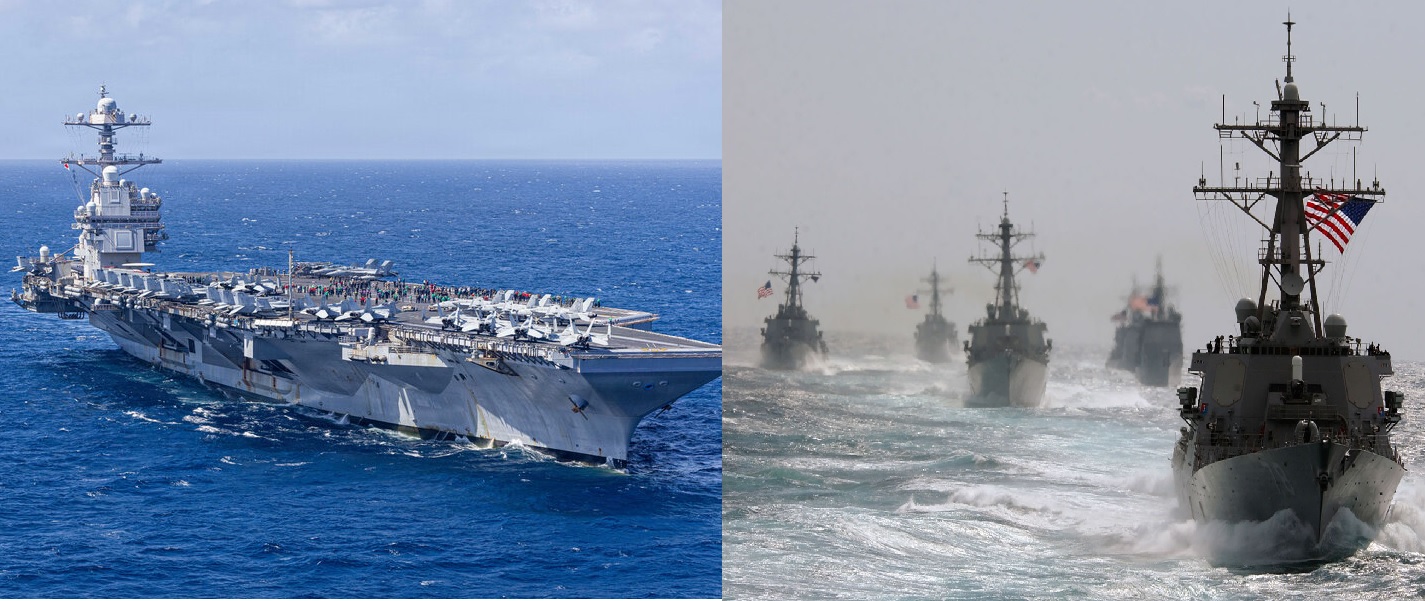
WASHINGTON — April 23, 2026 : The United States is intensifying its naval posture in the Middle East as the aircraft carrier USS George H.W. Bush is expected to enter the U.S. Central Command (CENTCOM) area of responsibility within the next 48 hours. The deployment coincides with new directives issued by Donald Trump targeting maritime mine threats in the Strait of Hormuz.
The carrier departed Naval Station Norfolk on March 31, 2026, and has been transiting via the Cape of Good Hope, a route assessed by U.S. officials as reducing exposure to potential threats in the Red Sea and the Bab el-Mandeb Strait. Upon arrival, it will reinforce U.S. operations in the Arabian Sea and Persian Gulf.
Carrier Strike Group Composition and Regional Posture
The George H.W. Bush carrier strike group includes the guided-missile destroyers USS Ross (DDG-71), USS Donald Cook (DDG-75), and USS Mason (DDG-87), along with the fast combat support ship USNS Arctic (T-AOE-8).
Once in theater, the carrier will join the USS Abraham Lincoln, which has been operating in the northern Arabian Sea. The addition of the George H.W. Bush will bring the total number of U.S. carrier strike groups in the CENTCOM area to three, significantly expanding airpower, surveillance, and maritime strike capabilities during ongoing regional operations.
Presidential Directive on Mine-Laying Activities
In a statement posted on April 23, 2026, via Truth Social, President Donald Trump directed the U.S. Navy to employ immediate lethal force against any vessel engaged in laying sea mines in the Strait of Hormuz. The order instructs forces to “shoot and kill any boat” involved in such activities without hesitation.
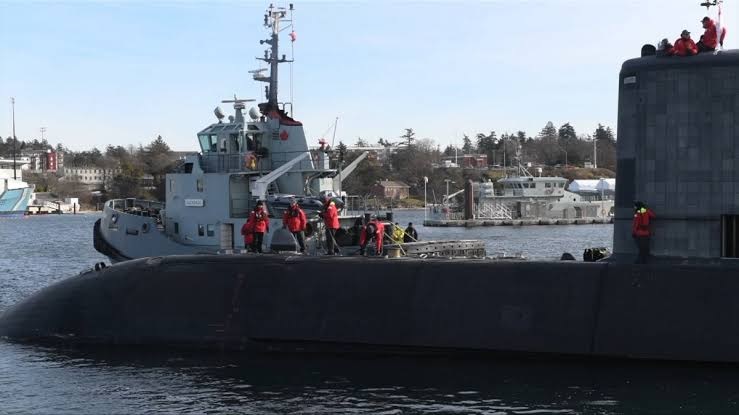
The directive also mandates a substantial increase in mine countermeasure operations. According to the president’s statement, ongoing mine-clearing efforts are to be expanded to three times their current operational level. These operations involve specialized mine countermeasure vessels, divers, and unmanned systems tasked with identifying and neutralizing naval mines.
Trump further stated that 159 Iranian naval vessels are currently “at the bottom of the sea.” No independent confirmation or denial of this claim has been issued by CENTCOM or other U.S. defense authorities.
Strategic Importance of the Strait and Ongoing Operations
The Strait of Hormuz remains a critical global energy transit route, accounting for approximately 20 percent of worldwide oil shipments. Disruptions linked to mine-laying activities have complicated commercial navigation and prompted a sustained U.S. military response.
The United States initiated a maritime blockade of Iranian ports and coastal areas earlier in April 2026 following escalations in the broader regional conflict that began in late February 2026. As part of enforcement actions, U.S. forces recently boarded the Guinea-flagged tanker Majestic X in the Indian Ocean over allegations of transporting sanctioned Iranian crude.
Pentagon assessments indicate that, under current operational conditions, full clearance of mines in the strait could require up to six months. The expansion of mine-sweeping efforts is intended to accelerate this timeline and mitigate risks to commercial and military vessels.
Iranian Naval Capabilities and Regional Context
Iran’s naval forces, operated by both its regular navy and the Islamic Revolutionary Guard Corps Navy, include a mix of frigates, corvettes, submarines, patrol boats, fast-attack craft, and smaller support vessels. Pre-conflict estimates placed the combined fleet at over 100 vessels, with broader counts—including auxiliary and small craft—aligning with the 159 figure referenced by the U.S. president.
Iranian officials have indicated that maritime transit through the Strait of Hormuz will remain restricted as long as U.S. blockade measures continue. The security environment remains complex, with naval operations ongoing despite a fragile ceasefire that has been in place since early April 2026.
Diplomatic Efforts and Outlook
Diplomatic negotiations aimed at establishing a durable ceasefire—previously mediated in Islamabad—remain stalled. While military activity continues at sea, U.S. officials maintain that operations are focused on ensuring freedom of navigation and maintaining maritime security.
The arrival of the USS George H.W. Bush is expected to further strengthen U.S. operational capacity in the region. However, detailed timelines regarding its exact entry into the CENTCOM area and specific implementation measures for the new mine-related directives have not been publicly released beyond the president’s statements.
——— End of Article ———