WASHINGTON — April 26, 2026 : The U.S. Army has requested $486 million in its Fiscal Year 2027 budget to procure 34 Sentinel A4 air defense radars, marking a continued step in the service’s effort to modernize short-range air and missile defense capabilities.
The Sentinel A4, designated AN/MPQ-64A4 and developed by Lockheed Martin, is an X-band Active Electronically Scanned Array (AESA) radar powered by Gallium Nitride (GaN) technology. It is intended to replace the legacy Sentinel A3 (AN/MPQ-64A3) and serve as the Army’s primary short-range air defense sensor.
Production and Acquisition Plan
The Army plans to transition the Sentinel A4 program from low-rate initial production (LRIP) to full-rate production (FRP), with a Full Rate Production decision scheduled for August 2026. This milestone will support a broader acquisition objective of more than 200 radars over the life of the program.
As of Fiscal Year 2026, the Army has received, ordered, or requested more than 60 Sentinel A4 systems. This includes a batch of 33 radars expected to be ordered during the current fiscal year. Following the anticipated full-rate production decision, deliveries are planned to begin at a rate of approximately two radars per month, increasing to four units per month as production stabilizes.
Recent program activity includes the delivery of the first Sentinel A4 unit under LRIP 2 phase. The system has also completed the first phase of Initial Operational Test and Evaluation (IOT&E), supporting its transition into higher-rate production.
System Design and Capabilities
The Sentinel A4 features a digital, open-architecture AESA design with GaN transmit/receive modules and sub-array digital beamforming. Compared to the Sentinel A3, the new radar offers significant performance improvements, including more than a 75 percent increase in detection range, with some assessments indicating improvements of up to 175 percent, and a 225 percent increase in sensitivity.
The radar provides full 360-degree azimuth coverage and hemispheric surveillance from ground level to zenith, eliminating the cone-of-silence limitation seen in earlier systems. It has a detection range of up to 200 kilometers and can track hundreds of targets simultaneously in real time.
The system is capable of detecting a wide range of threats, including cruise missiles, unmanned aerial systems (UAS)—including low-observable targets (0.01 m² RCS)—fixed-wing and rotary-wing aircraft, and rocket, artillery, and mortar (RAM) threats. It can also trace RAM threats back to their point of origin and calculate impact points to support force protection.
Additional technical specifications include a system weight of approximately 6,070 kilograms (13,382 pounds) and power requirements of 10 kW, 400 Hz, 115/200 VAC. The radar incorporates an open architecture with approximately 60 percent built-in growth potential, enabling future upgrades to address evolving threats.
Integration and Operational Role
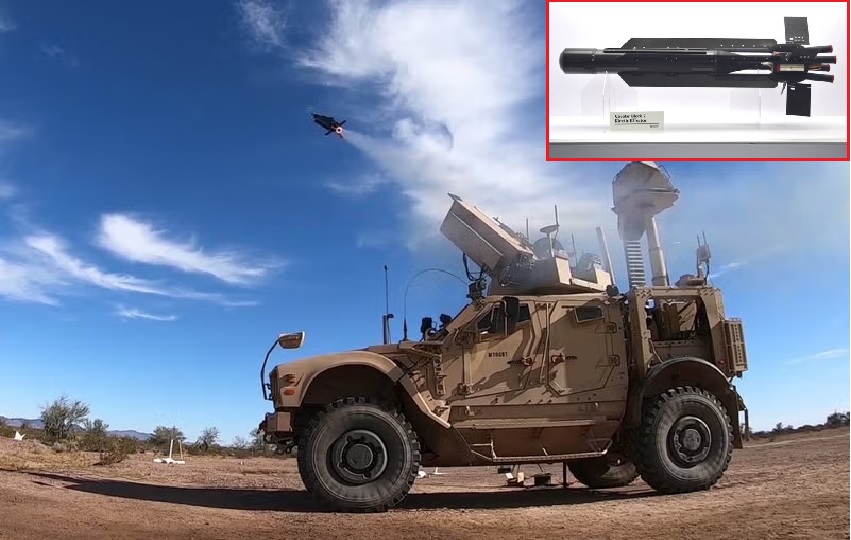
The Sentinel A4 is designed to integrate with the Army’s broader air and missile defense network, including the Integrated Battle Command System (IBCS) and Forward Area Air Defense Command and Control (FAAD-C2). It provides surveillance, target acquisition, and fire-control quality tracking data to support systems such as Maneuver Short-Range Air Defense (M-SHORAD) and Indirect Fire Protection Capability Increment 2.
The radar is mounted on mobile platforms and designed for expeditionary operations. It can be transported via air, sea, rail, or ground, enabling rapid deployment across operational environments.
——— End of Article ———