NASHVILLE, Tennessee — April 17, 2026 : The U.S. Army is examining the integration of aerial refueling capabilities into its future MV-75A Cheyenne II tiltrotor fleet, alongside potential investment in uncrewed tanker aircraft modeled on the U.S. Navy’s MQ-25 Stingray. The initiative reflects the Army’s effort to extend operational reach and sustain long-range air assault missions, particularly in geographically expansive and contested environments such as the Indo-Pacific.
The discussion was highlighted during the 2026 Army Aviation Association of America (AAAA) Warfighting Summit, where Army aviation leaders and industry representatives outlined emerging requirements tied to the Future Long-Range Assault Aircraft (FLRAA) program.
Aerial Refueling Considerations for MV-75A
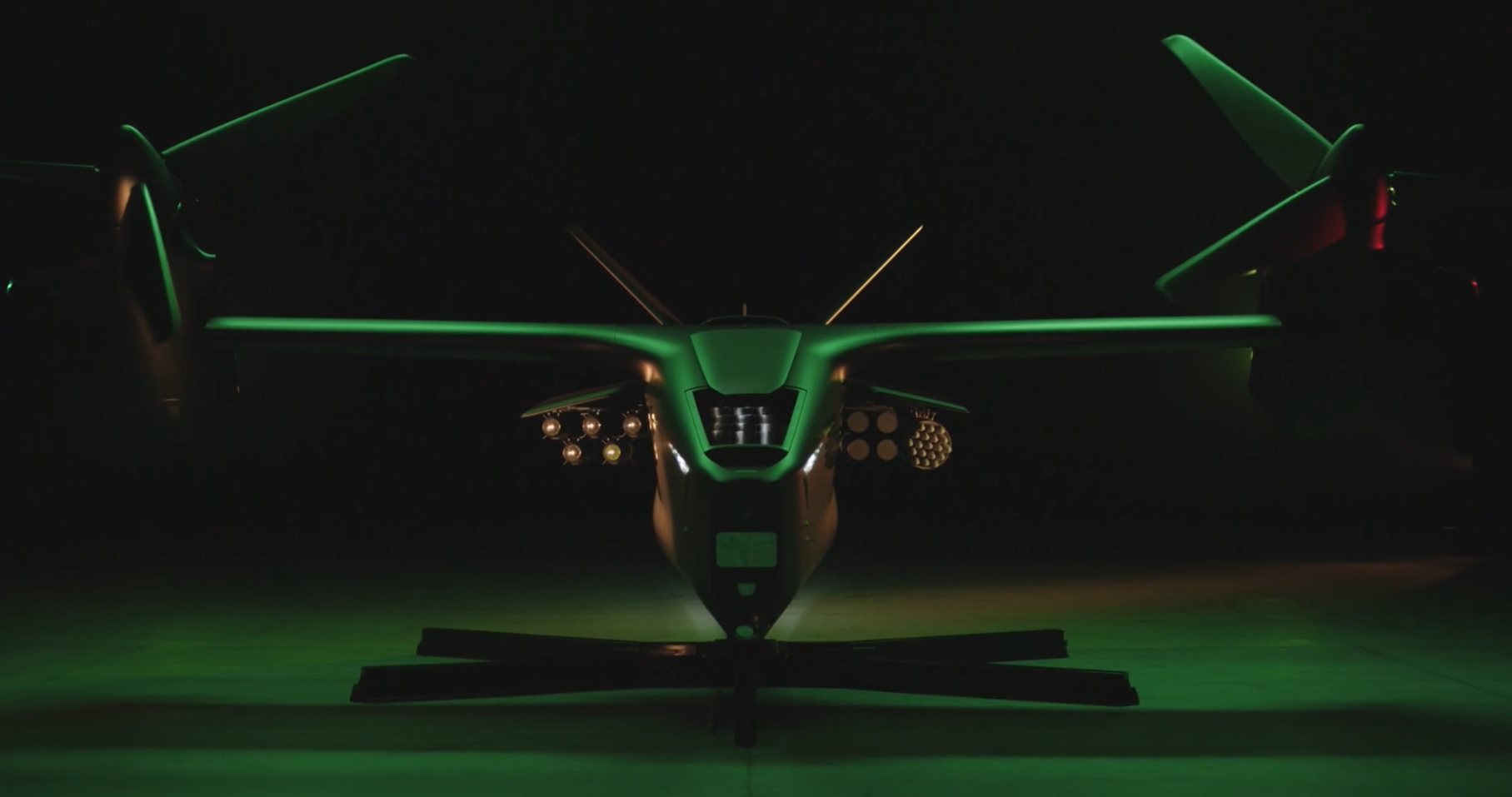
The MV-75A Cheyenne II, derived from Bell’s V-280 Valor tiltrotor, is being developed to replace a significant portion of the Army’s UH-60 Black Hawk helicopter fleet. Designed for higher speed and extended range, the platform is central to the Army’s future air assault doctrine.
Army Maj. Gen. Clair A. Gill, Program Executive Officer for Aviation and Maneuver Air, stated that the service is considering equipping some MV-75A aircraft with probe-and-drogue aerial refueling capability. However, he indicated that not all aircraft in the fleet would necessarily be configured this way.
“Our last chief used to talk to me all the time about aerial refueling. We think that’s something. Maybe we don’t get all of them configured for that, but they’ll have the capability,” Gill said during the summit.
He emphasized that the Army is engaging industry to address a key limitation: the absence of an organic aerial refueling capability.
“One of the challenges… is getting somebody to give them the gas,” Gill noted, pointing to reliance on external tanker support as a constraint on operational flexibility.
Absence of Organic Tanker Fleet
Unlike the U.S. Air Force and U.S. Navy, the Army does not operate dedicated aerial refueling aircraft. Fixed-wing tanker platforms such as the KC-135 Stratotanker and KC-46 Pegasus are operated by the Air Force, while the Navy and Marine Corps rely on KC-130 variants and carrier-based solutions.
As a result, Army aviation units currently depend on joint-force support for aerial refueling, limiting responsiveness and availability in high-demand operational scenarios.
The introduction of the MV-75A, with its extended range and speed, is expected to increase the need for organic or readily accessible refueling options, particularly for distributed operations.
Uncrewed Tanker Concept: MQ-25 Stingray
To address this gap, Army officials have pointed to uncrewed aerial refueling systems as a potential solution. Gill referenced ongoing Navy efforts in unmanned aviation, widely interpreted as a reference to the MQ-25 Stingray program.
Developed by Boeing under the Navy’s Carrier-Based Aerial Refueling System (CBARS) program, the MQ-25 is designed to autonomously deliver up to 15,000 pounds of fuel at a range of approximately 500 nautical miles. The aircraft is powered by a Rolls-Royce AE 3007N turbofan engine and has already demonstrated aerial refueling with platforms including the F/A-18 Super Hornet, E-2D Hawkeye, and F-35C.
Although designed for carrier operations, the MQ-25 is capable of operating from land bases. Boeing has also proposed land-based derivatives of the platform, including concepts supporting Air Force tanker requirements and operations alongside collaborative combat aircraft such as the MQ-28 Ghost Bat.
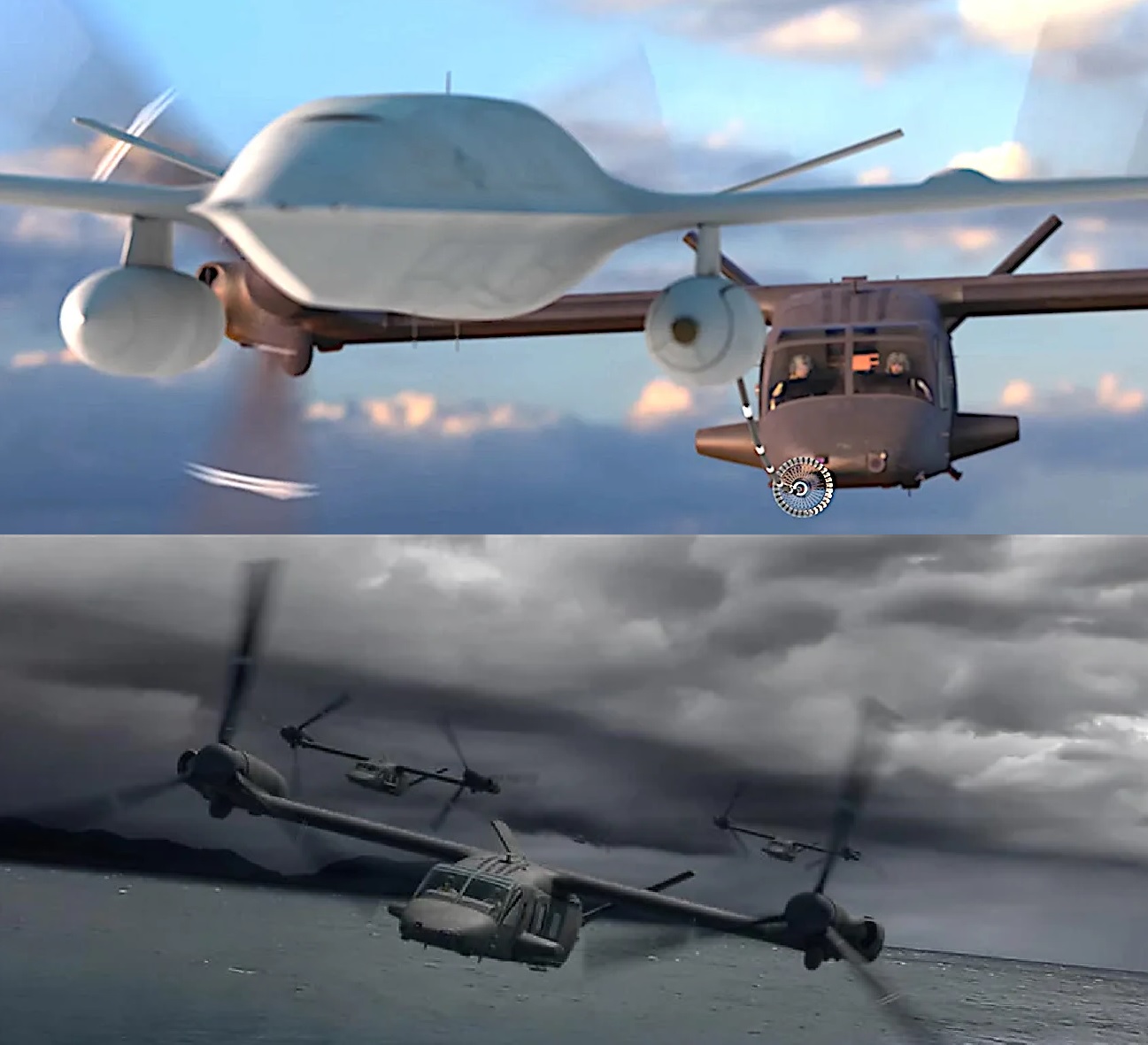
Coinciding with the AAAA summit, Bell released a promotional video depicting an MV-75A conducting mid-air refueling with an aircraft resembling the MQ-25 or a similar derivative, reinforcing the concept’s relevance to Army requirements.
Special Operations and Conventional Force Integration
The approach to aerial refueling within the Army is expected to differ between special operations and conventional aviation units.
The 160th Special Operations Aviation Regiment (SOAR), known as the Night Stalkers, is slated to receive a specialized version of the MV-75 equipped with in-flight refueling capability as standard. This aligns with current practices, as the regiment’s MH-60M Black Hawk and MH-47G Chinook helicopters already employ probe-and-drogue refueling.
In contrast, conventional Army aviation units have not historically operated aircraft with this capability. The extent to which the broader MV-75A fleet will incorporate aerial refueling remains under evaluation.
Training and Operational Preparation
The 101st Airborne Division, designated as the first conventional unit to receive the MV-75A, is already preparing for the platform’s extended operational envelope.
Maj. Gen. David W. Gardner, commander of the division, stated that recent training exercises with U.S. Marine Corps MV-22 Osprey tiltrotors were conducted to familiarize personnel with increased range and speed characteristics.
The MV-75A is expected to significantly expand the division’s ability to conduct long-range air assault operations, reduce reliance on forward arming and refueling points, and enhance maneuverability in contested environments.
Broader Joint Refueling Landscape
If the Army adopts probe-and-drogue refueling for the MV-75A, it will operate within a joint environment where tanker demand remains high.
Current aerial refueling assets include:
- U.S. Air Force KC-135 and KC-46 tankers, as well as HC-130J and MC-130J aircraft
- U.S. Navy and Marine Corps KC-130 variants
- Carrier-based buddy refueling using F/A-18F Super Hornets
The Air Force has also expanded probe-and-drogue compatibility to additional platforms, including the A-10 Warthog, increasing flexibility across the joint force.
Despite these capabilities, tanker availability remains constrained in large-scale or distributed operations, reinforcing the case for Army-controlled refueling solutions.
Platform Capabilities and Program Status
The MV-75A Cheyenne II is designed to deliver more than twice the speed and range of legacy rotorcraft, with a cruise speed exceeding 300 mph. It can transport up to 14 soldiers or carry external loads of up to 10,000 pounds.
The platform supports a wide range of missions, including air assault, medical evacuation, tactical resupply, and humanitarian assistance.
Bell has initiated assembly of the first prototype, with plans to deliver six test aircraft. While the program schedule has been accelerated, officials have not confirmed specific timelines for first flight or operational deployment.
Gill described the program timeline as a “success-oriented schedule” with limited flexibility, noting that development progress is constrained by available resources and engineering capacity.
Future Implications and Related Programs
The Army’s decisions regarding aerial refueling integration and uncrewed tanker acquisition may influence broader U.S. military aviation programs.
The Marine Corps is currently refining requirements for a successor to the MV-22 Osprey, while the Navy is leveraging FLRAA data for its Future Vertical Lift-Maritime Strike (FVL-MS) program, intended to replace MH-60 Seahawk helicopters and MQ-8C Fire Scout drones.
Bell has also presented navalized variants of the V-280 platform and concepts integrating uncrewed systems such as the V-247 Vigilant.
Naming and Designation
The MV-75 designation was formally announced on April 15, 2026, during the AAAA summit. The name “Cheyenne II” honors the Northern Cheyenne Tribe and the Cheyenne and Arapaho Tribes. The “MV” prefix denotes Multi-Mission Vertical Takeoff, while “75” references the founding year of the U.S. Army in 1775.
——— End of Article ———