NORFOLK, Virginia — April 25, 2026 : The United States Army has initiated domestic deployment of the first operational component associated with its emerging Golden Dome multi-layer missile defense architecture, marking a transition from overseas testing to homeland-based evaluation. The Army Long-Range Persistent Surveillance (ALPS) system was confirmed as operational at Joint Expeditionary Base Little Creek–Fort Story on April 23, 2026, during a conference attended by senior Department of Defense officials.
The deployment represents the first acknowledged placement of a Golden Dome-affiliated capability within the continental United States. Michael Guetlein, appointed in 2025 to oversee the program’s ground and space segments, described the installation as a measurable step in establishing a layered homeland defense network. Previous ALPS deployments were conducted under operational requirements in overseas theaters, including U.S. Central Command, U.S. European Command, and U.S. Indo-Pacific Command.
System Design and Detection Method
The ALPS system is designed as a passive radio frequency sensing platform that operates without emitting electromagnetic signals. Instead of functioning as a traditional radar, the system intercepts and processes electromagnetic emissions from external sources, including communication transmissions, navigation signals, and radar reflections originating from airborne objects.
This passive coherent location approach allows the system to detect, classify, and track targets while remaining difficult to identify or disrupt. Because it does not transmit signals, ALPS reduces susceptibility to electronic warfare measures, such as jamming or anti-radiation targeting. The system is configured to address coverage limitations associated with conventional active radar systems, particularly in detecting low-altitude and low-observable threats affected by terrain masking or reduced radar cross-sections.
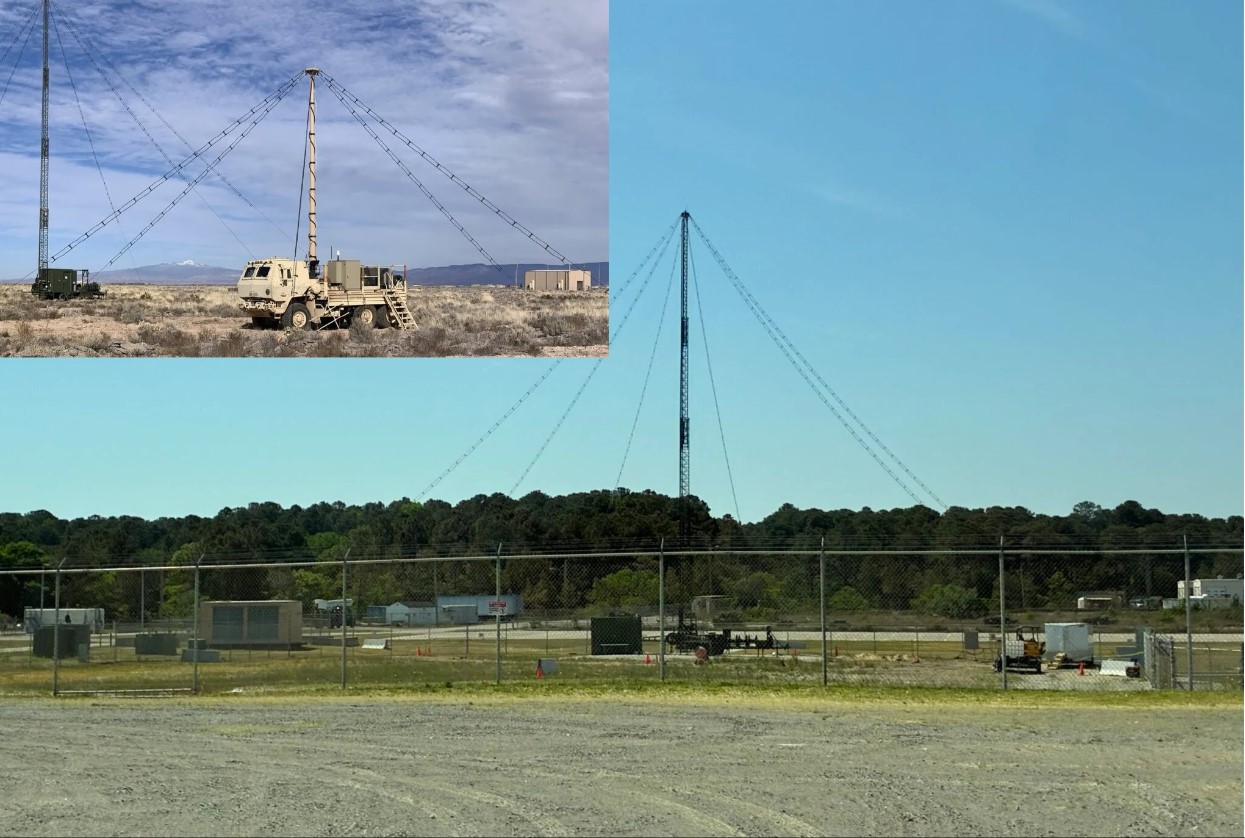
ALPS is capable of tracking a range of aerial platforms, including cruise missiles, fixed-wing aircraft, rotary-wing aircraft, and unmanned aerial systems. The deployed configuration corresponds to Increment 2 of the system and is mounted on the Family of Medium Tactical Vehicles platform, allowing for relocation across operational sites as required.
Despite its deployment, ALPS remains in a prototype evaluation phase and has not yet transitioned into a formal program of record within the U.S. defense acquisition structure. The Department of Defense has not released quantitative performance metrics, including detection range, simultaneous tracking capacity, or angular resolution.
Deployment Environment and Testing Objectives
The selection of Fort Story places the system within a complex electromagnetic and operational environment. Located in the Virginia Beach–Norfolk region, the area experiences a high density of civilian and military air traffic, providing conditions suitable for real-world data collection and system validation.
The ALPS installation is positioned in proximity to a Terminal High Altitude Area Defense battery, enabling direct comparison and correlation between passive detection data and active radar-generated tracks. This arrangement supports evaluation of track accuracy, detection consistency, and data fusion performance across different sensor types.
Physical characteristics of the deployed system include a low-visibility array consisting of poles and wire elements arranged in a triangular geometry optimized for signal collection. The configuration is designed to minimize visual and electromagnetic signature while maintaining wide-area coverage.
Integration Within Golden Dome Architecture
Within the broader Golden Dome framework, ALPS forms part of the terrestrial sensor layer responsible for generating detection and tracking data. This information is transmitted to command-and-control networks for processing and potential cueing of interceptor systems.
The Golden Dome concept is structured as a multi-layered defense architecture intended to address a spectrum of threats, including ballistic missiles, hypersonic glide vehicles, cruise missiles, and unmanned systems. A key operational objective is the development of boost-phase intercept capabilities, enabling threat neutralization shortly after launch.
Supporting the integration of sensor data is a digital infrastructure centered on the Apex Arc data environment, which aggregates inputs from multiple domains. The system incorporates AI-assisted tools for data processing, track correlation, and decision support. An ecosystem hub established in April 2026 coordinates collaboration among government agencies, industry participants, and academic institutions to accelerate development.
At present, there is no confirmed operational linkage between the ALPS deployment and space-based missile warning or interceptor systems, indicating that current efforts remain focused on regional and terrestrial sensor validation.
Industrial and Program Context
The ALPS system is developed with involvement from PAE, with historical associations across the broader architecture including other defense industry participants. The current operational iteration reflects continued refinement under field conditions rather than finalized production standards.
The Department of Defense maintains a baseline cost estimate of approximately $185 billion for the complete Golden Dome architecture. Budget projections for fiscal year 2027 allocate between $17 billion and $17.9 billion to support ongoing development, integration, and testing across system components.
No Initial Operational Capability (IOC) timeline has been formally established for ALPS. As of April 2026, no additional Golden Dome components have been publicly confirmed as deployed within the United States. The Fort Story installation represents the initial step in transitioning the program’s terrestrial sensor layer into a domestic operational testing phase.
——— End of Article ———