WASHINGTON — March 23, 2026 : The United States has formally notified Congress of a potential $1 billion Foreign Military Sale (FMS) to the United Kingdom, covering combat system integration and weapon-system support for the next-generation SSN-AUKUS nuclear-powered attack submarines under the trilateral AUKUS security partnership.
The notification, issued by the U.S. State Department on March 20, 2026, represents a substantial expansion of an earlier $50 million non-Major Defense Equipment (non-MDE) case. While the original package focused on non-recurring engineering, liaison support, and early integration work, the revised proposal establishes a comprehensive design, integration, and support framework for the combat and weapon systems of future British submarines.
Expansion from Initial Support to Full Integration Framework
The earlier $50 million case included non-recurring engineering, integration of U.S. equipment into UK submarine designs, delivery of software and technical publications, and administrative support for a UK liaison office at U.S. Naval Sea Systems Command (NAVSEA). The updated $1 billion package significantly broadens this scope into a full-scale integration effort.
The expanded package provides technical assistance and system components necessary to build the physical and digital architecture governing how submarines detect threats, process tactical data, and deploy weapons. It includes support for AUKUS-specific vertical deployment tubes, common weapon launchers, and multiple all-up-round canister support modules.
Additional elements include simulation systems, engineering demonstration models, testing and installation equipment, and a wide range of information technology hardware such as network input/output units, servers, switches, and custom electronics. The package also covers software, source code, technical documentation, and publications required for system operation and lifecycle management.
Embedded U.S. and UK personnel will be stationed across facilities in both countries to support design, integration, and training activities. The agreement further includes U.S. government and contractor engineering services, logistics support, testing and trials assistance, and program management support.
Integration with Submarine Warfare Federated Tactical System
The systems covered under the sale are closely tied to the Submarine Warfare Federated Tactical System (SWFTS), a modular combat system architecture used by the U.S. Navy. SWFTS integrates multiple independent subsystems into a unified combat network, enabling coordinated detection, decision-making, and weapon control.
The integration environment is associated with interfaces such as the AN/BYG-1 combat system, including the Weapon Launch Console, Payload Support Electronic System, and Tube Control Panel. Through access to software, hardware, and source code, the United Kingdom will gain the ability to independently integrate, test, troubleshoot, train, and upgrade its submarine combat systems over time.
This level of access supports the development of a sovereign capability to manage evolving undersea warfare requirements while maintaining compatibility with allied systems.
System Functionality and “Kill Chain” Architecture
The package does not include the procurement of specific munitions. Instead, it provides the enabling infrastructure required for safe storage, handling, launch, and rearming of weapons. In operational terms, the systems form the complete “kill chain,” linking detection and targeting processes to weapon release and control.
Core components such as networked electronics, control systems, and launch interfaces are designed to ensure secure and reliable operation of submarine weapon systems in complex operational environments.
Transition to Vertical Launch Capability
The inclusion of AUKUS-specific vertical deployment tubes marks a significant evolution in the Royal Navy’s submarine design approach. Current Astute-class submarines rely exclusively on a torpedo-room configuration, featuring six 21-inch (533 mm) tubes and a capacity of up to 38 weapons.
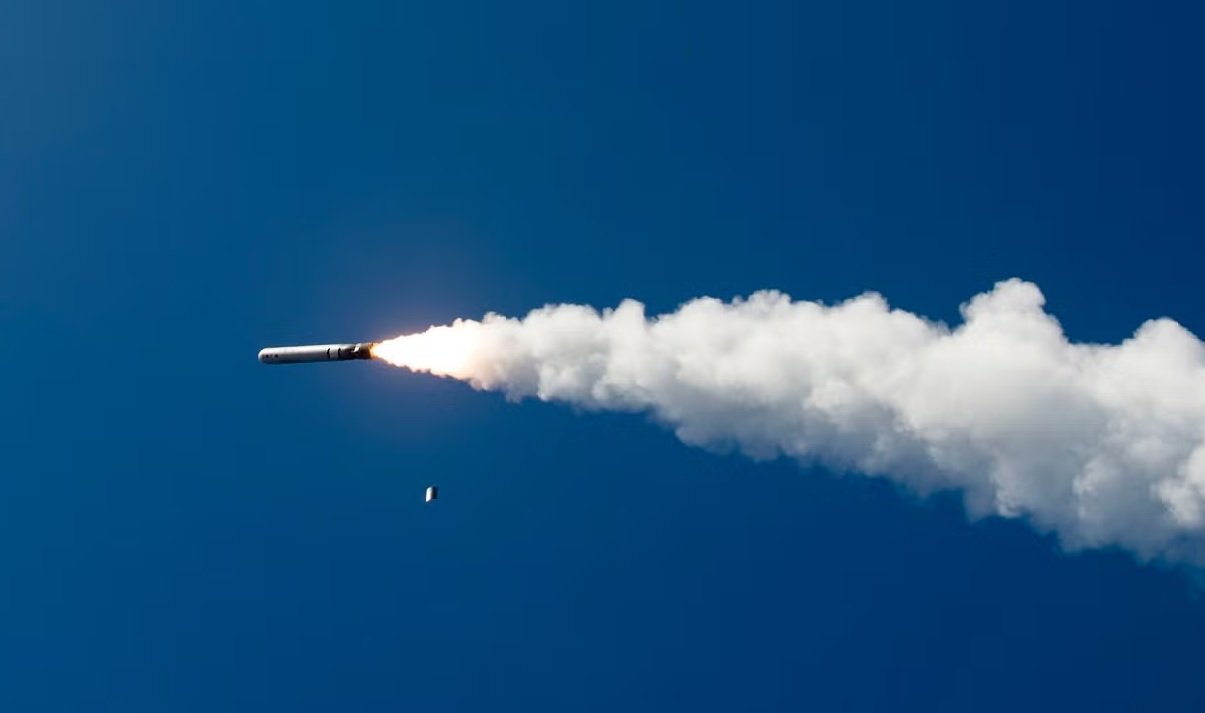
These submarines are equipped with Tomahawk Block IV land-attack missiles, offering a range of approximately 1,000 miles and mid-flight retargeting capability, as well as Spearfish heavyweight torpedoes, which have engagement ranges between 14 and 30 miles depending on operational conditions. The upgraded Spearfish includes a new warhead, improved electronics, a safer fuel system, and fiber-optic guidance.
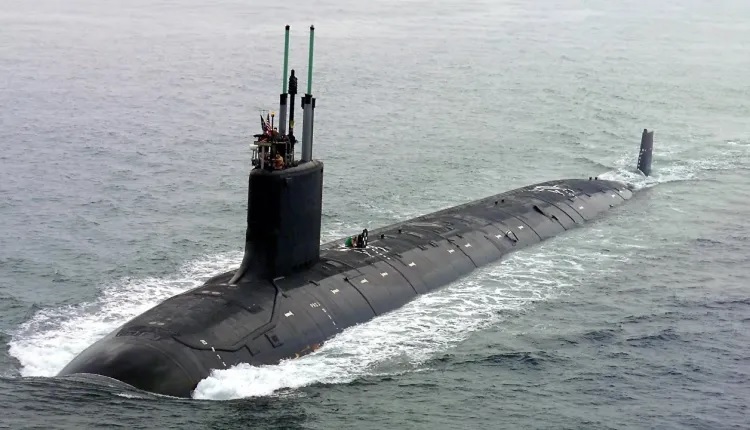
The introduction of vertical deployment tubes, comparable in concept to those used in the U.S. Navy’s Virginia-class submarines, enables the carriage of additional payloads such as land-attack missiles in dedicated launch modules. Each vertical tube can accommodate multiple all-up-round canisters, increasing overall payload capacity.
This configuration allows torpedo tubes to remain dedicated to anti-submarine and anti-surface warfare, while vertical systems handle strike missions and other payloads. The result is improved magazine depth, greater flexibility in mission planning, enhanced first-salvo capability, and extended operational endurance.
Standardization and Interoperability
The adoption of a common weapon launcher standard ensures uniformity in interfaces, safety mechanisms, control logic, and testing procedures across different submarine platforms. This reduces the complexity associated with platform-specific integration and supports more efficient certification and upgrade processes.
Standardization also enhances interoperability among AUKUS partners—the United States, United Kingdom, and Australia—allowing for closer operational coordination and shared technological development.
Industrial Participation and Contractors
The principal contractors identified for the program include Huntington Ingalls Industries (Newport News, Virginia), General Dynamics Electric Boat (Groton, Connecticut), General Dynamics Mission Systems (Fairfax, Virginia), Progeny Systems (Manassas, Virginia), Lockheed Martin (Bethesda, Maryland), and Systems Planning and Analysis (Alexandria, Virginia).
These companies will provide engineering, integration, and technical support services as part of the broader system development and implementation effort.
SSN-AUKUS Programme Context
The SSN-AUKUS program is a trilateral initiative involving the United States, United Kingdom, and Australia under AUKUS Pillar 1, focused on nuclear-powered submarine capabilities. The program will deliver a new class of submarines for both the Royal Navy and the Royal Australian Navy.
The submarine design is led by the United Kingdom, incorporating technologies from all three partner nations and drawing on elements aligned with U.S. Virginia-class systems. Construction for the UK fleet will take place at BAE Systems facilities in Barrow-in-Furness, while Australia will build its submarines in Adelaide.
The United Kingdom plans to acquire up to 12 submarines to replace its Astute-class fleet. Entry into service is expected in the late 2030s for the UK and the early 2040s for Australia.
Strategic Rationale and Next Steps
According to the U.S. State Department, the proposed sale supports U.S. foreign policy and national security objectives by strengthening a NATO ally and enhancing maritime security in northwestern Europe. It is also intended to improve the United Kingdom’s capability to address current and future threats through a modernized undersea deterrent.
The department stated that the United Kingdom is capable of absorbing the systems and that the sale will not alter the basic military balance in the region or negatively impact U.S. defense readiness.
The notification marks the beginning of the congressional review process required for Foreign Military Sales. No contracts have been finalized, and no implementation timeline or confirmed final value beyond the $1 billion estimate has been disclosed. Further updates are expected as the program progresses through subsequent approval and contracting stages.
——— End of Article ———