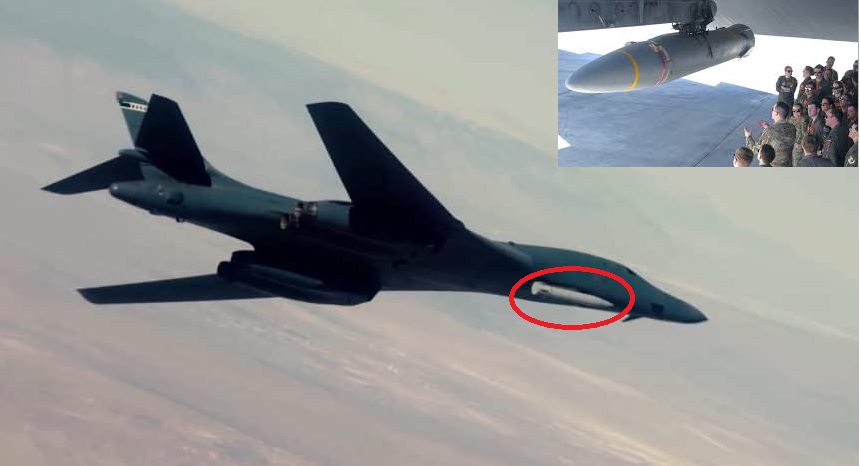
EDWARDS AIR FORCE BASE, Calif. — April 30, 2026 : The U.S. Air Force has publicly confirmed a new stage in its hypersonic weapons integration effort after releasing imagery of a B-1B Lancer carrying the AGM-183A ARRW externally. The footage, published on April 29, 2026, through an official social media video focused on aircraft maintainers, provides the first visual evidence linking the B-1B to the Air-Launched Rapid Response Weapon (ARRW), expanding the operational scope of the U.S. hypersonic strike architecture.
Visual Confirmation Signals Platform Expansion
The short video segment shows the B-1B in flight with the ARRW mounted on an external station, marking a departure from earlier program visibility that had primarily associated the weapon with the B-52H Stratofortress during test phases. The appearance confirms that integration work has progressed beyond concept planning and into practical carriage validation, introducing a second operational bomber platform for hypersonic deployment.
This development reflects a broader U.S. effort to diversify launch platforms for high-speed conventional strike systems, enabling greater flexibility in mission planning and survivability in contested environments.
Weapon Design and Flight Profile
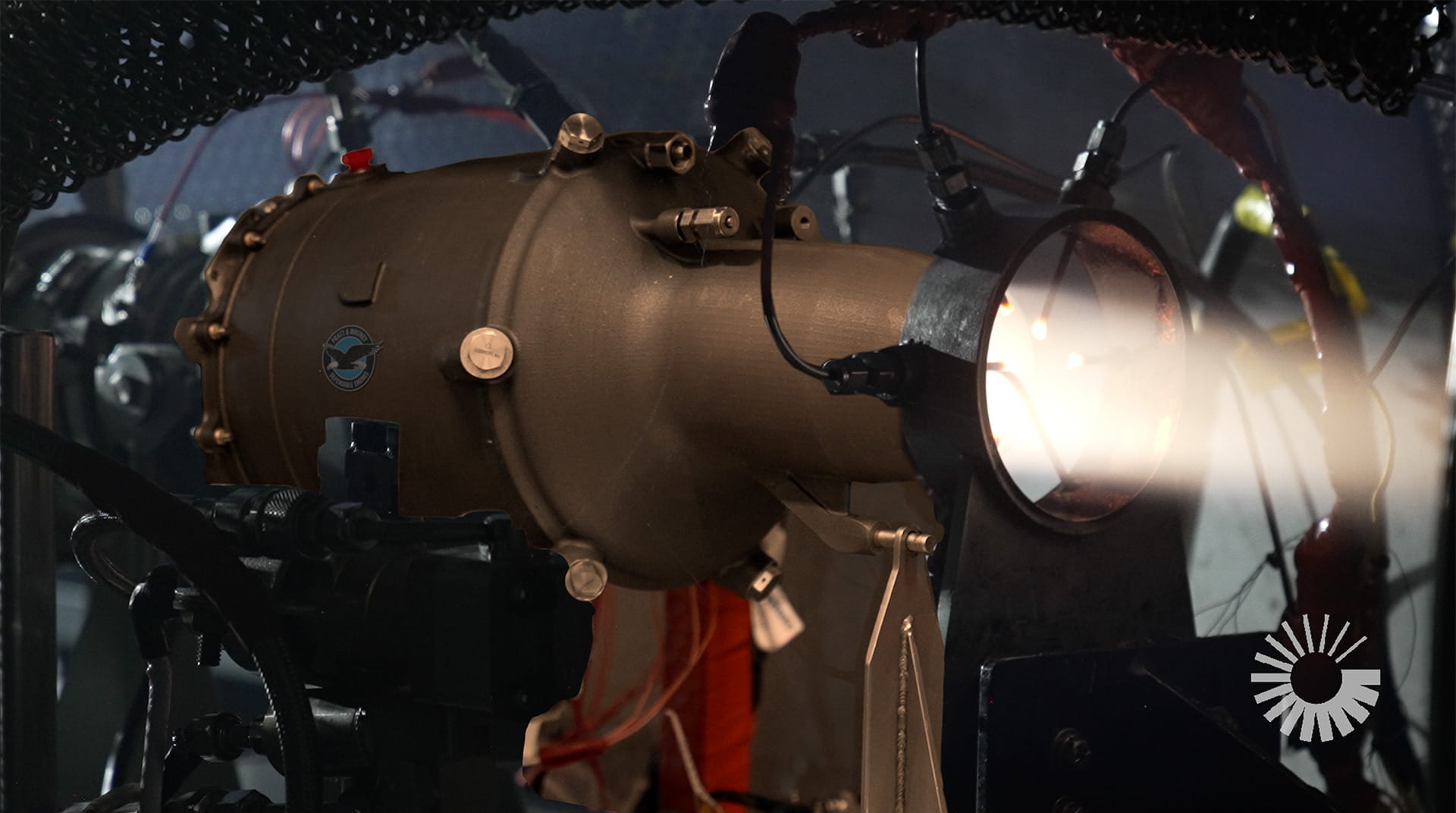
The AGM-183A ARRW, developed by Lockheed Martin, is an air-launched hypersonic boost-glide weapon derived from research conducted under DARPA’s Tactical Boost Glide program. According to documentation from the Department of Defense’s Director, Operational Test and Evaluation, the weapon consists of three primary components: a solid rocket booster, a protective shroud, and an unpowered glide vehicle equipped with a kinetic-energy projectile warhead.
After release from the aircraft, the booster accelerates the system to hypersonic velocities exceeding Mach 5, with aerospace assessments indicating potential speeds approaching Mach 20. The glide vehicle then separates and follows a maneuverable, non-ballistic trajectory toward its target, with an estimated operational range of approximately 1,600 kilometers.
This flight profile reduces warning times and complicates interception by conventional surface-to-air missile systems, particularly within Anti-Access/Area-Denial (A2/AD) environments where layered air defenses are designed to counter traditional ballistic or cruise missile threats.
Engineering Integration and Pylon Architecture
Integrating a hypersonic weapon in the 5,000-pound class onto the B-1B required extensive engineering work beyond static carriage. The process includes captive-carry envelope expansion, structural load validation, aerodynamic flutter analysis, pylon and weapons-bay clearance verification, separation modeling, and routing of power and data connections. Additionally, updates to the aircraft’s stores management system are necessary to support safe release and mission integration.
External carriage is enabled by the Load Adaptable Modular (LAM) pylon system developed by Boeing. The B-1B can be configured with up to six such pylons, each capable of carrying either two 2,000-pound-class munitions or a single weapon exceeding 5,000 pounds. This modular configuration allows the aircraft to transition from a high-capacity bomb delivery platform into a carrier for oversized standoff weapons, including hypersonic systems.
Platform Capabilities and Operational Role
The B-1B Lancer is a long-range, multi-role heavy bomber powered by four afterburning General Electric F101 engines. It is capable of reaching speeds of Mach 1.2 at sea level and operates with a four-person crew consisting of two pilots and two combat systems officers. With a payload capacity of up to 75,000 pounds—the largest in the U.S. Air Force inventory for conventional munitions—the aircraft supports both guided and unguided weapons.
Under prior arms-control agreements, the B-1B was converted to a conventional-only platform. Its adaptation to carry hypersonic weapons externally enhances its role in long-range precision strike missions without altering its non-nuclear designation. The aircraft has an established operational history, including extensive deployment of Joint Direct Attack Munitions (JDAMs) in past conflicts.
Operational Context and Mission Scenarios
The integration aligns with recent operational patterns, including Operation Epic Fury. Initiated on March 4, 2026, the operation involved U.S. Central Command conducting strikes against targets associated with Iran’s security infrastructure. During the campaign, a B-1B executed a Continental United States (CONUS)-to-CONUS mission profile, demonstrating the aircraft’s ability to conduct long-range strike operations without reliance on forward basing.
While there is no indication that ARRW was used in that operation, the mission structure provides a model for potential hypersonic employment. A B-1B equipped with ARRW could conduct rapid strikes against integrated air defense command nodes, ballistic missile support infrastructure, hardened facilities, and long-range radar systems. Its combination of speed, aerial refueling compatibility, and standoff launch capability enables engagement from outside heavily defended airspace.
Strategic and Theater-Level Implications
The deployment of a hypersonic-capable B-1B has implications across multiple operational theaters. In the Indo-Pacific, it introduces a mobile, long-range strike option capable of targeting maritime denial networks and sensor infrastructure. In Europe, it offers NATO an additional conventional deterrence capability without requiring forward deployment of sensitive systems. In the Middle East, the CONUS-based strike model demonstrated during Operation Epic Fury highlights an alternative approach when regional basing is constrained.
The development also signals ongoing adaptation of legacy bomber platforms alongside next-generation systems such as the B-21 Raider, indicating a layered approach to future strike capabilities.
Program Funding and Future Development
Budget documents support the transition of ARRW from testing toward sustained capability development. The Fiscal Year 2027 Air Force budget includes a request of $345.7 million for ARRW under Research, Development, Test, and Evaluation (RDT&E), with total projected funding reaching approximately $1.7 billion through Fiscal Year 2030. These allocations cover integration efforts, system support, obsolescence mitigation, supplier transitions, and production planning for Increment 2 capabilities.
Official descriptions characterize ARRW as a conventional prompt-strike system designed for use in A2/AD environments. Specific procurement quantities remain classified as Controlled Unclassified Information.
Ongoing Testing and Integration Path
The appearance of ARRW on the B-1B indicates that captive-carry testing is underway to support further evaluation, certification, and eventual operational fielding. Data collected from these flights will inform safe separation procedures, aerodynamic performance, and mission integration parameters.
The combination of a proven supersonic bomber with an advanced hypersonic weapon reflects a continued U.S. effort to adapt existing airframes for emerging strike requirements. As testing progresses, the B-1B’s role within the hypersonic mission set is expected to expand, contributing to a broader portfolio of long-range precision strike options in contested environments.
——— End of Article ———