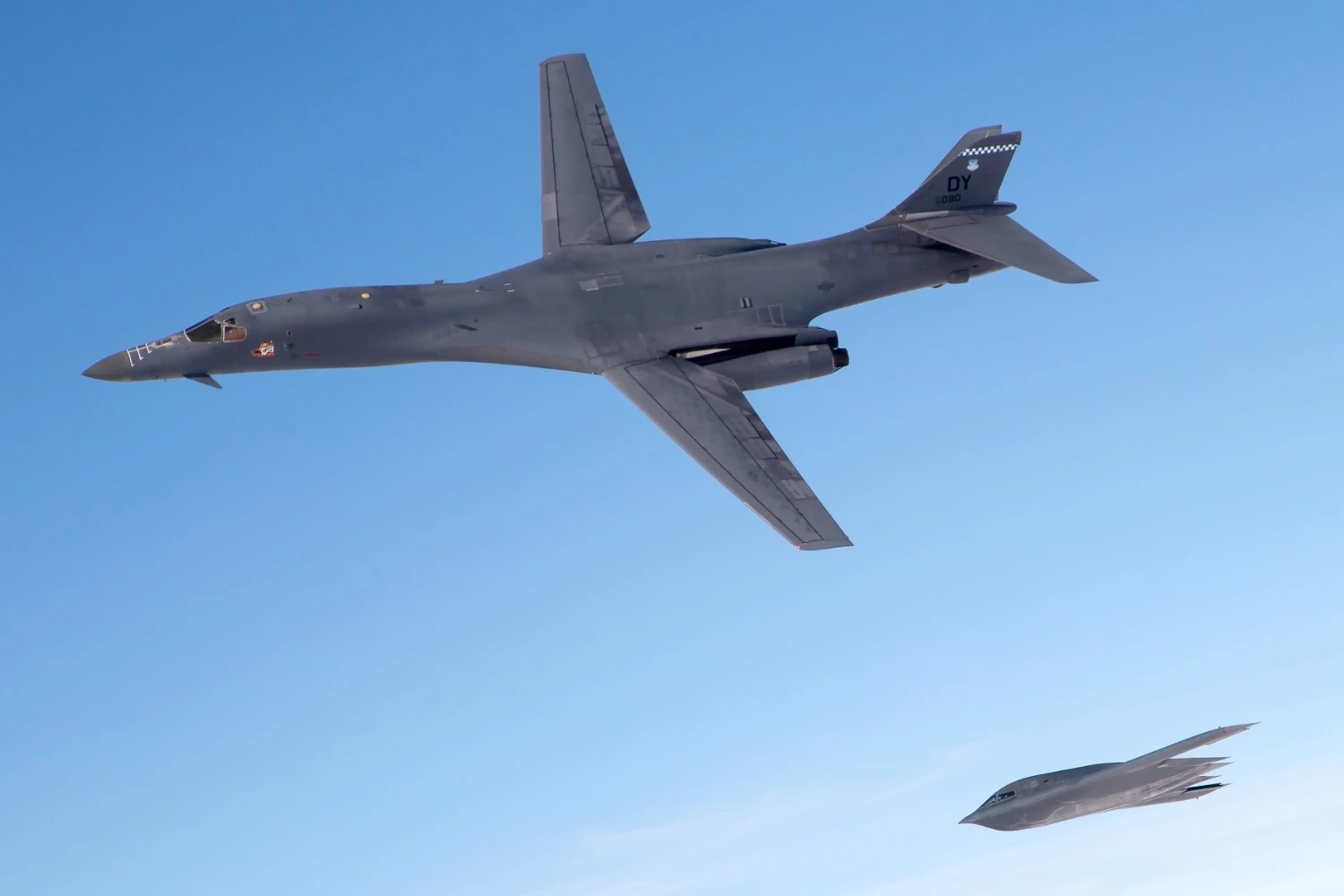
WASHINGTON, D.C., — April 26, 2026 : The United States Air Force has approved a funding plan of nearly $1.7 billion to extend the operational life and enhance the capabilities of its legacy bomber fleet, specifically the B-1B Lancer and the B-2 Spirit. The decision reflects adjustments in long-term force planning as the service manages delays in fielding the next-generation B-21 Raider, ensuring that long-range strike capacity remains intact during the transition period.
Funding Allocation and Modernization Plans
According to budget documents released by the Department of the Air Force, the $1.7 billion investment will be distributed over a five-year period, covering fiscal years 2027 through 2031. The funding is divided between both bomber platforms to support modernization, sustainment, and operational readiness.
For the B-1B Lancer fleet, approximately $342 million has been allocated. These funds are intended to maintain the aircraft’s combat effectiveness and extend its operational service life through 2037. The Air Force currently operates 44 B-1 aircraft, which are capable of carrying the largest payload of conventional guided and unguided munitions in the service’s inventory. Planned upgrades are expected to focus on sustaining structural integrity, improving mission systems, and ensuring compatibility with modern weapons.
The larger portion of the funding, approximately $1.35 billion, is designated for the B-2 Spirit fleet. The Air Force maintains 19 B-2 aircraft, all of which are based at Whiteman Air Force Base. As the only operational U.S. stealth bomber capable of delivering nuclear weapons, the B-2 remains a critical component of the strategic deterrence posture. The allocated funding will support ongoing modernization and maintenance efforts to ensure the aircraft remains viable for national security missions for as long as required. No revised retirement timeline for the B-2 has been specified.
Shift in Bomber Transition Strategy
The funding decision marks a revision of earlier Air Force plans that envisioned retiring both the B-1 and B-2 fleets in the early 2030s. Those plans were based on the assumption that the B-21 Raider would be fielded in sufficient numbers within that timeframe.
However, while the B-21 program remains on schedule and within cost estimates, the rate of production and deployment has required adjustments to avoid a gap in operational capability. The aircraft began deliveries in 2025 and is expected to achieve initial operational presence at Ellsworth Air Force Base in 2027. Despite this progress, the number of available aircraft in the near term will not be sufficient to fully replace existing bomber capacity.
In response, the Air Force and Northrop Grumman reached an agreement in February 2026 to increase B-21 production capacity by 25 percent. This expansion is supported by $4.5 billion in previously authorized funding, though additional aircraft will take several years to enter operational service.
The Air Force has stated its intent to procure at least 100 B-21 bombers, with some policymakers advocating for a fleet size of up to 145 aircraft.
Sustaining Global Strike Capability
Officials from U.S. Strategic Command and other defense entities have indicated that global demand for bomber operations remains steady, requiring a balanced approach between modernization and sustainment. Maintaining the B-1 and B-2 fleets ensures the Air Force can meet current operational requirements while continuing the transition to newer systems.
The modernization effort also complements the ongoing upgrade of the B-52 Stratofortress into the B-52J configuration, which includes new engines and updated avionics. Together, these initiatives form a layered approach to preserving long-range strike capabilities.
Budget documents emphasize that the allocated funding will support spare parts procurement, depot-level maintenance, and personnel requirements necessary to sustain both aircraft types. While specific upgrade packages—such as avionics enhancements, weapons integration, or structural modifications—have not been detailed, the overall objective is to maintain combat effectiveness across the bomber fleet.
——— End of Article ———