WASHINGTON, D.C. — April 20, 2026 : The United Arab Emirates has initiated discussions with the United States to secure a potential financial safety mechanism as the ongoing regional conflict involving Iran raises risks to the Gulf nation’s economic stability and external liquidity position.
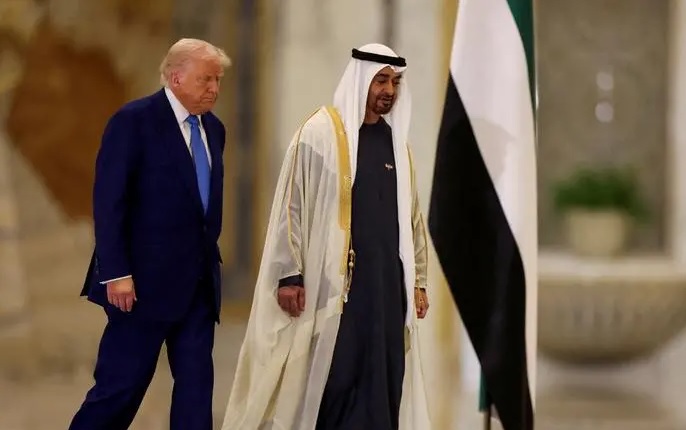
The discussions took place last week during the Spring Meetings of the International Monetary Fund and the World Bank in Washington. UAE Central Bank Governor Khaled Mohamed Balama held meetings with U.S. Treasury Secretary Scott Bessent and officials from the Federal Reserve to explore the possibility of establishing a currency-swap arrangement.
Emirati officials described the proposal as precautionary and confirmed that no formal request has yet been submitted. However, they emphasized that continued disruption to energy infrastructure and restricted access to critical export routes could significantly affect foreign reserves and investor confidence if the conflict persists.
Currency-Swap Proposal and Dollar Liquidity Concerns
At the center of the discussions is a proposed currency-swap line, a mechanism that would allow the UAE Central Bank to exchange dirhams for U.S. dollars at a predetermined rate. The tool is typically used by central banks to ensure short-term liquidity during periods of financial stress without requiring a direct loan.
The UAE maintains a long-standing peg of its currency (the dirham) to the U.S. dollar, supported by approximately $270 billion in foreign exchange reserves. This framework depends on stable inflows of dollar revenues, primarily from oil exports.
Officials indicated that disruptions to maritime oil transport—particularly through the Strait of Hormuz—have constrained the country’s ability to generate dollar inflows. The resulting pressure could complicate efforts to maintain the currency peg and meet domestic liquidity needs.
Impact of Conflict on Energy and Infrastructure
According to the UAE Ministry of Defense, Iran has launched more than 2,800 drones and missiles toward the UAE and neighboring states since the escalation began. While most of these projectiles have been intercepted, officials confirmed that the conflict has directly affected energy infrastructure and logistical operations.
The disruption of tanker traffic through the Strait of Hormuz has significantly affected global energy flows. The International Energy Agency has characterized the current situation as the most severe oil-supply shock on record.
UAE authorities stated that although the country retains strong fiscal buffers, prolonged instability could trigger capital outflows and weaken its position as a regional financial hub.
Potential Shift Toward Yuan-Based Oil Trade
During the Washington discussions, Emirati representatives also raised the possibility of adopting alternative currencies for oil transactions if dollar liquidity becomes constrained.
Specifically, officials indicated that the UAE could consider settling energy trade in the Chinese yuan under a worst-case scenario. Such a shift would represent a departure from the current system in which global oil transactions are predominantly conducted in U.S. dollars.
A move toward yuan-based oil trade by a major exporter like the UAE would have broader implications for global financial markets, as the existing dollar-based framework underpins consistent international demand for U.S. currency.
Institutional Constraints in Washington
The proposal faces procedural and policy constraints within the United States. Currency-swap lines are typically authorized by the Federal Reserve’s Federal Open Market Committee (FOMC), which has historically limited such arrangements to central banks with deep financial integration with U.S. markets, including those in the United Kingdom, Canada, Japan, and the European Union.
Market analysts expect that the Federal Reserve may be reluctant to extend a formal swap line to the UAE under current conditions.
As an alternative, the U.S. Treasury could explore other financial mechanisms. Precedent exists in the Treasury’s use of the Exchange Stabilization Fund to implement a $20 billion swap arrangement for Argentina in 2025 without requiring Federal Reserve approval.
U.S. Treasury officials have indicated a willingness to engage with Gulf partners and have invited regional governments to outline financial and infrastructure support requirements as the conflict continues.
Regional Financial Stabilization Measures
The UAE’s discussions with the United States are part of a broader set of financial measures being implemented across the Gulf to address liquidity pressures.
In Abu Dhabi, authorities recently raised approximately $4 billion through private debt placements coordinated by major financial institutions, including Goldman Sachs.
Bahrain has established a $5 billion bilateral currency-swap arrangement with the UAE to support regional financial stability.
Meanwhile, Saudi Arabia’s Finance Minister Mohammed Al-Jadaan stated last week that restoring normal oil logistics and infrastructure operations may take until at least the end of June 2026.
Outlook
UAE officials stated that while the country has so far avoided the most severe economic consequences of the conflict, contingency planning remains necessary. The proposed currency-swap line is being positioned as a safeguard to preserve exchange-rate stability, maintain adequate foreign reserves, and support the UAE’s role as an international financial center under conditions of sustained geopolitical disruption.
——— End of Article ———