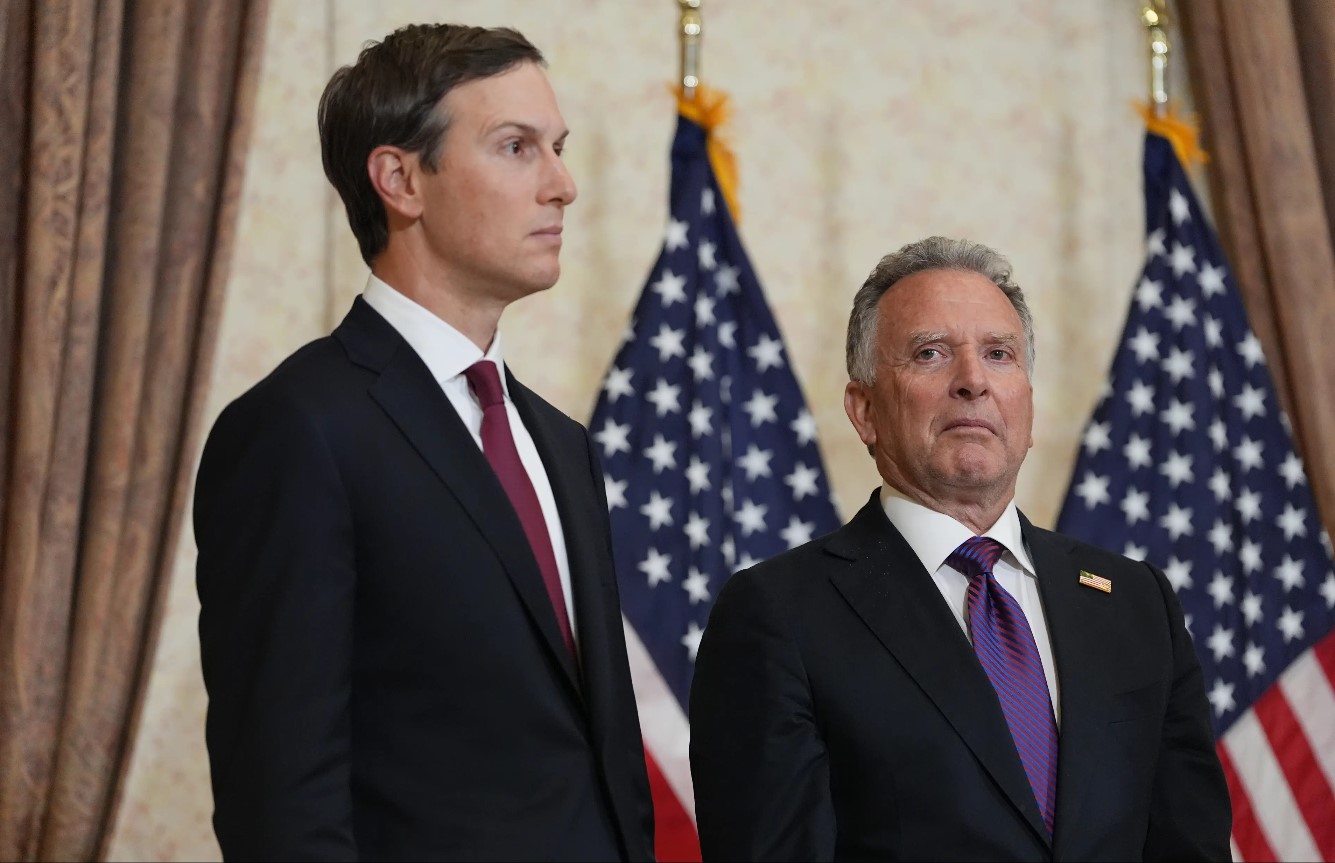
ISLAMABAD / WASHINGTON — April 24, 2026 : U.S. President Donald Trump has directed Special Envoy Steve Witkoff and senior adviser Jared Kushner to travel to Pakistan this weekend for a new round of talks with Iranian Foreign Minister Abbas Araghchi, according to administration officials.
The meetings, scheduled to take place in Islamabad, are part of ongoing efforts to negotiate a permanent ceasefire following the recent U.S.-Iran conflict. Pakistani authorities are facilitating the discussions, with Deputy Prime Minister and Foreign Minister Mohammad Ishaq Dar playing a central mediating role.
Diplomatic Representation and Participation
U.S. Vice President JD Vance will not attend the initial round of talks and will remain in Washington on standby. Officials indicated that he is prepared to travel to Islamabad if negotiations show measurable progress toward an agreement.
On the Iranian side, Parliament Speaker Mohammad Bagher Ghalibaf is also not participating in this round. His absence follows his previously stated opposition to negotiations while a U.S. naval blockade of Iranian ports remains in effect.
The U.S. decision to send Witkoff and Kushner instead of Vice President Vance reflects an effort to align diplomatic representation levels after confirmation of Ghalibaf’s non-participation.
Background of Previous Talks
The upcoming discussions follow an earlier round of high-level negotiations held in Islamabad on April 11–12, 2026. That session lasted approximately 21 hours and was led on the U.S. side by Vice President Vance, alongside Witkoff and Kushner. The Iranian delegation at that time was headed by Ghalibaf and included Foreign Minister Araghchi.
Those talks concluded without a comprehensive agreement, though they contributed to establishing a temporary ceasefire framework.
Key Issues on the Agenda
The Islamabad meetings are expected to focus on several core issues tied to the fragile ceasefire that took effect earlier in April 2026 and has since been extended on a conditional basis.
Primary areas of discussion include:
- Stabilizing and extending the current ceasefire agreement
- The status and reopening of the Strait of Hormuz
- The ongoing U.S. Central Command (CENTCOM) naval blockade of Iranian ports
- Maritime security and vessel movement restrictions, including recent reports that U.S. forces redirected 34 ships
- Broader concerns such as sanctions, nuclear-related issues, and regional infrastructure security
Regional Mediation Efforts
In addition to Pakistan’s role, regional actors including Egypt and Turkey are supporting diplomatic efforts. Ahead of the talks, Foreign Minister Araghchi held consultations with regional leaders, including Kurdistan Region President Nechirvan Barzani, to review ceasefire developments and coordination.
Uncertainty Over Participation and Outcomes
Iran has not formally confirmed its participation in the upcoming talks with the U.S. delegation. No official details have been released regarding the duration, structure, or expected outcomes of the meetings.
The White House has described the engagement as part of continued diplomatic efforts to reach a lasting resolution. The outcome of the Islamabad discussions is expected to determine whether Vice President Vance will travel to Pakistan to finalize any potential agreement.
With the ceasefire deadline approaching, the negotiations are taking place under time-sensitive conditions, though officials have not disclosed a specific timeline for decisions.
——— End of Article ———