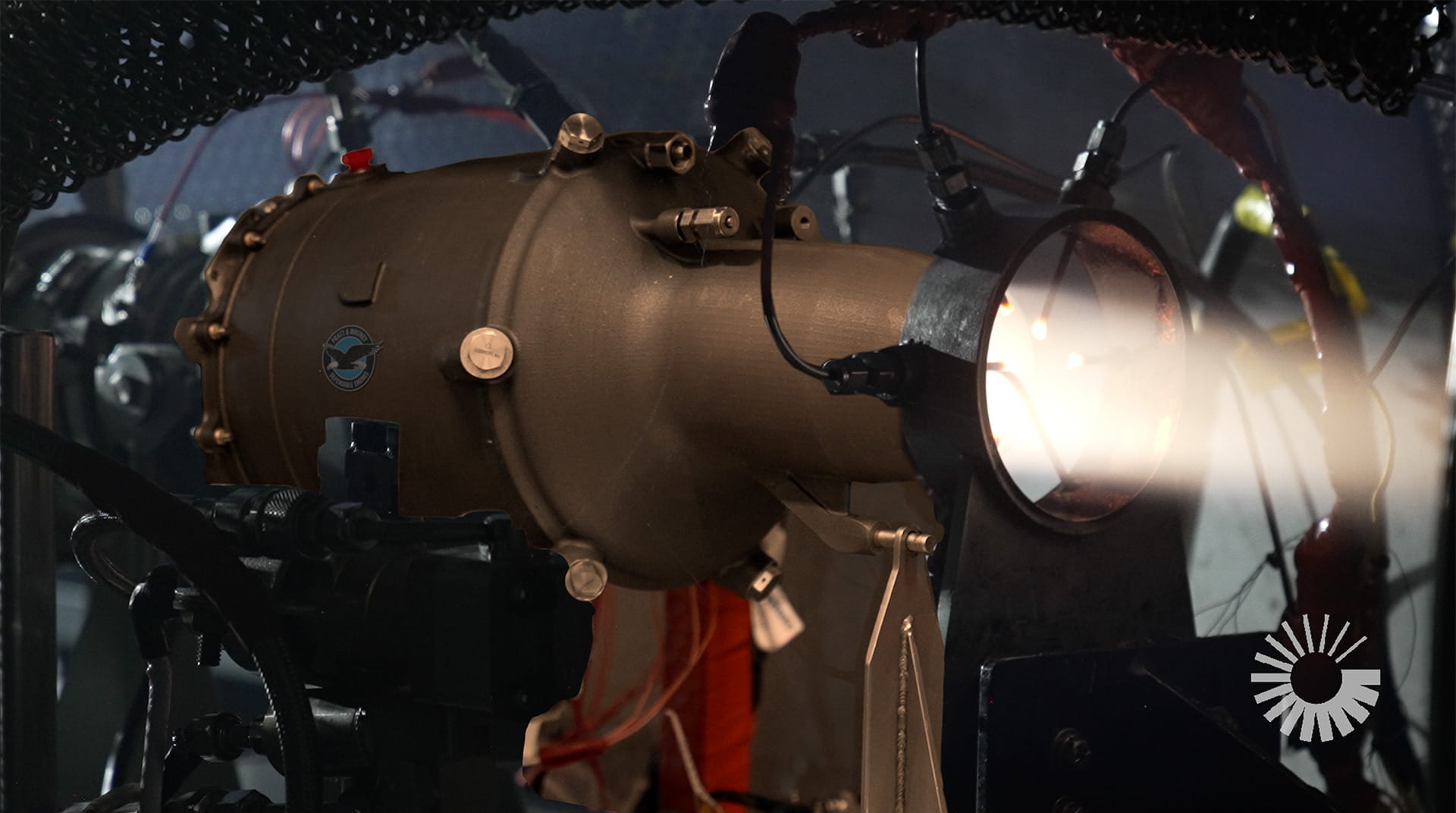
LONDON / NEW MEXICO — April 23, 2026 : Tiberius Aerospace has completed a controlled flight test of its Sceptre precision-guided, liquid-fueled ramjet 155mm artillery projectile, marking a first-of-its-kind demonstration involving a NATO-standard howitzer and in-flight ramjet ignition under operational conditions.
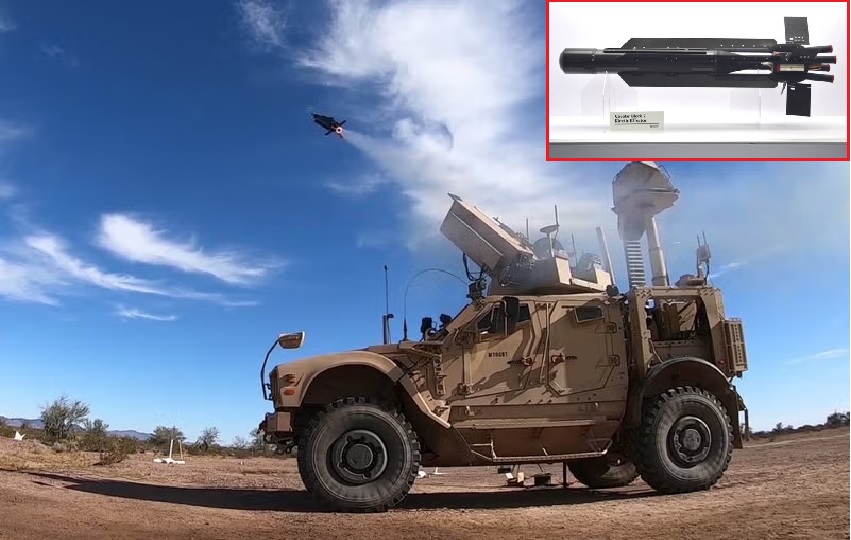
The test campaign, conducted at a U.S. range in New Mexico, validated the projectile’s ability to endure extreme launch stresses and transition into sustained powered flight. According to the company, the munition was successfully fired from a standard 155mm artillery system, survived setback forces of approximately 18,000 g, and achieved stable ramjet ignition following barrel exit. Flight data confirmed controlled rotation, stable aerodynamic behavior, and effective in-flight stabilization throughout the engagement profile.
System Design and Performance Characteristics
The Sceptre projectile, also designated TRBM 155HG, has a total launch mass of 47.5 kg and measures approximately 155 centimeters in length with a 155mm diameter. Its structural mass without fuel and payload is 36.8 kg. The munition carries a 5.2 kg warhead within a payload volume of 3,150 cubic centimeters.
During testing, the projectile demonstrated a maximum operational range of up to 150 kilometers (approximately 93 miles), with sustained speeds of around Mach 3.5, equivalent to roughly 5,600 km/h. The system operates at altitudes exceeding 65,000 feet, a flight envelope intended to reduce exposure to conventional short-range air defense systems and certain electronic warfare effects.
The propulsion system is based on a liquid-fueled ramjet capable of generating peak thrust exceeding 8 kN. Fuel injection and combustion were initiated after launch, with onboard systems regulating thermal and aerodynamic loads to maintain performance across varying conditions. The projectile is compatible with widely available fuels, including diesel, JP-4, JP-8, and Jet-A, and can be fueled by operators using a dedicated ground station.
Guidance, Accuracy, and Targeting
Sceptre employs a hybrid guidance architecture combining GPS and inertial navigation systems (INS), designed to provide rapid time-to-first-fix (TTFF) after launch. The system demonstrated a circular error probability (CEP) of approximately 3.5 meters, maintaining precision in GPS-contested or degraded environments.
The baseline navigation suite is supplemented by optional seeker configurations, including semi-active laser (SAL) and active radar homing (ARH), allowing engagement of both fixed and moving targets. The projectile incorporates forward flight control surfaces for maneuvering and trajectory correction during powered flight.
Targeting and coordination functions are integrated with Tiberius Aerospace’s proprietary GRAIL platform, an AI-enabled system that supports real-time position correction, targeting refinement, and multi-asset coordination.
Warhead Configurations and Operational Use
The munition supports multiple warhead options tailored to mission requirements, including high-explosive fragmentation (HE-Frag), penetrator, and high-explosive anti-tank (HEAT) variants. An optional tungsten alloy ballistic tip is available for enhanced armor penetration.
While the Sceptre’s warhead is smaller than those used in larger guided rocket or missile systems, the system is designed for precision engagement of point targets such as radar installations, command nodes, and logistical infrastructure, where high explosive yield is not the primary requirement.
Cost Structure and Manufacturing Approach
Tiberius Aerospace has set a baseline unit price of approximately $52,000 per projectile, excluding payload, fuel, and fuze components. This pricing represents roughly 10 percent of the cost of an extended-range guided rocket such as ER-GMLRS.
The company states that the system is designed to offer a cost-effective alternative for long-range precision strikes while reducing reliance on more expensive missile inventories. The projectile’s architecture consists of 68 unique components and follows a modular, open design intended to enable incremental upgrades and simplified maintenance.
The system is compatible with existing NATO-standard 155mm artillery platforms and does not require modifications to current howitzers. It is also designed to integrate with platforms equipped with automatic loading systems, where compatible.
Tiberius Aerospace has indicated that the limited parts count and open architecture support licensed domestic production, allowing allied nations to manufacture the system within national industrial bases. The munition is specified to have a shelf life exceeding 20 years.
Development Background and Testing Progress
Development of the Sceptre system has proceeded through iterative live-fire and synthetic testing cycles since its public unveiling in 2025. In September 2025, the program received a contract from the United Kingdom’s Ministry of Defence to support trials and further maturation.
The April 2026 New Mexico test series represents a key milestone, particularly the successful ignition of the liquid-fueled ramjet following artillery launch, which had previously been a critical technical challenge.
Chad Steelberg, Founder and CEO of Tiberius Aerospace, stated following the trials that the results validate both the underlying propulsion concept and the broader engineering approach. He added that the company is preparing for extended-range testing and certification activities as part of the next development phase.
Operational Positioning and Next Steps
Tiberius Aerospace positions the Sceptre as a system designed to bridge the gap between conventional tube artillery and long-range precision-guided missile systems. Traditional artillery provides high rates of fire and lower cost but is limited in range and accuracy, while missile systems offer extended reach and precision at higher cost and lower production scalability.
By combining ramjet propulsion, precision guidance, and compatibility with existing artillery infrastructure, the Sceptre is intended to deliver missile-like performance within the logistical framework of conventional artillery forces.
The company has stated that further testing will focus on expanding the validated range envelope, refining guidance performance under contested conditions, and completing certification requirements. As of April 23, 2026, no procurement contracts or operational deployment timelines have been formally announced.
——— End of Article ———