WASHINGTON — The United States has used a significant portion of its advanced missile interceptor inventory during the five-month conflict with Iran, raising concerns inside the Pentagon over the readiness of U.S. air and missile defense forces if another major conflict emerges.
According to an exclusive CNN report published on Tuesday, U.S. military commanders have warned that the Pentagon's stockpile of key interceptor missiles has reached "dangerously low" levels after months of sustained operations against Iranian missile attacks.
The report, citing officials familiar with the latest Pentagon inventory assessment, states that the U.S. Army has expended nearly 80% of its pre-war Terminal High Altitude Area Defense (THAAD) interceptor inventory and roughly half of its Patriot air defense interceptors since the conflict began in late February.
THAAD and Patriot Inventories Under Pressure
The reported decline reflects the heavy use of U.S. layered missile defense systems during repeated Iranian ballistic missile attacks targeting American military bases and regional partners across the Middle East.
According to estimates from the Center for Strategic and International Studies (CSIS), the United States entered the conflict with approximately 2,200 Patriot interceptors (including PAC-3 and GEM-T variants) and 452 THAAD interceptors.
CNN's assessment indicates that nearly four-fifths of the THAAD inventory has now been consumed, while about half of the Patriot interceptor stockpile has also been used during combat operations.
Earlier CSIS estimates, published before the latest Pentagon assessment, projected somewhat lower levels of expenditure. The think tank estimated that between February and July the United States had used about 65% of its Patriot inventory, leaving fewer than 1,000 missiles, while THAAD inventories had fallen by at least 38%, to roughly 250 interceptors. CSIS noted that the actual numbers could change as additional operational data became available.
Concerns Raised Before Additional Strikes Were Halted
According to CNN, senior military officials warned about the rapid depletion of interceptor stockpiles before President Donald Trump decided last week to halt additional military strikes against Iran.
The reported shortage has also raised concerns among U.S. partners in the Middle East, where American missile defense systems play a central role in protecting military installations and allied forces from ballistic missile attacks.
Officials are concerned that prolonged regional tensions could place additional pressure on remaining interceptor inventories if another large-scale missile campaign occurs.
Budget Request Focuses on Rebuilding Missile Inventories
The depletion of interceptor stockpiles is reflected in the Trump administration's fiscal year 2027 defense budget request.
The proposal includes $95 billion for munitions procurement, together with an additional $21 billion in supplemental funding, aimed at accelerating production of critical missile systems. The procurement request includes plans to acquire more than 3,000 Patriot interceptor missiles and approximately 800 THAAD interceptors.
Defense analysts note that replenishing these inventories will take time because procurement levels in previous years were comparatively lower, limiting near-term missile deliveries.
Missile Production Capacity Being Expanded
To address increasing demand, the U.S. Department of Defense has begun expanding missile production capacity through long-term agreements with industry.
In January 2026, Lockheed Martin signed a framework agreement with the Department of Defense to increase THAAD interceptor production capacity from 96 missiles annually to 400 per year. The company also announced construction of a new Munitions Acceleration Center in Camden, Arkansas, to support higher production rates using advanced manufacturing technologies.
Separately, the Pentagon has also signed agreements to increase production capacity for Patriot interceptor components as part of a broader effort to rebuild U.S. missile inventories following high operational demand.
THAAD's Role in U.S. Missile Defense
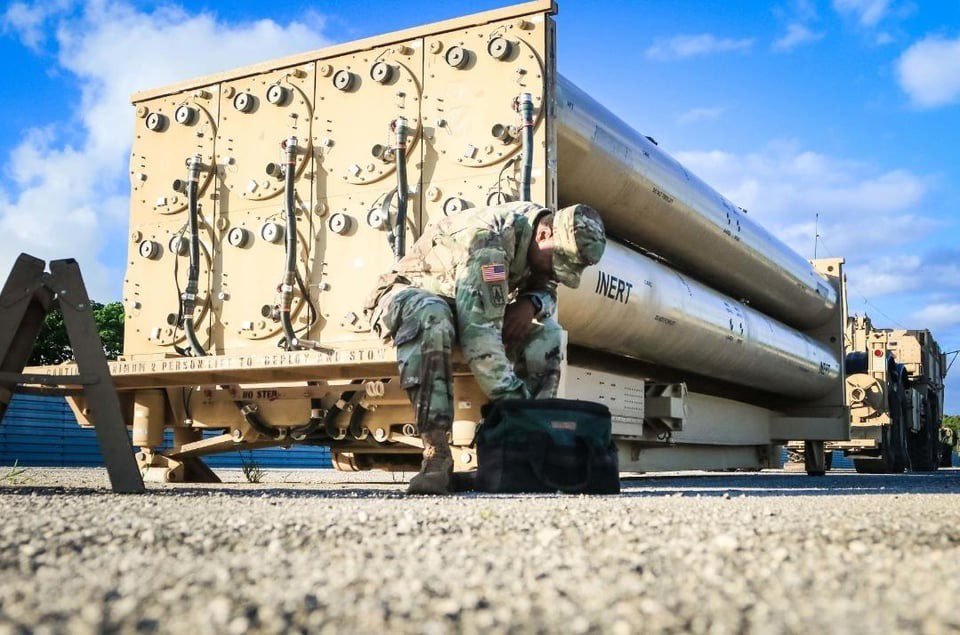
THAAD (Terminal High Altitude Area Defense) is designed to intercept ballistic missiles during the terminal phase of flight, including engagements outside the Earth's atmosphere.
The system uses the Talon hit-to-kill interceptor, which destroys incoming ballistic missiles through direct kinetic impact rather than an explosive warhead. According to publicly available U.S. Army information, THAAD can engage ballistic missile threats at altitudes of up to 150 kilometers (93 miles) and at ranges of up to 200 kilometers (124 miles).
The United States currently operates seven THAAD batteries and plans to expand the force to eight batteries. Higher interceptor production is intended both to replenish depleted inventories and support future force expansion.
Patriot Provides Lower-Layer Missile Defense
The Patriot air defense system operates alongside THAAD as part of the U.S. layered missile defense architecture.
Using PAC-3 and GEM-T interceptor missiles, Patriot is designed to engage tactical ballistic missiles as well as aerodynamic threats such as aircraft and cruise missiles, providing medium- and high-altitude air defense for military forces and critical infrastructure.
Precision-Guided Missile Stocks Also Reportedly Affected
The reported pressure on U.S. munitions has extended beyond defensive interceptor missiles.
According to Reuters, U.S. forces also came close to exhausting inventories of Army Tactical Missile System (ATACMS) and Precision Strike Missile (PrSM) long-range precision-guided weapons during the five-month campaign, highlighting broader concerns over the sustainability of high-intensity military operations and the pace of munitions production.
Defense analysts have said rebuilding these inventories will require sustained production increases over several years, even with expanded manufacturing capacity now being introduced across the U.S. defense industrial base.
——— End of Article ———