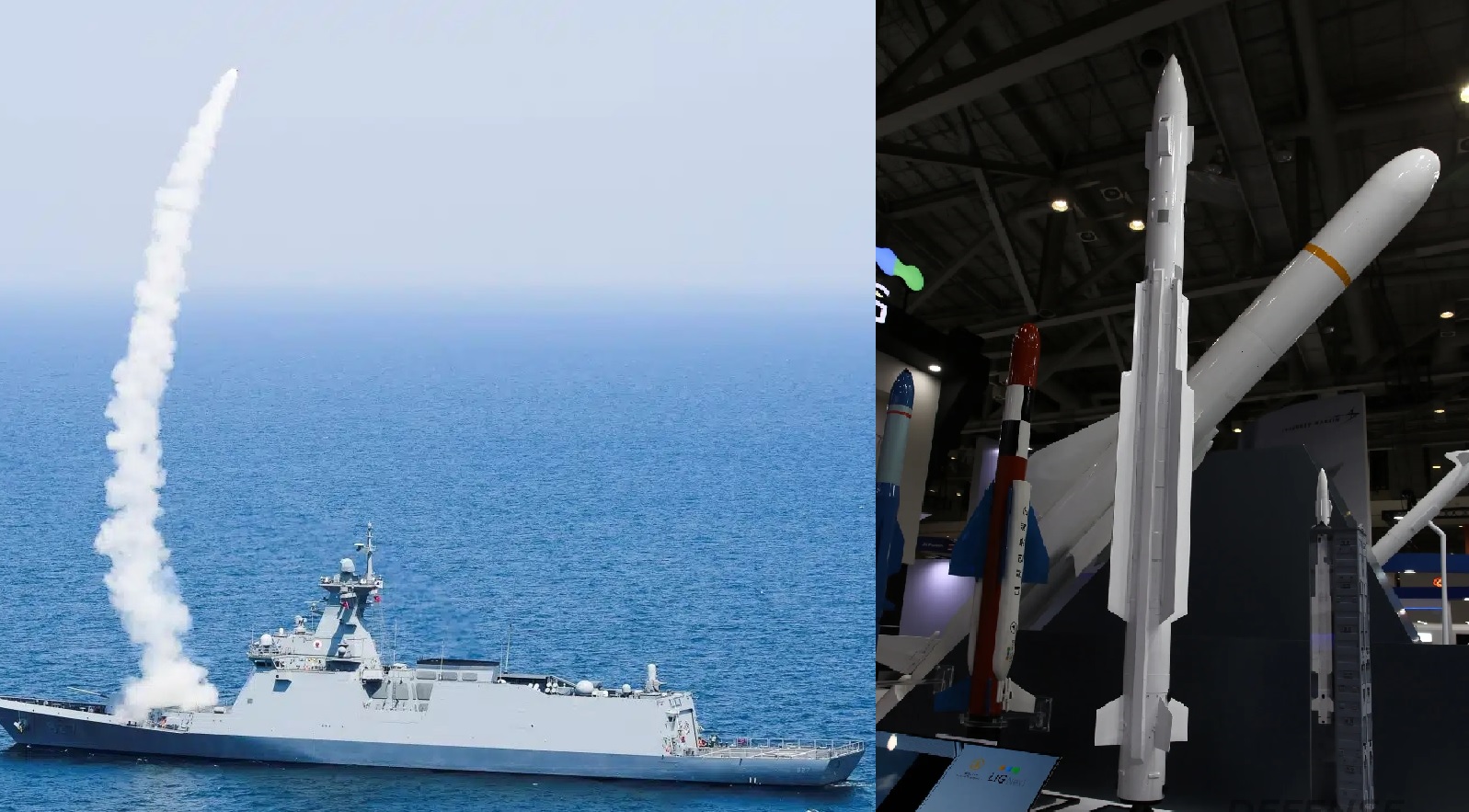
KUALA LUMPUR — April 23, 2026 : South Korean defence firm LIG Nex1, also operating as LIG Defense & Aerospace, has signed its first export contract for the Haegung (K-SAAM) ship-based surface-to-air missile system with Malaysia’s Ministry of Defence. The agreement, valued at $94 million (approximately KRW 140 billion), was concluded on April 22, 2026, during the Defence Services Asia (DSA) 2026 exhibition held in Kuala Lumpur.
The contract covers the supply and integration of the Haegung system onto three Royal Malaysian Navy Littoral Mission Ship Batch 2 (LMSB2) vessels. These ships are currently under construction by Turkish state-owned defence firm STM Defence and are based on the Ada-class corvette design. The programme forms part of Malaysia’s ongoing naval modernisation effort under its 15-to-5 fleet rationalisation plan, which seeks to reduce the number of ship classes while enhancing operational capability in littoral environments.
According to the agreement, each of the three LMS Batch 2 vessels will be equipped with a 16-cell vertical launching system configured to deploy the Haegung missiles. The system supports quad-pack canisters, enabling up to 16 missiles per ship in a 2×2 configuration as part of the vessels’ short-range air defence suite.
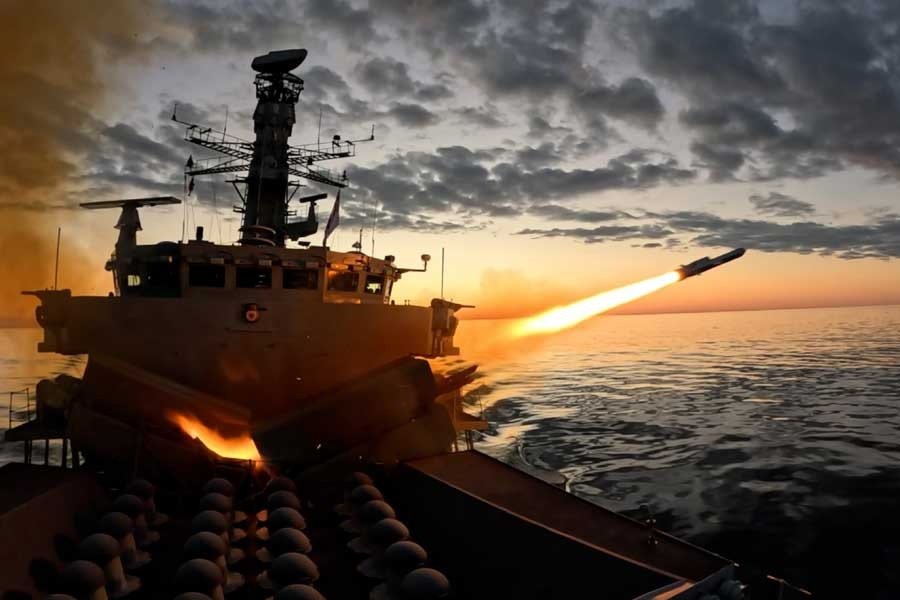
The Haegung, also known as the Korean Surface-to-Air Anti-Missile (K-SAAM), was developed by South Korea’s Agency for Defense Development in partnership with LIG Nex1. Development of the missile began in 2011, with mass production commencing in 2019 and operational deployment starting in 2021 with the Republic of Korea Navy.
Designed for point defence of naval platforms, the system is intended to intercept anti-ship missiles, aircraft, and other aerial threats. The missile measures approximately 3.08 to 3.36 metres in length, has a maximum speed of up to Mach 2, and an operational interception range of between 15 and 20 kilometres. It uses inertial mid-course guidance combined with a dual-mode terminal seeker that integrates radio frequency radar and imaging infrared sensors, enabling engagement in complex electronic warfare environments.
The missile employs a vertical launch mechanism followed by rapid directional manoeuvring to engage targets shortly after launch. Prior to this agreement, the system was exclusively operated by the Republic of Korea Navy, including deployment on platforms such as the Daegu-class frigates and the ROKS Marado.
The LMS Batch 2 vessels will incorporate a mix of Turkish and international systems. In addition to the K-SAAM, the ships are expected to be equipped with Roketsan Atmaca surface-to-surface missiles, a 76 mm main gun, and a 30 mm secondary gun. Construction of the vessels is underway at STM facilities in Istanbul, with keels laid in 2025.
Daniel Lee, head of LIG Nex1’s Malaysia office, stated that the agreement reflects the Royal Malaysian Navy’s confidence in the company’s technology and builds on cooperation developed over the past seven years.
The contract represents the first overseas sale of the Haegung system and marks an expansion of South Korea’s defence exports into the maritime guided weapons segment in Southeast Asia. It follows previous export successes of LIG Nex1’s Cheongung-II (M-SAM II) systems to Middle Eastern countries, including the United Arab Emirates, Saudi Arabia, and Iraq.
Malaysian defence authorities announced that the Haegung contract was one of 24 agreements and industrial collaboration programmes signed during DSA 2026, with a combined value exceeding RM3.54 billion. No specific delivery schedule or integration timeline for the missile systems has been disclosed.
——— End of Article ———