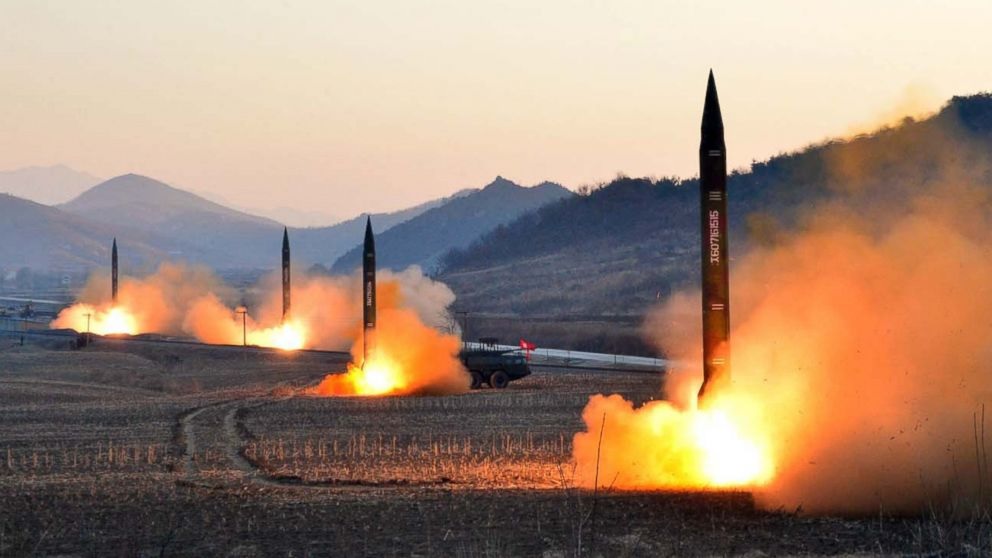
In a joint effort to enhance regional security, South Korea, the United States, and Japan announced the activation of a new system designed to detect and assess North Korea missile launches in real-time. This development follows North Korea recent test of its newest intercontinental ballistic missile (ICBM) on Monday, aimed at evaluating the preparedness of its nuclear force in the face of escalating U.S. hostility.
Key Aspects of the Missile Warning Data Sharing System:
1. Information Shared:
Under the newly activated mechanism, the three countries will exchange information continuously, providing details such as the launch site, flight trajectory, and impact point of North Korean missiles. Previously, the United States shared such information separately with South Korea and Japan.
2. Rapid Response:
South Korean Defence Minister Shin Won-sik emphasized that the new system will enable faster access to warning data on North Korean missiles, allowing for a more effective response. This move is seen as a significant step forward in trilateral security cooperation.
3. Purpose of Sharing:
Washington and its allies consider this mechanism a milestone in advancing trilateral security cooperation, aimed at improving their ability to safeguard their populations. The shared information is expected to facilitate quicker responses to North Korea growing nuclear and missile threats.
Background on the Need for Information Sharing:
1. Historical Strains:
Previous tensions between South Korea and Japan over historical issues and other disputes hindered information sharing. However, the current geopolitical landscape, with North Korea intensifying its weapons programs, prompted South Korean President Yoon Suk Yeol to prioritize mending ties since taking office in May 2022.
2. Security Over Politics:
Experts, including Ankit Panda of the Carnegie Endowment for International Peace, view the new mechanism as a safeguard against political tensions affecting cooperation. The institutionalization of this system aims to ensure its resilience against potential domestic political changes in South Korea or Japan.
North Korea Response:
North Korea has criticized the newly established information-sharing system, viewing it as a U.S.-led effort to escalate confrontation and bolster its military dominance in the region. The North state media characterized the tripartite data-sharing mechanism as a dangerous military action that could further intensify the regional situation.
In summary, the activation of the real-time missile warning system signifies a significant stride in trilateral security cooperation among South Korea, the United States, and Japan, aiming to address the evolving threats posed by North Korea missile launches.
——— End of Article ———