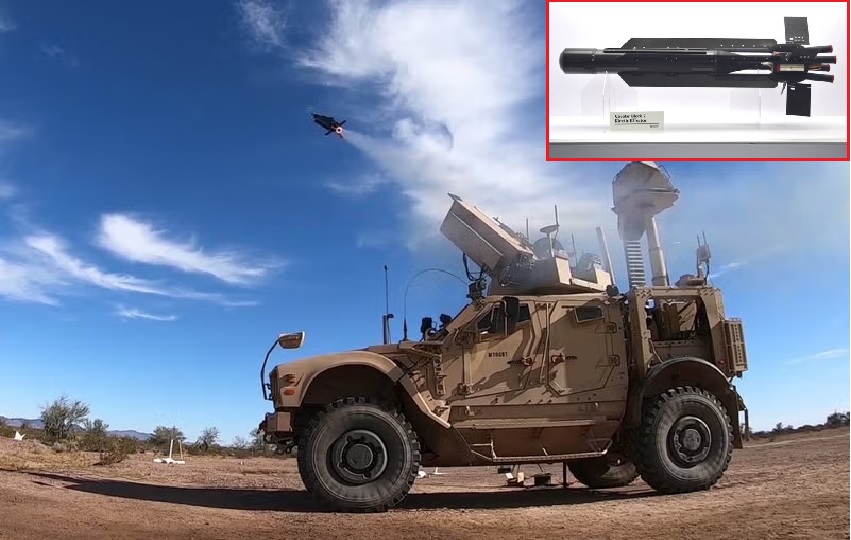
KEY WEST, Fla., — May 2, 2026 : Sierra Nevada Corporation presented its Battery Revolving Adaptive Weapons Launcher – Reconfigurable (BRAWLR) during Exercise FLEX 2026, demonstrating a compact, modular air defense capability designed to counter uncrewed aerial systems and other airborne threats in maritime environments.
Demonstration Observed by Senior Leadership
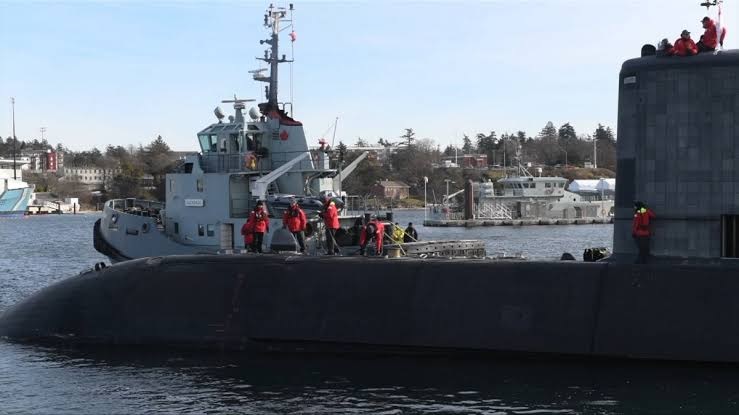
The live demonstration was attended by United States Southern Command commander Francis L. Donovan and United States 4th Fleet commander Carlos Sardiello. The system was deployed aboard a multi-mission uncrewed surface vessel developed by Textron Systems.
Exercise FLEX 2026, conducted from April 24 to 30, focused on integrating unmanned systems and artificial intelligence into maritime operations across regions overseen by SOUTHCOM, including Latin America and the Caribbean. The demonstration emphasized localized air defense in distributed maritime environments, a key operational requirement for forward-deployed forces.
System Architecture and Operational Role
BRAWLR is part of SNC’s Rapidly Deployable Air Defense and Counter-Unmanned Systems (C-UxS) Family of Systems, also referred to as the Expeditionary Adaptive Air Defense (EAAD) portfolio. The system has reached Technology Readiness Level 9, indicating operational maturity, and has been in active service since 2023.
Built on a hybrid, open-architecture framework, BRAWLR integrates commercially available components with military-grade sensors, communications, and effectors. It can function as a standalone air defense node or integrate with existing command-and-control networks to extend engagement range and capability.
The launcher is designed to independently detect, track, identify, and defeat airborne threats, including Group 1–3 unmanned aerial systems, cruise missiles, and other aerial targets. It can also augment layered air defense architectures by providing additional kinetic options.
Technical Specifications and Deployment Characteristics
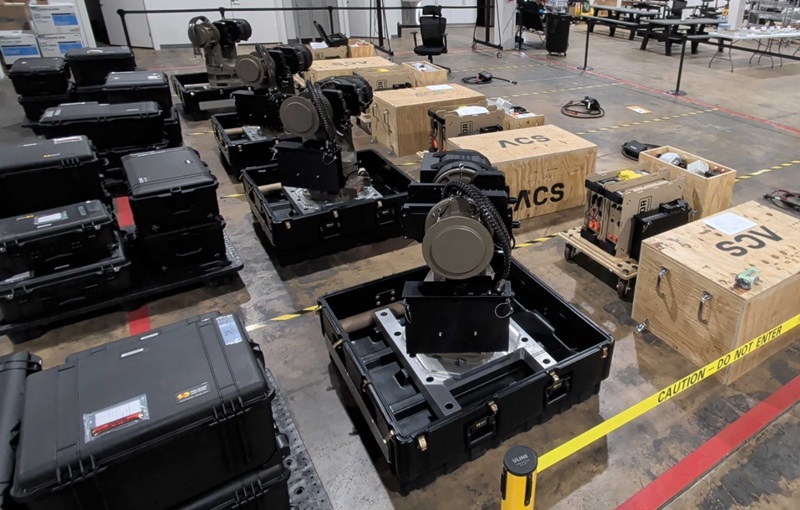
BRAWLR is engineered for expeditionary operations, prioritizing mobility and rapid deployment over larger fixed installations. The system measures approximately 5 feet in width and depth and stands 7 feet tall, with an empty weight of 2,300 pounds. It supports a payload capacity of up to 2,000 pounds distributed across four modular weapons stations.
The launcher operates with a power requirement of 9 kilowatts and can be set up within 10 minutes, with a breakdown time of approximately 3 minutes. It requires only one operator for deployment and operation.
A high-capacity turret enables ±180-degree traverse, providing continuous 360-degree rotation at a rate of 40 degrees per second, with an elevation range from 0 to 45 degrees. The system incorporates FLIR imaging sensors, tactical video systems, and communications through Silvus MANET radio networking.
BRAWLR is transportable via standard 463L military pallets and can be mounted on naval vessels, light tactical vehicles, trailers, flatbed trucks, or ground emplacements, supporting flexible deployment across multiple domains.
Munitions and Engagement Capabilities
The launcher supports both rail- and tube-launched munitions and allows operators to configure mixed payloads across its four stations, enabling layered defense within a single system.
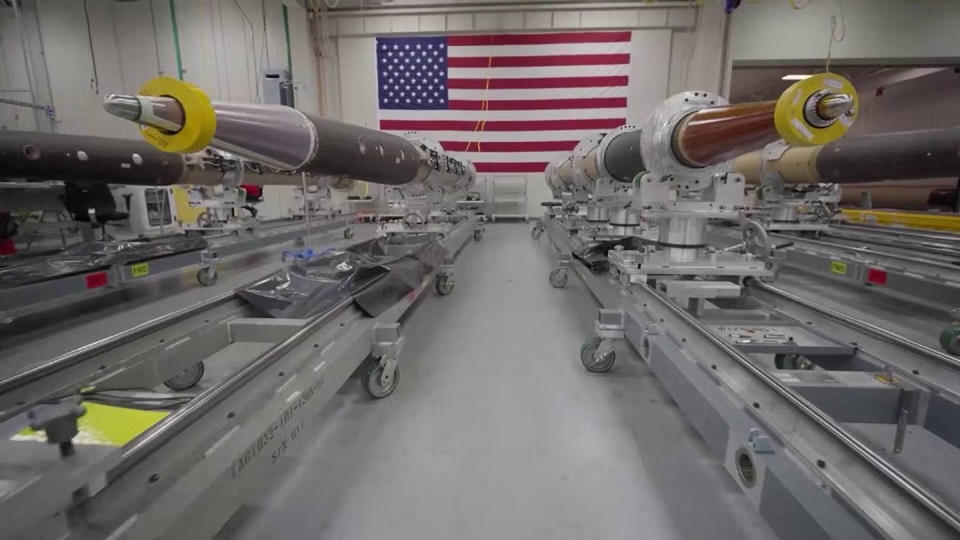
In its maximum configuration, BRAWLR can carry up to 46 laser-guided Advanced Precision Kill Weapon System (APKWS) rockets, optimized for high-volume engagements against drone swarms at ranges up to 6 kilometers.
The system is compatible with several short- to medium-range interceptors, including the AIM-9M Sidewinder (range approximately 12 kilometers), AIM-132 ASRAAM (up to 15 kilometers), and IRIS-T missiles. For extended engagements, it can integrate AIM-120 AMRAAM missiles to target larger or maneuvering airborne threats.
The platform is munition-agnostic and can also incorporate less-lethal kinetic options depending on mission requirements.
Operational Record and System Integration
BRAWLR entered operational service in 2023 for a foreign military customer following a U.S. government request. According to SNC, the system has intercepted more than 400 aerial targets in operational deployments, although specific locations and customers have not been disclosed.
The launcher is integrated with SNC’s TRAX Edge software for command and control, enabling interoperability with higher-echelon systems and supporting multi-domain operations. It is also related to the Mobile Anti-Air Weapons Launcher – Reconfigurable (MAAWLR), a vehicle-mounted variant within the same system family.
Future Autonomy Development
SNC has announced a partnership with Applied Intuition to expand automation across its Expeditionary Area Air Defense platforms, including BRAWLR. The collaboration aims to integrate dual-use autonomy software with SNC’s hardware systems.
The effort focuses on enabling autonomous operation of localized air defense units, improving response times through real-time sensor fusion, and reducing personnel requirements in contested environments.
Operational Significance
The FLEX 2026 demonstration highlighted BRAWLR’s suitability for maritime security and force protection missions, particularly in regions facing threats from transnational organized crime and increasingly capable aerial systems.
Its compact size, rapid deployment capability, and modular configuration are aligned with operational needs for distributed forces operating in austere or contested environments. SNC continues development of its Rapidly Deployable Air Defense and C-UxS systems to address evolving threats to military forces, infrastructure, and critical assets.
——— End of Article ———