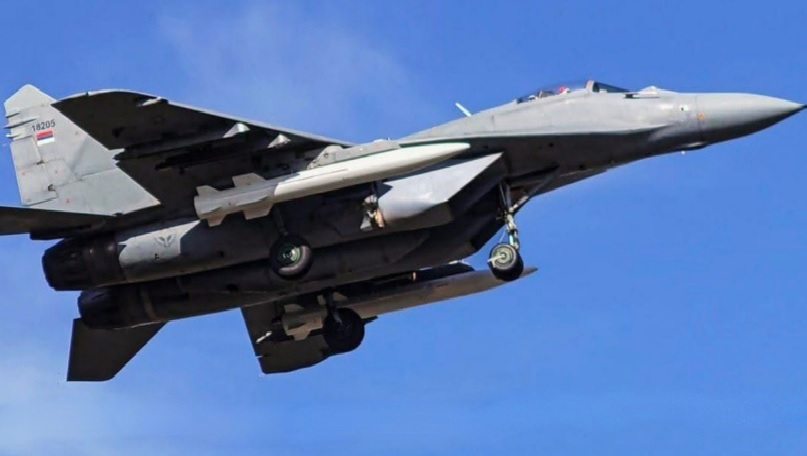
BELGRADE — March 10, 2026 : The Serbian Air Force has reportedly integrated Chinese-made CM-400AKG air-launched missiles onto its MiG-29 fighter aircraft, expanding the strike capabilities of the country’s frontline combat aviation fleet as Belgrade continues to diversify its military procurement sources.
The integration became publicly known after defense analyst Danube Intel released a 2026 photograph showing a Serbian MiG-29 carrying the Chinese missile. The analyst indicated that the weapons may have been delivered to Serbia as early as 2025.
Transport Flights Suggest Earlier Deliveries
According to open-source monitoring cited by the analyst, Serbian military transport aircraft conducted multiple flights over the past eight months to Egypt, the United Arab Emirates and Jordan. The aircraft involved in these missions included Il-76 strategic airlifters operated by the Serbian military.
These destinations are believed to have served as transfer points where Chinese weapons were loaded before being transported onward to Serbia. The analyst stated that these flights likely correspond to the delivery of the new missile systems.
Chinese Universal Pylons Installed on MiG-29 Fleet
To enable integration of the new armament, Serbia’s MiG-29 fighters have reportedly been equipped with universal weapon pylons produced by the Chinese company China National Aero-Technology Import & Export Corporation (CATIC).
These pylons allow the aircraft to carry a wider range of Chinese precision-guided weapons, including guided bombs and air-to-ground missiles. The modification enables compatibility between the Soviet-designed MiG-29 platform and Chinese weapon systems without requiring extensive structural redesign of the aircraft.
CM-400AKG Missile Design and Characteristics
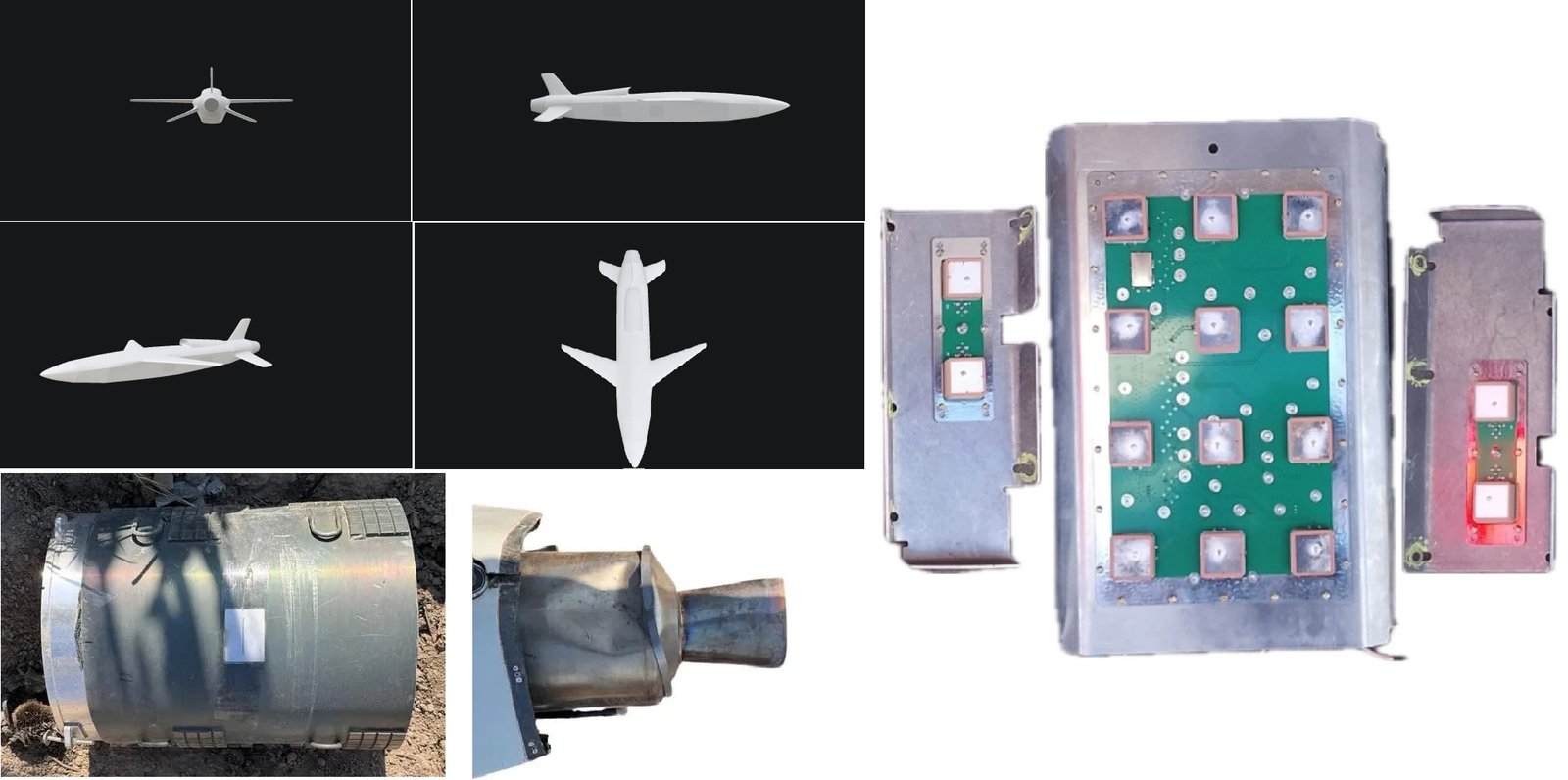
The CM-400AKG is an air-launched cruise missile developed by the China Aerospace Science and Industry Corporation (CASIC). The weapon is designed primarily for engaging naval vessels and fixed ground targets such as radar installations, command centers and air-defense facilities.
According to manufacturer specifications and open-source defense data, the missile has the following characteristics:
- Mass: Approximately 900 kilograms
- Warhead: Up to 200 kilograms
- Range: Estimated between 100 and 240 kilometers depending on launch altitude and flight profile
- Propulsion: Single-stage solid-fuel rocket motor located in the tail section
The rocket engine ignites immediately after the missile is released from the carrier aircraft, accelerating the weapon to high supersonic speeds.
The manufacturer claims the missile can reach speeds between Mach 4.5 and Mach 5.5. Some defense analysts note that while the missile can achieve hypersonic-range speeds during portions of its flight, it may not maintain those speeds throughout the entire trajectory. Its semi-ballistic flight profile and steep terminal dive are intended to complicate interception by air-defense systems.
Guidance System and Targeting
Open-source information indicates that the CM-400AKG uses a multi-mode guidance system combining several navigation methods. These include:
- Inertial navigation systems (INS)
- Satellite-based positioning guidance
- Terminal homing seekers, which can include either infrared or passive radar sensors
This guidance configuration enables the missile to strike both maritime and land-based targets, including radar stations, air-defense batteries and other stationary military infrastructure.
Claims and Assessments From the 2025 India–Pakistan Conflict
The missile previously drew international attention during the May 2025 conflict between India and Pakistan.
During the hostilities, claims circulated that Pakistan Air Force JF-17 Thunder fighter jets had used CM-400AKG missiles to strike an Indian S-400 air-defense battery located at the Adampur airbase.
However, Pakistani authorities did not release video evidence or operational confirmation supporting the destruction of the system. Indian defense officials and independent analysts subsequently rejected the claim after the Indian Prime Minister was photographed visiting the Adampur base alongside the intact S-400 system.
Post-conflict assessments indicated that the incoming missiles had been detected early by Indian early-warning surveillance systems. Analysts noted that the missile’s design lacks advanced stealth features and sophisticated terminal maneuvering capability, which reportedly made interception by layered air-defense networks more feasible.
Continued Diversification of Serbia’s Arsenal
The CM-400AKG integration represents the latest addition to Serbia’s expanding inventory of foreign military equipment acquired from multiple suppliers.
In 2024, Serbia received the Chinese-manufactured HQ-17AE short-range air-defense system. The system is designed to intercept aircraft, cruise missiles and certain types of precision-guided munitions.
Serbia also acquired Soviet-Russian Kh-31 anti-radiation missiles in 2025 and began integrating them onto its MiG-29 fleet.
Historically, neither Serbia nor the former Yugoslavia operated the Kh-31 missile family or possessed aircraft configured for their use. The Kh-31P variant was originally developed for aircraft such as the Su-17M, Su-24 and MiG-27 strike platforms before later integration into newer aircraft including the Su-30, Su-34 and Su-35.
No Official Confirmation From Serbian Authorities
Serbian defense authorities have not issued an official statement confirming the delivery timeline or operational deployment of the CM-400AKG missiles.
If confirmed, the integration would provide Serbia’s MiG-29 fleet with a new long-range strike capability against both maritime and fixed land targets, further expanding the operational role of the country’s fighter aircraft.
——— End of Article ———